The International Olympic Committee (IOC) has firmly rejected demands to ban the United States from next month's Winter Olympic Games, despite international outcry over a recent military intervention in Venezuela.
Political Pressure and the IOC's Stance
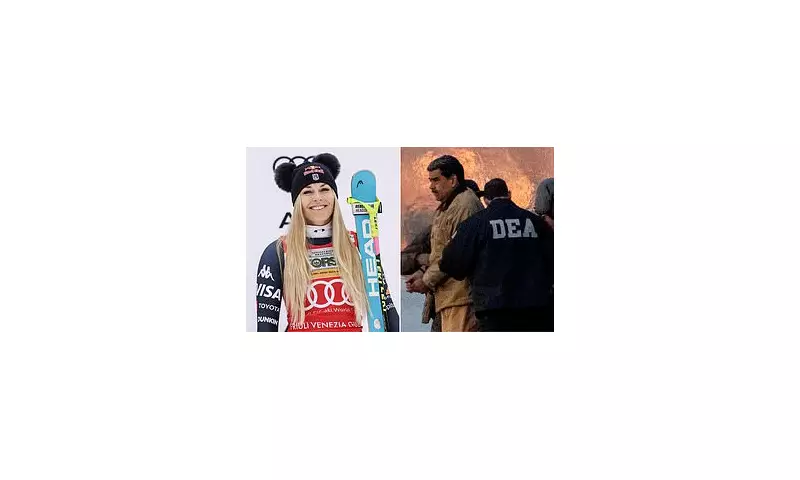
This decision follows the stunning capture of Venezuelan President Nicolas Maduro and his wife by US military forces earlier this month. The operation, ordered by former President Donald Trump, prompted calls from various quarters for the IOC to impose a ban similar to the one enforced on Russia.
In a clear statement to BBC Sport, the governing body insisted it must keep politics separate from sport. The IOC stated it 'cannot involve itself directly in political matters or conflicts between countries, as these fall outside our remit.' This position mirrors its earlier rejection of calls to ban Israel from the Olympics over the war in Gaza.

A Complex Reality: Contrast with Russia's Ban
The Committee drew a distinct line between the US situation and its sanctions against Russia. It clarified that Russian teams were banned following the country's full-scale invasion of Ukraine, an action which involved capturing territory and placing athletes under the control of the Russian Olympic Committee.
'As a global organisation, the IOC has to manage a complex reality,' the statement continued. It emphasised the fundamental role of the Games in uniting athletes from across the world to 'give hope to the world,' a principle it argues would be compromised by direct political involvement.
Broader Sporting Consequences and World Cup Hosting
The controversy has spilled over into other sports. Some British politicians have urged FIFA to consider banning the US Men's National Team (USMNT) from its own World Cup. They argue the ban should stand until America demonstrates 'clear compliance with international law and respect for the sovereignty of other nations.'
This adds a layer of diplomatic tension as the United States is set to co-host this summer's FIFA World Cup alongside Canada and Mexico. Meanwhile, star American athletes like skiing legend Lindsey Vonn are confirmed to compete when the Winter Olympics kick off in Milan and Cortina next month.
The IOC's ruling underscores the persistent challenge of navigating the intersection of global sport and geopolitics, maintaining its stance as a neutral arena despite mounting external pressures.