Kirsty Muir's Olympic Agony: 0.41 Points from Bronze in Slopestyle Heartbreak
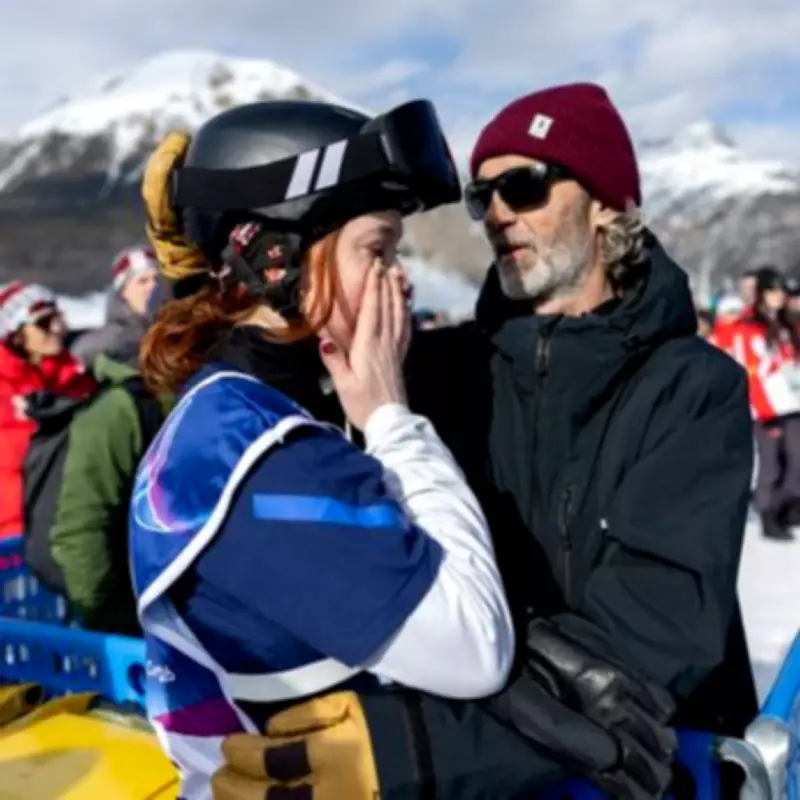
The tears of Kirsty Muir told a story of Olympic anguish that only elite athletes can truly comprehend. For the freestyle skier from Aberdeen, a fourth-place finish at the Milano Cortina 2026 Winter Games represents the cruellest of margins—the difference between the podium's glory and the valley of what might have been.
A Fraction Away from History
In the high-stakes world of freestyle skiing, where timing and execution are measured in hundredths of points, Muir's best run of 76.05 left her a mere 0.41 points behind Canada's Megan Oldham, who claimed bronze. The gold and silver medals went to Switzerland's Mathilde Gremaud and China's Eileen Gu respectively, replicating the Beijing 2022 podium.
"I was so proud to put one down but I struggle to accept how close it was," confessed Muir, her voice heavy with emotion. "I know I have more in me. It's hard to say how I'm feeling right now—it's just tough. It's all up to the judges. The score is a little bit hard for me."

The irony is particularly sharp for Muir, who just over two weeks earlier had dominated the prestigious X Games in Aspen with a mammoth score of 93.66—a mark that would have secured Olympic gold with ease. Instead, she found herself grappling with the Livigno SnowPark course, ultimately opting for a safer run that included her signature double cork 1440, a trick involving four full rotations in a single jump.
The Technical Battle
Slopestyle skiing demands athletes perform tricks over jumps, rails, and various features, with judges awarding scores based on difficulty, execution, style, and flow. Finalists have three runs, with only their best score counting toward the final standings.
Muir had been working diligently in training to perfect a complex 'mute grab' on an early rail—a move requiring her to grab the outside edge of her ski with her leading hand while executing a precision spin. When competition pressure mounted, she made the tactical decision to simplify this element, betting everything on her final jump.
"It slipped away from me," she admitted. "I went back to safety to just get a run down and bet everything on the last jump because that's one of my biggest tricks. It just wasn't enough."
Perspective from Experience
British freestyle skier James Woods, who narrowly missed a medal in the same slopestyle discipline at PyeongChang 2018, understands Muir's pain all too well. Now working as an expert analyst for Olympic broadcaster TNT Sports, he offered both empathy and perspective.
"Coming in fourth is just rotten—it sucks, it's the worst thing ever," said Woods. "Kirsty had the ingredients today and that was incredibly unfortunate. She put down the biggest trick of the day. She was one of the favourites to take a gold medal, so coming fourth is rubbish but we can all be so incredibly proud of her."
Woods continued: "We are so focused on medals here because that's the only currency that we know. She's got a fantastic chance in Big Air."
Looking Ahead to Big Air
Muir will have little time to dwell on her disappointment, with Big Air qualifying scheduled for Saturday. This discipline has been particularly kind to her this season—she won her first World Cup gold in Big Air and took silver at the recent X Games.
"I think I just need a moment to process," Muir reflected. "I don't want to dwell on it too much. I've got at least a day or so until I hit the big air. I need to accept this, find the positives and reset myself. I've got another chance and that needs to be the focus now."
This Olympic campaign marks Muir's second Games appearance—she finished fifth in Beijing as a 17-year-old debutante. While the progression to fourth represents improvement, the proximity to the podium makes this result particularly bittersweet.
The Milano Cortina 2026 Winter Olympic Games continue through February 22, with extensive coverage available across multiple platforms for British viewers following Team GB's remaining medal hopes.