Annika Malacinski's Emotional Fight for Women's Inclusion in Nordic Combined
U.S. Nordic combined athlete Annika Malacinski is spearheading a passionate campaign for gender equality at the Winter Olympics, following the exclusion of women from the sport at the upcoming Milan Cortina Games. This decision has sparked outrage and determination among female athletes worldwide.
A Heartbreaking Moment of Exclusion
Annika Malacinski vividly recalls the devastating moment when the door to the Milan Cortina Winter Olympics was firmly shut for women in Nordic combined. While on a flight from Munich to Denver, she purchased airplane Wi-Fi to join a crucial conference call with the International Olympic Committee, fully expecting that the sport would finally open up to female competitors.
"Then the decision came: 'no.' No explanation, no discussion. Just 'no,' and then they moved on to the next topic," she revealed to The Associated Press from her training base in Norway. "I cried for eight hours straight on that flight. When I arrived in Denver, my eyes were swollen shut. It felt like my world had crashed."

That pivotal moment occurred in June 2022. Despite an ongoing campaign led by Malacinski, a 24-year-old athlete from Colorado, Nordic combined remains the last Olympic sport to exclude women. This is particularly striking as Milan Cortina is set to showcase the highest level of female participation in Winter Games history, at 47%.
Elite Athlete Left Out
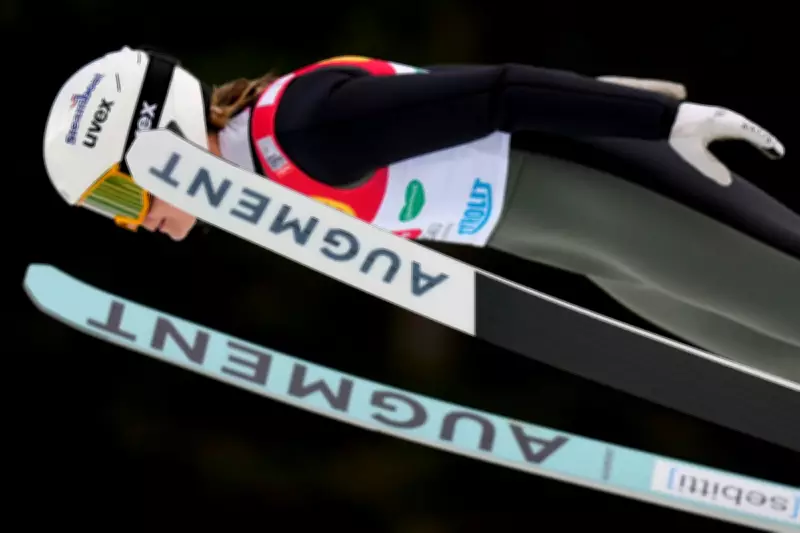
Malacinski is a consistent top-10 finisher at elite competitions in Nordic combined, a demanding sport that blends ski jumping and cross-country skiing and requires rigorous year-round training. Her younger brother, Niklas, will compete in the men's event for the United States at the Games, and she plans to travel to northern Italy to support him.
"It's bittersweet. I know how hard he works, and he absolutely deserves it," Malacinski said. "I do the same sport as him. I jump the same ski jumps and ski the same courses. The only difference is that I'm a woman."
In a recent protest against the exclusion, female skiers racing in Seefeld, Austria, raised their poles overhead to form an X, symbolising their fight for inclusion. Men have competed in Nordic combined since the first Winter Games in Chamonix, France, in 1924, over a century ago.
The sport now faces the risk of being removed from the program at the next Winter Olympics in 2030. The IOC has cited struggles with attracting participation from enough countries and limited television audience appeal as reasons for this potential exclusion.
A Long Climb Toward Participation and Parity
The history of women's inclusion in the Olympics has been a slow and arduous journey. Women were entirely excluded from the first modern Olympics in 1896. When they were permitted to compete in Paris four years later, participation was restricted to just a handful of sports, such as tennis, archery, and croquet.
Track and field opened to women only in 1928, at the Amsterdam Games, but restrictions were imposed based on outdated beliefs about female fragility. Although the 800 meters was initially included, it was withdrawn for more than three decades due to these misconceptions.
The first women's Olympic marathon did not take place until 1984 in Los Angeles, a full 88 years after the race, inspired by an ancient Greek battle, made its debut. While nearly all gender differences have since been eliminated, some disparities persist. At the Summer Olympics, women compete in the seven-event heptathlon, while men contest the 10-event decathlon.
Winter Olympics Changes at a Glacial Pace
Progress at the Winter Games has arrived even later. Ski jumping was off-limits to women as recently as the 2010 Vancouver Olympics and was only introduced four years later at Sochi. The most recent and sweeping change in winter sports has been in cross-country skiing's distance overhaul.
At Milan Cortina, men and women will race the same distances across all events for the first time in Olympic history. Previously, the longest women's race capped at 30 kilometers, compared with 50 for men. Both genders will now have 50-kilometer mass start races, mirroring the format used at the Nordic Ski World Championships last year.

Malacinski remains steadfast in her campaign for inclusion, now shifting her focus to the 2030 Winter Games in the French Alps. "I'm a very gritty person," she asserted. "If I put my mind to something, I know I can do it."
"That just fuels the fire for me," she added. "We deserve to be there, and I'll fight until 2030 because that's our rightful place." Her determination underscores a broader movement for equality in sports, highlighting the ongoing struggles and triumphs in the quest for gender parity.