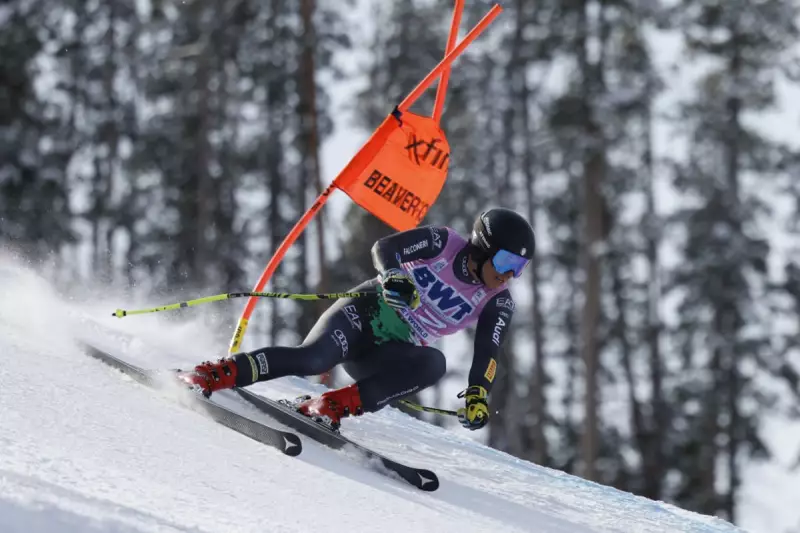
Winter Olympics Safety Review Intensifies After Tragic Skiing Deaths
The Alpine skiing world has been shaken by two devastating tragedies that have placed safety protocols under intense scrutiny ahead of the 2026 Winter Olympics. The deaths of Italian skiers Matteo Franzoso and Matilde Lorenzi within a fifteen-month period have prompted urgent reviews and soul-searching within the sport's governing bodies.
A Stark Wake-Up Call for the Sport
Both athletes succumbed to injuries sustained during training crashes, leading the International Ski and Snowboard Federation (FIS) to declare that all options are being considered in their drive to enhance safety measures. The timing is particularly critical with the Milano Cortina Games approaching, where men's races will challenge the notorious Stelvio course in Bormio - a track where downhillers can reach speeds exceeding 150 kilometres per hour.
Urs Lehmann, the FIS CEO appointed last year and himself a 1993 downhill world champion, told Reuters in December: "We had a couple of tragic accidents. The one of Franzoso... brought up new questions. That was the moment when we questioned the whole system."

Comprehensive Safety Overhaul Underway
Under Lehmann's leadership, the FIS has initiated a comprehensive safety overhaul beginning with a survey of its approximately 140 member federations to identify gaps in their existing structures. "We want to see: do you have a dedicated person in charge for safety? Do you have a module in your coach education programme dedicated to safety?... Then share best practice and set standards," Lehmann explained.
One immediate change being implemented is the expansion of World Cup rules on airbag use to a wider array of training sessions. While airbags have been mandatory for speed World Cup events and official training sessions since the 2024-25 season, initial exemptions were granted to some athletes who claimed the body-worn devices restricted movement.
Lehmann stated unequivocally: "Airbag has been mandatory in competition but not in training. We say: airbag has to be worn also in training... no exceptions."
Technological Advances and Resistance
More than ninety percent of airbags utilised in World Cup races are supplied by Italian manufacturer Dainese, which began developing ski-specific safety technology in 2011. The system employs sophisticated sensors, refined through years of data collection from runs and GPS technology, to monitor an athlete's motion and deploy only during genuine crashes.
Despite being hailed as the most significant safety innovation in skiing over the past two decades, adoption has faced challenges including technical hurdles, cost implications, and resistance from some skiers. Dainese's Racing Director Marco Pastore acknowledged early misfires but affirmed that deployment rates are now extremely low and far less hazardous than unintended binding releases.
Training Conditions Under Fire
Former champions argue that the greatest risks often occur away from televised race days. Retired Italian downhiller Kristian Ghedina told Reuters that training sites - particularly summer sessions on glaciers or in South America - frequently rely on ad-hoc fencing erected merely the day before. "In World Cup you have nets right and left; in training protections are precarious," he observed.
Three-time Olympic champion Deborah Compagnoni echoed these concerns, highlighting that hills sometimes feature too many parallel training sets on narrow pistes with insufficient escape room. She advocates for moderating speeds by adjusting gate settings and re-evaluating the ultra-hard snow preparation that has become standard as natural snowfall declines.
Looking Beyond Airbags
The safety conversation extends beyond protective gear. Lehmann anticipates that smart bindings, which use algorithms for earlier ski release and could be available within three to four years, will significantly reduce the knee and tibia injuries prevalent in the sport. The FIS is also exploring thicker race suits that would slow skiers and modifications to boot design, though Lehmann conceded that teams invest heavily in developing faster gear and would be reluctant to sacrifice speed.

Academia is contributing innovative solutions, with a team from Turin's Polytechnic University employing drones to map pistes and simulate racing lines to generate risk assessments. This system could help determine a hill's suitability for specific training sessions.
A Father's Mission
Adolfo Lorenzi now heads a foundation established in honour of his daughter Matilde, who died at just nineteen in 2024 following a crash during a training run in South Tyrol. He believes safety has lagged behind rapidly evolving equipment, and his foundation promotes practical training for coaches while advocating for higher safety standards at training camps. "There's a cost - but there's no cost tied to a human life," he told Reuters.
Even with improved equipment and modelling, experts stress that course management remains paramount. Ghedina, who helped pioneer the back protector in the 1990s and supports airbags, advocates for more nets, air-fences, and wider fall zones. "You can't make a sport of speed totally safe... but you can do much more on training pistes," he concluded, summarising the delicate balance between maintaining skiing's thrilling nature while better protecting its athletes.