US Athletes Could Face Hostility at International Events Due to Trump's Foreign Policy
American lawmakers have issued stark warnings that President Donald Trump's recent aggressive foreign policy actions could create hostile environments for US athletes competing in major international sporting events this year. Representatives argue that competitors may face booing, jeering, and anti-American sentiment from crowds overseas.
Recent Policy Actions Creating Diplomatic Tensions
President Trump began the new year with a military operation in Venezuela aimed at capturing authoritarian president Nicolas Maduro. Following this, he demanded US control of Greenland while threatening European allies with higher tariffs if they refused to support what critics have called imperial ambitions. Although Trump later backed down on the Greenland threat after talks at the World Economic Forum in Davos, Switzerland, the damage to international relations may already be done.
The president has previously called for Canada to become the 51st US state and threatened actions against other South American nations including Cuba and Colombia. These cumulative actions have created significant diplomatic tensions with traditional allies.

Winter Olympics Could See First Impact
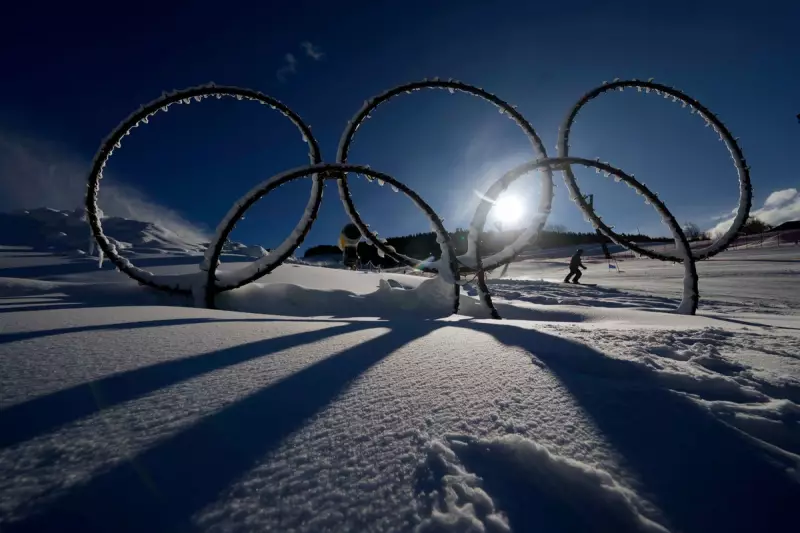
Those participating in the 2026 Winter Olympic Games, scheduled to begin in Milano Cortino, Italy, at the end of next week, could be the first to experience the consequences of these strained international relations. Washington Democratic Representative Pramila Jayapal told The Hill that the situation will be challenging for athletes due to divisions created with long-term allies.
"It's going to be really tough for the athletes because unfortunately what the president has done has created so many divisions with long term allies of ours," Jayapal stated. "He's talking about taking over other countries and the people of those countries are legitimately upset."
Lawmakers Express Concern Over Global Reputation
Colorado Democratic Representative Jason Crow voiced serious concerns about the impact on America's global standing, saying of Trump: "He is essentially treating our foreign and economic policies as an organized crime boss and is rapidly destroying our reputation around the world."
New York Democratic Representative Dan Goldman emphasized that American competitors should not be held accountable for presidential conduct, stating: "I hope other countries realize what Donald Trump [does] should not be blamed on American citizens and athletes, most of whom are very apolitical. Nobody asks an American gold medal winner what party you are from, and hopefully that spirit can carry through."
Tennessee Republican Representative Tim Burchett offered a different perspective, commenting: "They want to play those games, let 'em. Whenever they get in trouble, who are they going to call? The United States of America."
Historical Precedents of Politics in Sports
Kristian Coates Ulrichsen, a fellow at Rice University's Baker Institute of Public Policy, noted that sports and politics have always been intertwined, particularly at Olympic events. "Especially with this year's games being in Europe, there is a strong possibility US athletes will face booing at the very least," he observed. "Anyone who says sports and politics don't mix, that's never been true. And we've always seen the Olympics be a proxy for wider issues."
Historical examples demonstrate this connection clearly:
- The 1936 Olympics in Berlin, where Black American track star Jesse Owens won four gold medals amid Nazi Germany's racial ideology
- The 2004 Games in Athens, where controversy over the Iraq War led to regular jeering of American participants
- The 2022 Winter Olympics in Beijing, when China's alleged human rights abuses became a significant focus
Potential Impact on Upcoming FIFA World Cup
The situation in Italy could have significant ramifications for this summer's upcoming FIFA World Cup, which is being co-hosted by the US, Canada, and Mexico. The United States is scheduled to host 78 of the tournament's 104 matches.

Although FIFA President Gianni Infantino has shown support for Trump by awarding him a controversial "Peace Prize" in December 2025, participating nations may face difficult decisions. German Football Association official Oke Gottlich suggested over the weekend that European countries might need to consider withdrawing in opposition to Trump's policies.
"I really wonder when the time will be to think and talk about this [a boycott] concretely," Gottlich told the Hamburger Morgenpost newspaper. "For me, that time has definitely come."
Danish politician Mogens Jensen told Deutsche Welle that while his country isn't currently calling for a World Cup boycott over Greenland tensions, this could change if Trump breaks his Davos promise about military invasion. "I will be honest and say, yes, if that should happen, then a boycott discussion is very, very relevant," Jensen stated regarding the World Cup. "It's likely to happen if it develops into a real conflict. I sincerely hope that it will not come to this."
White House Response
The White House has dismissed suggestions that anti-Trump sentiment could create difficulties for American athletes, issuing a statement that read: "There is nothing political or controversial about American athletes competing on the world stage on behalf of the strongest and greatest nation on earth. President Trump stands fully behind these patriotic athletes, who represent some of the best talent in our country."
As international sporting events approach, the intersection of politics and athletics appears increasingly unavoidable, with American competitors potentially caught in the crossfire of global diplomatic tensions created by the current administration's foreign policy decisions.