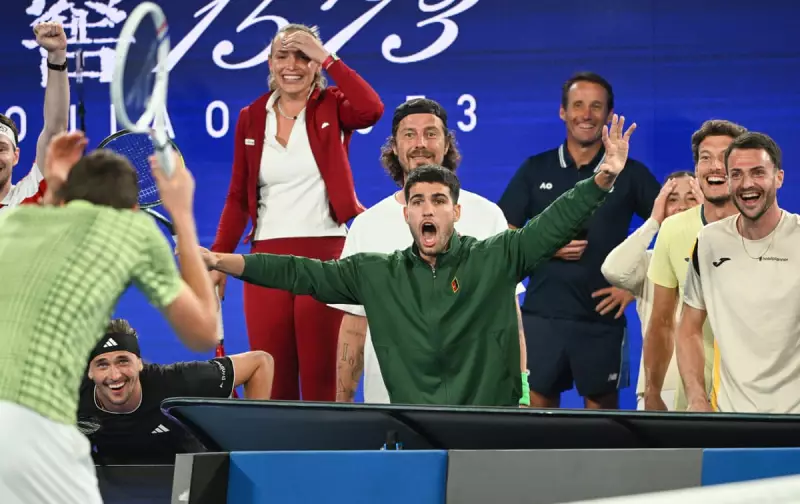
The traditional two-week grand slam tournament is becoming a relic of the past. A quiet revolution, spearheaded by the Australian Open and the US Open, has successfully expanded these pinnacle events into vibrant, three-week sporting festivals, with qualifying rounds now drawing crowds in the tens of thousands.
The End of the Best-Kept Secret
For decades, the week before a grand slam main draw was a hushed affair. While top stars prepared away from the spotlight, lower-ranked players battled through qualifying matches in near-empty stadiums. Access was often free, but it remained tennis's "best-kept secret," a niche delight for dedicated fans. That era is conclusively over.
The shift began with a realisation of the untapped potential. Tournament directors at Melbourne and Flushing Meadows embarked on what now resembles a friendly arms race, each striving to create the most spectacular lead-in week. The US Open branded its initiative "Fan Week," while the Australian Open opted for "Opening Week." Both concepts share a core goal: to attract massive new audiences with affordable access and a festival atmosphere.

Record-Breaking Crowds and Festival Vibes
The success in Melbourne this year has been staggering. The tournament has shattered its own qualifying attendance records daily. Monday saw 29,261 spectators flood through the gates, demolishing the previous record of 7,543. By Thursday, the daily figure reached 35,805, with a four-day total of 136,248.
For a modest A$20 (£10) grounds pass, fans are treated to a sprawling festival. Beyond watching future main-draw contenders compete, they can observe top players like Novak Djokovic and Carlos Alcaraz in open practice sessions that fill half of Rod Laver Arena. The grounds feature a dedicated festival oval with live music, trivia, player appearances, and extensive family-friendly activities, including free racket giveaways and mini-tennis courts.
Special events have also become a hallmark. Following the US Open's innovative revamp of its mixed doubles event last year—which featured high-profile pairings like Casper Ruud and Iga Swiatek—the Australian Open responded with the inaugural "One Point Slam" competition, offering a life-changing A$1 million prize.
Wimbledon Risks Being Left Behind
While the Australian and US Opens surge ahead, and the French Open attracts solid crowds to its qualifying event at Roland Garros, Wimbledon finds itself constrained. Its qualifying is still held off-site at Roehampton, and the All England Club's celebrated grass courts are too delicate for pre-tournament fan festivals.
The club's ambitious Wimbledon Park Project, which aims to bring qualifying on-site and create a public park alongside new courts, is currently mired in a High Court legal battle. As other slams dramatically expand their footprint and fan engagement, the venerable Championships now stand as the last remaining pure two-week grand slam, risking being overtaken in the global spectacle stakes.
The transformation is clear. Grand slams are no longer just about the fortnight of elite competition; they are immersive, multi-week celebrations designed to grow the sport's base. The secret is well and truly out, and the future of tennis looks louder, longer, and more accessible than ever before.