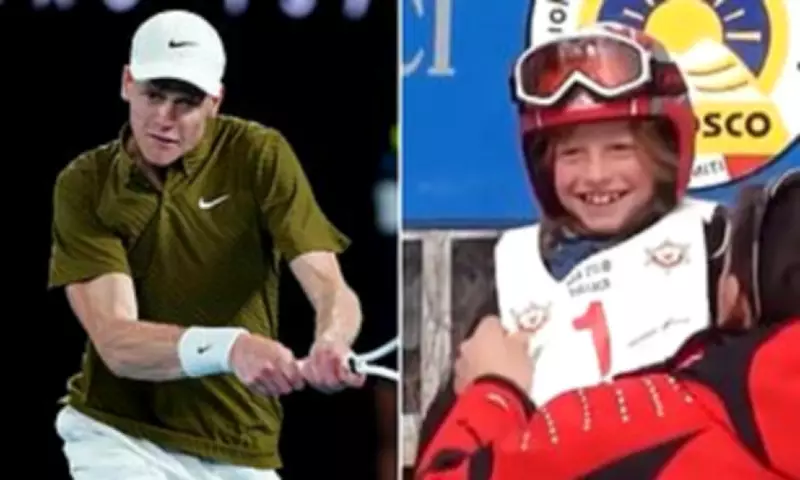
The Alpine Origins of a Tennis Champion
Jannik Sinner is globally recognised as a four-time Grand Slam champion and one of tennis's most composed competitors. However, long before his Australian Open triumphs and battles with rivals like Alex de Minaur, Carlos Alcaraz, and Novak Djokovic, Sinner was carving a very different athletic path on the snowy slopes of northern Italy.
A Childhood on the Slopes
Born in South Tyrol within the majestic Dolomites, Sinner grew up in the village of Sexten, surrounded by expansive snowfields where his parents were employed at a local ski resort. From an early age, skiing was not merely a pastime but the central focus of his life. His childhood hero was American downhill skiing legend Bode Miller, rather than any tennis icon.
By the tender age of seven, Sinner had already secured a Junior National Championship title in giant slalom. At eleven years old, he achieved a national runner-up position, marking him as one of Italy's most promising junior alpine talents. His prowess on skis was such that he even outperformed contemporaries like Giovanni Franzoni, who now leads the Italian Olympic skiing team.

The Crucial Decision: From Skiing to Tennis
At thirteen, Sinner made a life-altering choice. He abandoned competitive skiing and relocated to Bordighera to dedicate himself fully to tennis. This transition was a significant gamble. In an interview with Vogue in 2024, Sinner explained his reasoning, stating, "The reason why I chose tennis was, in tennis you can make mistakes. You can lose points, but you can still win the match. In skiing, if you make one mistake, one big mistake, you cannot win."
This high-stakes environment of skiing, where a single error can end a race, fundamentally shaped his mental approach. Sinner learned early that margins in alpine sports are brutal and unforgiving, with no opportunity for mid-run recovery. In contrast, tennis always offers another point, another chance to fight back. This distinction ultimately redirected his athletic destiny.
Overcoming Early Setbacks
The shift from skiing to tennis was not without its challenges. Sinner candidly admitted that while he had been "winning a lot" in junior skiing competitions, his initial foray into tennis brought a string of defeats as he adapted physically and technically. "I was winning a lot when I was young in skiing, and in tennis I never won," he recalled. "And then slowly I started to lose in skiing, because physically I was not ready to compete."
Nevertheless, the gamble paid off spectacularly. Sinner ascended to the world number one ranking in tennis, capturing multiple major titles and establishing himself as the foremost figure in Italian men's tennis. The mental resilience forged on the ski slopes became the foundation of his competitive edge on the tennis court.
Reconnecting with Olympic Roots
Despite his tennis success, Sinner's connection to winter sports and the Olympic dream has never faded; it has merely evolved. In September 2024, he was appointed as the first official volunteer for the Milano Cortina 2026 Winter Olympics. Demonstrating his commitment, just days after reaching the semifinals of the 2026 Australian Open, Sinner was photographed back in Italy, checking train tickets alongside Paralympic fencing champion Bebe Vio.
"I am proud to represent the passion for these extraordinary disciplines and the desire to contribute to the success of such a unique event," Sinner declared at the time of his appointment.
A Return to Alpine Imagery
In the lead-up to the 2026 Milano Cortina Games, Sinner has publicly re-engaged with his alpine heritage. He featured prominently in the Gucci Altitude winter sports collection campaign, which drew direct inspiration from his childhood in the Dolomites. Notably, no stunt double was required; Sinner comfortably returned to skis, showcasing that the technical skill and balance honed in his youth remain intact.

However, a serious return to competitive skiing is deemed unrealistic, given the inherent injury risks and the rigorous demands of the professional tennis tour. In an alternate reality, Jannik Sinner might have represented Italy in giant slalom at a Winter Olympics. Instead, he chose tennis—a sport that permits recovery from errors and offers continuous opportunities for redemption, point by point.
This pivotal decision has not only defined his career but has also cultivated one of the most formidable and mentally resilient champions of his sporting generation.