Potapova Dismisses 'Copycat' Claims Over Nationality Announcement
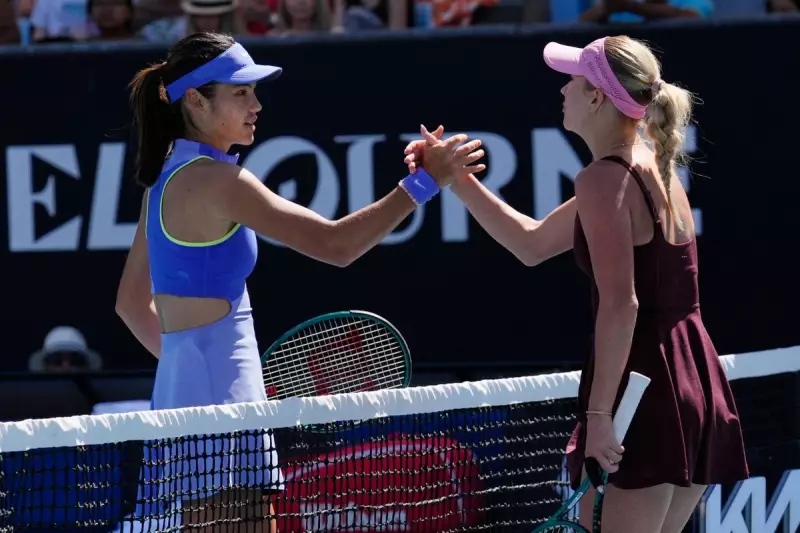
Russian tennis professional Anastasia Potapova has firmly rejected criticism surrounding the striking similarities between her recent declaration of allegiance to Austria and an earlier announcement made by fellow player Daria Kasatkina. The world number 55, who recently secured a significant victory over Britain's Emma Raducanu at the Australian Open, insisted there was "nothing wrong" with adopting what she described as "perfect words."
Mirrored Messaging Sparks Social Media Debate
In December, Potapova utilized social media to announce her decision to represent Austria on the international tennis circuit. Observant fans were quick to notice that her statement bore an almost identical structure and phrasing to Kasatkina's March announcement regarding her switch to represent Australia. Potapova's post described Austria as "a place I love, is incredibly welcoming and a place where I feel totally at home" – wording that matched Kasatkina's earlier declaration word for word.
Kasatkina herself acknowledged the parallel on social media platform X with a lighthearted comment: "no, we are not from same agency." This exchange fueled considerable discussion among tennis enthusiasts and media outlets, with many labeling Potapova's approach as unoriginal or lacking authenticity.

Potapova's Unapologetic Defense
Following her first-round victory over Dutch competitor Suzan Lamens at Melbourne Park, Potapova addressed the growing controversy directly with reporters. "Well, I don't find anything wrong with that because you cannot say it in a better way," she explained after her 3-6 7-5 6-2 triumph. "And why not? It was perfect words. I loved it. We loved it with my team, with everyone. So, yeah, we gave it a shot."
The 24-year-old athlete went further to suggest that media outlets had exaggerated the significance of the similarity. "I don't think that it's something terrible happened. I think the media just blew it up just because they didn't like me with the fact of it happening. I mean, who cares about posts, right?" Her comments reflect a pragmatic approach to public communication in the digital age, where social media announcements have become integral to athlete branding.
Broader Context of Nationality Changes in Tennis
Potapova's switch to Austrian representation occurs within a wider trend of Russian-born tennis players altering their competitive nationalities in recent years. This movement has been particularly pronounced since the 2022 invasion of Ukraine, which led to bans preventing Russian and Belarusian athletes from competing under their national flags in many international tournaments.
Notable players who have made similar transitions include:
- Daria Kasatkina (now representing Australia)
- Elena Rybakina (now representing Kazakhstan)
- Kamilla Rakhimova (now representing Uzbekistan)
- Polina Kudermetova (now representing Uzbekistan)
These changes often involve complex considerations beyond athletic competition, including travel restrictions, sponsorship opportunities, and geopolitical factors affecting international sports participation.
Australian Open Progress Amid Controversy
Despite the surrounding discussion about her nationality announcement, Potapova has demonstrated impressive form on the court at the Australian Open. Her victory over former US Open champion Emma Raducanu secured her place in the tournament's third round, marking a significant achievement in her professional career.
The timing of these parallel announcements – with Kasatkina's coming in March and Potapova's in December – has created an intriguing narrative within the tennis community. While some critics view the similarity as lacking originality, Potapova maintains that the shared wording simply represents the most effective way to communicate her genuine connection to her new representative nation.
As the Australian Open progresses, all eyes will remain on Potapova's performance both on and off the court, with her straightforward approach to the controversy potentially setting a precedent for how athletes address public perception in an era of heightened social media scrutiny.