Australian tennis icon Pat Rafter has delivered a blunt response to several contemporary stars who have voiced frustration about what they perceive as intrusive filming practices at the Australian Open, comparing the experience to being treated like "animals in the zoo." The debate intensified this week following high-profile complaints from top-ranked players about a perceived lack of private spaces at Melbourne Park.
Current Stars Voice Privacy Concerns
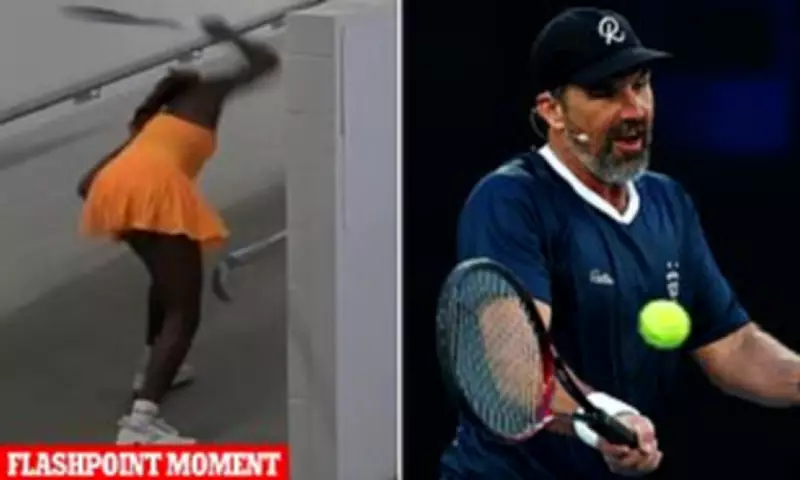
The controversy erupted when American sensation Coco Gauff publicly questioned tournament organisers after broadcast footage captured her smashing a racquet in a private moment following her quarter-final defeat to Elina Svitolina on January 27. Gauff expressed particular frustration that she had deliberately sought out what she believed was a camera-free area to vent her emotions, only to discover the incident had been televised globally.
"I have a thing with the broadcast," Gauff stated during her post-match press conference. "I tried to go somewhere where I thought there wasn't a camera, because I don't like breaking racquets. I went somewhere where I thought they wouldn't broadcast it, but obviously they did. Maybe some conversations can be had."

Swiatek and de Minaur Echo Similar Sentiments
World number two Iga Swiatek subsequently amplified these concerns with particularly vivid language, questioning whether players were being afforded appropriate privacy. "The question is, are we tennis players...or are we animals in the zoo where they are observed even when they poop, you know?" Swiatek remarked. "OK, that was exaggerating obviously, but it would be nice to have some privacy."
Australian hope Alex de Minaur found himself in a similar situation when cameras captured his animated discussion with his coaching team following his defeat to world number one Carlos Alcaraz. These incidents have led multiple competitors to express feelings that they are participating in what resembles a reality television show rather than a prestigious tennis tournament.
Rafter's Pragmatic Perspective
Two-time Grand Slam champion and former world number one Pat Rafter offered a contrasting viewpoint during an appearance on Nova FM's Jase & Lauren show. The Australian legend suggested players should exercise greater awareness about where they choose to express their frustrations, particularly highlighting the locker room as a designated private space.
"Well, there is a safe space... and that's your locker room if you want to unload," Rafter stated. "They can't really have cameras in there, can they? I said to one of the players that it's fine to let the emotion out on the court too, because if you're getting really frustrated, and she (Gauff) was getting her ass kicked...she just couldn't find a way back in...then let that frustration out."
Broadcast Revenue and Player Responsibility
Rafter further emphasised the financial relationship between tournament broadcasting and player earnings during his radio interview. When co-host Clint Stanaway noted that "players also make money out of the broadcast," Rafter responded succinctly: "Exactly." This exchange underscored the commercial realities of modern professional tennis, where media rights contribute significantly to prize money and player incomes.
The Australian icon also shared personal insights about managing on-court emotions during his own competitive career. "Sometimes, at the end of the first set, just demolish (a racquet) and then it just clears everything," Rafter explained. "For me, it was a reset. If you continually keep smashing your racquet as the sets go along, that's not great, but it's about getting the anger out."
Historical Context and Proposed Solutions
This is not the first time the Australian Open's comprehensive coverage has sparked controversy. In 2019, respected tennis journalist Ben Rothenberg famously described the tournament as "the Orwellian Open" due to its all-encompassing filming approach. The current debate has reignited discussions about balancing fan access with player privacy in the digital broadcasting era.

Following Gauff's much-publicised incident, former US Open champion Andy Roddick proposed practical solutions on his Served podcast. "Can she go somewhere where she can just detonate?" Roddick asked. "Also, can there be a unisex place for people to have a private conversation and/or break something?" These suggestions highlight growing calls for tournament organisers to designate specific camera-free zones where players can manage emotions without surveillance.
The ongoing discussion reflects broader tensions in professional sports between media obligations, commercial interests, and athlete wellbeing. As broadcasting technology continues to evolve, finding appropriate boundaries for player privacy remains a significant challenge for tournament directors and governing bodies worldwide.