Unforgettable Finale Caps Forgettable Women's Australian Open
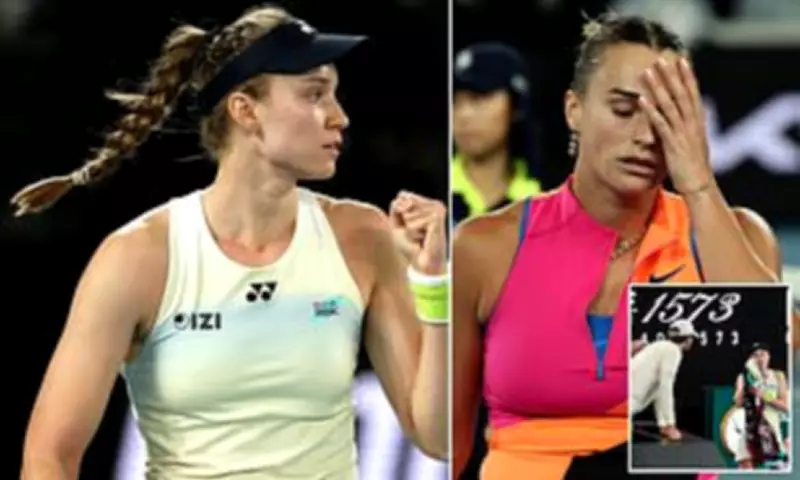
A tournament that had largely failed to capture the imagination produced a truly memorable climax as Elena Rybakina staged a remarkable comeback to defeat world number one Aryna Sabalenka in a pulsating Australian Open final. The match, brimming with raw power and nerve-shredding tension, saw Rybakina recover from a break down in the deciding set to secure a 6-4, 4-6, 6-4 victory and her second Grand Slam title.
A Triumph Marred by Controversial Presence
While Rybakina's achievement deserves celebration, her triumph was overseen by a figure whose presence prompts significant unease. Her coach, Stefano Vukov, was banned by the WTA last year for abuse of authority and abusive conduct towards the player. An investigation revealed Vukov had called Rybakina "stupid" and "retarded," and told her she would "still be picking potatoes in Russia without him." Although his ban was reduced after arbitration, his return to her coaching box casts a shadow over her victory.
Rybakina has consistently defended Vukov publicly, even refusing to take a photo with WTA CEO Portia Archer after winning the World Tour Finals in November. Their dynamic appears to be one of dependence, with Rybakina frequently consulting him during matches for tactical advice. However, her performance in Melbourne proved, beyond any doubt, that she possesses the talent to succeed independently.

Fire and Ice: A Captivating Rivalry
The final showcased one of tennis's most compelling modern rivalries. Sabalenka, whose every emotion is vividly displayed, represents molten lava, while the ice-cool Rybakina could be described as a polar ice cap. This was their 15th career meeting—neither has faced another opponent more often—with Sabalenka now leading their head-to-head eight matches to seven.
Rybakina's victory was built on her supreme ball-striking and what is arguably the world's finest serve. Her second serve, in particular, demonstrates exceptional force, angle, and control, setting her apart from other power players. She is the only competitor with the necessary weapons to consistently rush and pressure Sabalenka, which she did effectively from the opening game.
Sabalenka's Missed Opportunities and Mental Hurdles
Aryna Sabalenka will rue missed chances after surrendering a 3-0 lead in the final set. Her Grand Slam final record now stands at four wins and four defeats—a 50% success rate that belies her dominance over the rest of the tour. Analysis suggests she could have varied her tactics more; recent defeats for Rybakina came against players like Karolina Muchova and Marketa Vondrousova, who employed slices, drop shots, and volleys to disrupt her rhythm. Although Sabalenka's touch game has improved dramatically, she underutilised this toolbox in the final.
This loss marks her second Australian Open final defeat, following last year's loss to Madison Keys. Combined with her collapses against Coco Gauff in the 2023 US Open and Roland Garros finals, it highlights a pattern where composure deserts her at critical moments. The next step in her evolution is clearly to cultivate greater clarity and tranquillity when championships are on the line.
Doubles Delight for British Contingent
In the men's doubles final, there was success for British tennis as Liverpool's Neal Skupski, partnering American Christian Harrison, claimed the title in their first Grand Slam together. The 36-year-old Skupski teamed up with Harrison after his previous partner, fellow Brit Joe Salisbury, took a break from tennis due to anxiety. Their victory adds a positive British footnote to the tournament's concluding narrative.
Elena Rybakina's Australian Open win solidifies her status as a major force in women's tennis. Her powerful game is undeniable, but the controversy surrounding her coaching situation ensures this victory will be remembered for more than just the breathtaking tennis displayed on Rod Laver Arena.