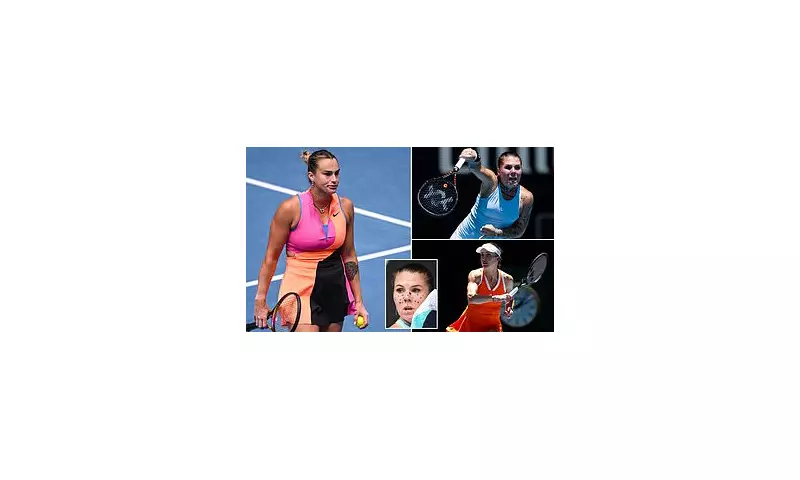
World number one Aryna Sabalenka has firmly rejected calls for Russian and Belarusian tennis players to be excluded from professional tournaments due to the ongoing conflict in Ukraine. The Belarusian star, who recently progressed to the third round of the Australian Open, emphasised her wish for peace while stating she wants to concentrate solely on tennis during competitions.
Ukrainian Players Voice Strong Opposition
On Tuesday, Ukrainian tennis professional Oleksandra Oliynykova publicly urged the WTA Tour, ATP Tour, and Grand Slam championships to implement bans against Sabalenka and other athletes from Russia and Belarus. Following her defeat to defending Australian Open champion Madison Keys at Rod Laver Arena, Oliynykova expressed frustration that tennis hasn't followed other sports in disqualifying players from these nations.
Oliynykova made her stance visible during her Australian Open debut, appearing on court with a floral arrangement painted on her face and wearing a T-shirt bearing the message 'I need your help to protect Ukrainian women and children but I can't talk about it here' during her post-match press conference. The world number 92 revealed disturbing details about conditions in her homeland, describing how her Kyiv apartment shook from a nearby drone strike explosion before she travelled to Melbourne.

Personal Connections to the Conflict
The Ukrainian player shared deeply personal motivations behind her activism, revealing that her father Denis is currently serving on the frontline in the Ukrainian army. 'He is my biggest supporter and has been since childhood,' Oliynykova explained emotionally. 'I'm so proud of him and that's something that's keeping me motivated even more.'
She disclosed that her father had messaged after her match to say she had 'made his dream come true' by competing at the Australian Open, adding that her ranking has improved by over 200 places since he joined the military. Oliynykova expressed concern that international attention is waning as the conflict approaches its fourth anniversary in February, despite ongoing severe conditions in Ukraine including widespread electricity, water, and heating shortages.
Sabalenka's Consistent Position
Sabalenka, who comfortably defeated Chinese qualifier Zhuoxuan Bai 6-3, 6-1 to advance in the tournament, maintained the position she has expressed since the conflict began. 'Well, I've spoken a lot about that before. Obviously, I want peace,' the reigning Australian Open champion stated firmly. 'If I could change anything, I would definitely do that. Other than that, I have nothing else to say.'
When pressed further on the political dimensions of her participation, Sabalenka responded bluntly: 'Listen, I am here for tennis, it is a tennis event. I've said it enough in the past, I just don't want to talk politics here.' The Belarusian arrived in Melbourne having secured her second consecutive Brisbane International title two weeks earlier, where she defeated Ukrainian star Marta Kostyuk in a final marked by a frosty trophy presentation after Kostyuk refused to acknowledge her opponent.
Wider Tennis Community Responses
Fellow Ukrainian player Elina Svitolina later supported Oliynykova's right to use her platform to raise awareness about the conflict, though she acknowledged the tennis tours have already made their decisions regarding Russian and Belarusian participation. 'The war has been ongoing for four years and we've talked about it many, many times,' Svitolina commented after her second-round victory. 'For me, now it's gone, the topic. The stance has been taken already. Decisions have been made by the WTA and ATP Tours.'
The Embassy of Ukraine in Australia and New Zealand publicly praised Oliynykova's activism, posting on social media: 'Many thanks to Oleksandra Oliynykova for using her voice at AO to make an important statement. Russian and Belarusian athletes should not be allowed to compete in reputable international competitions while Russia continues to kill Ukrainians and leave them freezing to death.'

This ongoing debate occurs against the backdrop of tournament rules prohibiting political statements at competition venues, creating complex tensions between athletes' personal experiences, professional responsibilities, and the wider geopolitical context affecting international sport.