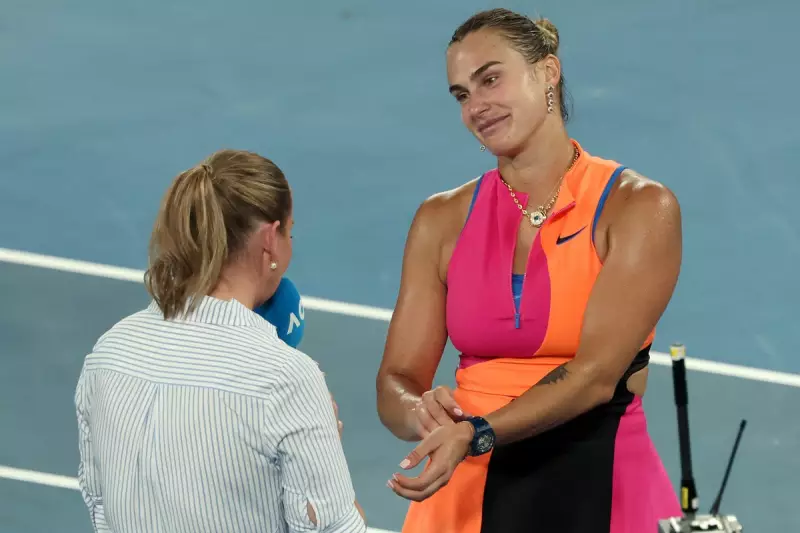
Belarusian tennis star Aryna Sabalenka has voiced her frustration and confusion over the Australian Open's prohibition of wearable fitness trackers on court, urging tournament organisers to reconsider their stance. The world number two was instructed to remove her Whoop device during matches at Melbourne Park, despite having received approval from the International Tennis Federation (ITF) for its use.
Grand Slam Policy Clash with Tour Approvals
Sabalenka, alongside fellow top players Carlos Alcaraz and Jannik Sinner, has been spotted wearing the Whoop fitness tracker on her wrist throughout the tournament. However, all three athletes were told to remove the devices as they have not been authorised by the grand slam organisers. This creates a significant policy discrepancy, as the WTA has maintained a partnership with Whoop since 2021, and the ATP approved their use in 2024.
Tennis Australia confirmed that wearable wrist technology is currently not permitted at the Australian Open or other grand slam events. A spokesperson stated, "Wearables are currently not permitted at grand slams. The Australian Open is involved in ongoing discussions on how this situation could change."

Sabalenka's Health Monitoring Concerns
Following her quarter-final victory over Iva Jovic, Sabalenka expressed her bewilderment at the decision. "The reason why I was wearing that on court is because we received the email that we got approval from the ITF to wear this device," she explained. "I didn't know that grand slams hadn't come to a conclusion. I don't understand why, because the whole year we are wearing, on WTA tournaments, all the tournaments I play we wear Whoop. It's just for tracking my health."
The reigning US Open champion emphasised the practical benefits of the technology for athlete welfare, adding, "I don't understand why grand slams are not allowing us to wear it, and I really hope that they will reconsider the decision and let their players track their health monitor."
Multiple Players Affected by Enforcement
The enforcement of the ban has affected several high-profile competitors during the tournament's crucial stages:
- Jannik Sinner was ordered to remove his Whoop device, which was concealed beneath his wristband, before his fourth-round match against Luciano Darderi
- Carlos Alcaraz was stopped from wearing his device by a tournament official after it was noticed during a match
- Sabalenka had her tracker removed earlier in the competition
Player Testimonies Highlight Practical Benefits
Sabalenka, who serves as a Whoop ambassador, has previously detailed how the technology assisted her recovery during her 2024 US Open title campaign. In a WTA-produced video, she explained that the band monitored her stress levels between matches, with data advising her to take rest days when she entered the "red zone."
Sinner, who endured challenging conditions during his third-round victory, clarified his intended use of the technology. "There is certain data what we would like to track a little bit on court," he said. "It's not for the live thing. It's more about what you can see after the match. These are datas what we would like to use also in practice sessions, because from that you can practice with the heart rate, how many calories you burn, all these kind of things."
Industry Reaction and Future Discussions
The controversy has drawn reaction from the technology sector, with Whoop founder and CEO Will Ahmed commenting on social media platform X after Alcaraz was caught wearing the device. "Ridiculous. Whoop is approved by the International Tennis Federation for in-match wear and poses no safety risk. Let the athletes measure their bodies. Data is not steroids!" he posted.
Tennis Australia has indicated that discussions are ongoing regarding potential changes to the policy, suggesting the possibility of future revisions to accommodate athlete health monitoring technology. The organisation's spokesperson confirmed, "The Australian Open is involved in ongoing discussions on how this situation could change."

The incident highlights the growing tension between traditional tournament regulations and modern sports technology, with players increasingly relying on data-driven insights to optimise performance and recovery during demanding grand slam competitions.