Australian Open Final Rematch: Sabalenka and Rybakina's Divergent Journeys Converge
Three years have passed since Aryna Sabalenka and Elena Rybakina delivered what many consider an instant classic in the Australian Open final. That dramatic 2023 encounter, filled with breathtaking ball-striking and intense competition, suggested both players were destined to dominate the grand slam landscape for years to come. Instead, their paths diverged significantly, making Saturday's championship rematch at Melbourne Park particularly compelling.
Contrasting Trajectories Since the 2023 Classic
For Sabalenka, that initial victory proved transformative. The Belarusian powerhouse has since established herself as the undisputed world number one, capturing four grand slam titles and reaching seven consecutive hard-court major finals. Her remarkable consistency and mental fortitude have become hallmarks of her game, though questions about her temperament in championship matches persist.
Rybakina's journey proved more turbulent. The Russian-born Kazakhstani player, who won Wimbledon in 2022, experienced frustrating periods of illness and injury following her Australian Open defeat. Her progress was further complicated by the suspension of her long-term coach, Croatian Stefano Vukov, amid investigations into potential breaches of the WTA's Code of Conduct and allegations of abusive behaviour. Vukov, who denied any wrongdoing, successfully appealed his suspension and returned to the tour in August.

Remarkable Resurgence and Statistical Significance
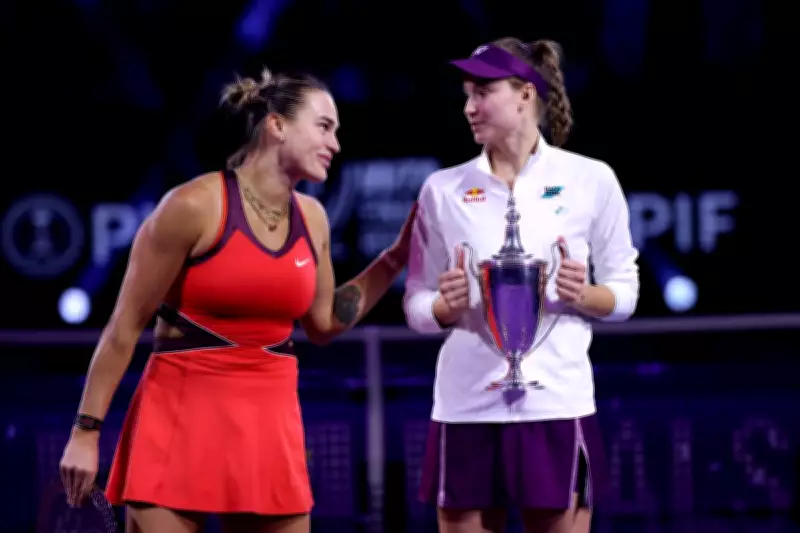
Since Wimbledon, no player has won more matches than Rybakina. Her late-season surge carried her to the WTA Finals as a last-minute qualifier, where she defeated Sabalenka to claim the largest single payday in women's tennis history – a staggering £3.98 million prize. That victory served as a powerful reminder of her championship credentials.
Both players arrive at this final having not dropped a single set throughout the tournament, becoming the first pair to achieve this feat in a grand slam final since Serena and Venus Williams at Wimbledon in 2008. They also represent the first duo to progress from the WTA Finals championship match to the Australian Open final since the year 2000.
The Mental Battle: Sabalenka's Final Frontier
While Sabalenka's technical improvements are undeniable – particularly her enhanced variety and court coverage – questions about her big-match temperament remain. Since the beginning of 2025, her record in finals stands at 5-5, with notable meltdowns in defeats to Madison Keys at the Australian Open and Coco Gauff at Roland Garros defining those matches.
"I actually know what was wrong in all of those finals that I played and I lost," Sabalenka revealed after her semi-final victory over Elina Svitolina. "Last year was lots of lessons, lots of things to learn about myself, and it's definitely not gonna happen again this season."
The world number one believes she has turned a psychological corner, acknowledging that grand slam finals are inherently challenging and that opponents exist to make them difficult. "Right now my mentality is like, I'm ready to do whatever," she declared.
Rybakina's Serve: The Ultimate Weapon and Potential Vulnerability
For Rybakina, success hinges substantially on her explosive serve and flat, destructive groundstrokes that can overwhelm even the most aggressive opponents. She has won eight consecutive matches against top-10 opponents since the WTA Finals, including victories this week against Iga Swiatek and Jessica Pegula.
However, her serve has shown vulnerability at critical moments. During her semi-final against Pegula, Rybakina was broken twice when serving for the match. Her first-serve percentage dipped below 50% in the quarter-final against Swiatek – a statistic she cannot afford to replicate against Sabalenka's relentless pressure.
"The serve, quite often it might not work as much as I want, and you need to be ready to win with other aspects of your game," Rybakina acknowledged. "I think now I'm just trying to stay more calm in these situations, trying to think, adjust during the match. For now, it's been working."

Different Players, Different Conditions, Same High Stakes
The conditions in Melbourne differ significantly from Riyadh, where Rybakina produced a masterclass to defeat Sabalenka 6-3, 7-6 (7-0) under a roof and at altitude during the WTA Finals. This environmental contrast adds another layer of complexity to their rematch.
Both players recognise how much they have evolved since their initial encounter. "Me and her, we both are different players," Sabalenka observed. "We went through different things. We're much stronger mental and physically, and we're playing better tennis now."
Their 2023 final lasted two and a half absorbing hours, producing one of the most memorable grand slam finals in recent memory. This year's tournament has seen limited drama since the fourth round, with only one match progressing to a deciding set. The stage is perfectly set for Sabalenka and Rybakina to deliver another classic encounter that could define both their careers and the current era of women's tennis.