Spanish Tennis Star Confronts Rowdy Spectators During Tense Australian Open Victory
Alejandro Davidovich Fokina has launched a scathing attack on a group of "ignorant, drunk" fans who disrupted his dramatic five-set triumph against Reilly Opelka at the Australian Open on Wednesday. The world number fourteen's hard-fought victory was marred by unsavoury scenes as he directly confronted spectators during a heated fourth-set exchange.
Match Tensions Boil Over Into Spectator Confrontation
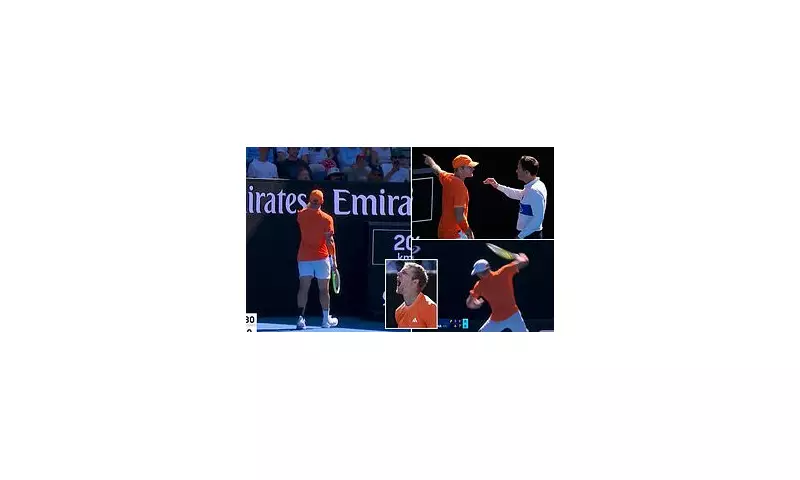
Despite beginning the match strongly by securing the first two sets, Davidovich Fokina's composure began to unravel during the third set. After falling behind 6-5, the Spaniard violently smashed his racket into the ground, earning himself an official code violation from the chair umpire. This incident appeared to embolden a section of the crowd, who began heckling the 26-year-old player from their baseline positions.
During a subsequent changeover, Davidovich Fokina approached the chair umpire and was overheard complaining about "zero respect" from the spectators. He continued pleading with the official about the fans' conduct, receiving the advice: "Don't get into it." However, tensions escalated dramatically when Davidovich Fokina trailed 2-1 in the fourth set.

Direct Confrontation Erupts During Crucial Match Phase
In a remarkable interruption to play, Davidovich Fokina stopped proceedings just as Opelka prepared to serve and stormed toward a group of rowdy fans seated in the front row behind the baseline. The Spaniard furiously waved his finger at the spectators before engaging in a heated verbal exchange, prompting the chair umpire to leave his seat and physically intervene.
TNT Sports commentators revealed that Davidovich Fokina believed a supporter had made an offensive hand gesture toward him. The chair umpire subsequently issued a formal warning to the disruptive fans before addressing the entire 5,000-capacity stadium through the public address system.
"Please, ladies and gentlemen, for everyone in the stadium, keep it fair for both our athletes," the official announced. "They are trying their best out here. We're playing a tennis match."
Victory Secured Amid Lingering Resentment
The umpire's intervention appeared to temporarily calm the situation, allowing Opelka to level the match at 2-2. However, a resilient Davidovich Fokina regrouped magnificently, eventually securing a 3-2 lead in the decisive fifth set. The Spaniard saved two critical break points before emphatically breaking his opponent's serve at 4-5 to claim victory.
His celebration was characteristically passionate, involving throwing his racket toward the centre of the court while shouting triumphantly toward the crowd. During his post-match press conference, Davidovich Fokina remained visibly angered by the spectators' behaviour, specifically calling out "four ignorant drunks" whom he claimed he could do nothing about.
Historical Parallels With Previous Court Incidents
This incident echoes similar crowd disturbances that have occurred on the same court approximately twelve months earlier. American player Danielle Collins faced comparable heckling during her match against Australian Destanee Aiava, eventually responding to her critics with provocative celebrations after securing victory.
Collins famously smacked her backside and blew kisses toward the booing spectators before thanking the "super drunk" fans for contributing to her holiday funds through their ticket purchases. "During the match I was like, while I'm out here I might as well take that big fat pay check," Collins remarked during her on-court interview. "We love a five-star vacation, so a big part of that will go towards that."
The recurrence of such incidents raises questions about spectator management at major tennis tournaments, particularly regarding alcohol consumption and behavioural expectations in stadium environments. Tournament organisers may face increasing pressure to implement stricter measures to protect players from similar disruptions during high-pressure matches.