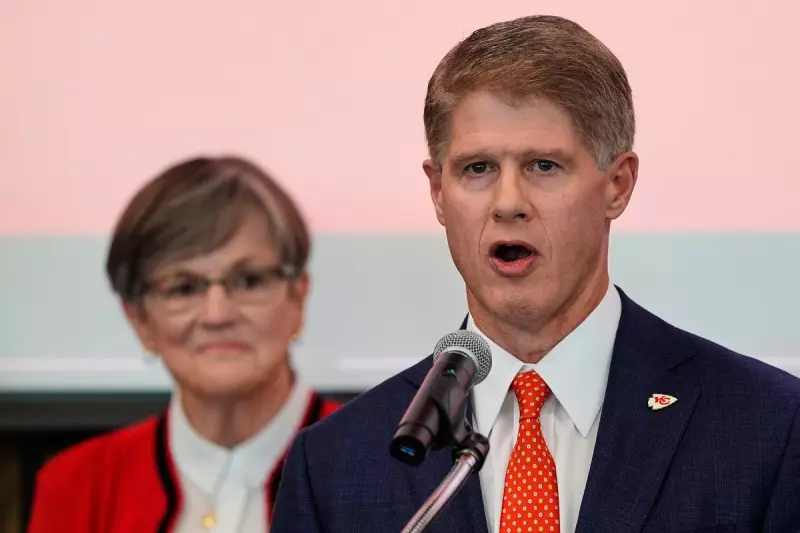
The sporting landscape of Kansas City is undergoing a seismic shift, placing the future of its baseball franchise squarely in the spotlight. The Kansas City Chiefs have confirmed a monumental move, agreeing to leave their long-time Missouri home for a new, state-of-the-art $3 billion domed stadium to be built across the state line in Kansas.
A Cross-State Rivalry for Sporting Prestige
This decision by the Chiefs, announced on Monday 23 December 2025, immediately turns attention to the Kansas City Royals. The baseball team faces an almost identical crossroads regarding its future home. One certainty is that the Royals will not play at Kauffman Stadium once their lease expires in January 2031. Owner John Sherman has historically favoured a downtown ballpark, but those plans have been repeatedly stalled by political wrangling and community opposition.
A significant setback occurred last year when voters in Jackson County, Missouri, decisively rejected extending a sales tax that funded Kauffman Stadium's upkeep and was earmarked to contribute to a new ballpark. The Royals must now decide whether to persist with the downtown vision, explore a new site elsewhere in Missouri, or follow their NFL neighbours and relocate to Kansas.

The Billion-Dollar Battle for Teams
The financial packages offered by both states are at the heart of this interstate competition. To retain the Chiefs at Arrowhead Stadium, Missouri lawmakers authorised bonds in June covering up to 50% of new stadium costs, plus $50 million in tax credits. This package remains available for the Royals.
However, Kansas has presented an even more aggressive offer. Its bond package, which would not directly tax residents but be repaid by state sales and liquor taxes from the project area, can cover up to 70% of total costs. For the Chiefs, this translates to Kansas issuing over $2.4 billion in bonds, covering roughly 60% of a total project expected to exceed $4 billion. This constitutes the largest public subsidy ever for a U.S. stadium project.
Missouri Governor Mike Kehoe expressed frustration, stating, "Kansas is about to leverage... Kansas taxpayer revenue to make this deal happen. I can’t see where the numbers would pencil on that, as a business person." He emphasised the state's desire to keep the Royals, telling the team, "I’m in the driver’s seat now. I’m THE team."
Potential New Homes and Local Opposition
The Royals have evaluated multiple downtown Kansas City sites, all facing issues from traffic to local support. They have also considered a stadium district in Clay County, Missouri, north of the Missouri River.
Recently, momentum appears to be building for a move to the Kansas suburb of Overland Park, specifically the Aspiria Campus—a site where a Royals affiliate already holds the mortgage. This plan has, however, met resistance from residents in the affluent neighbouring suburb of Leawood, Kansas.
The Chiefs' agreement, signed by owner Clark Hunt, mandates a stadium with at least 65,000 seats be ready by 1 August 2031, with a minimum 30-year tenancy. The deal also includes a $300 million training complex in Olathe, Kansas, and a commitment to at least $1 billion in ancillary development like retail and entertainment spaces.
For local fans like John Mosley, a 65-year-old from Kansas City, Missouri, the shift is palpable. "I’m noticing that most things are going over into Kansas," he observed. "It just seems like everything is moving." As the Chiefs finalise their historic relocation, the pressure mounts on the Royals to navigate a complex web of finance, politics, and fan sentiment to secure their own future.