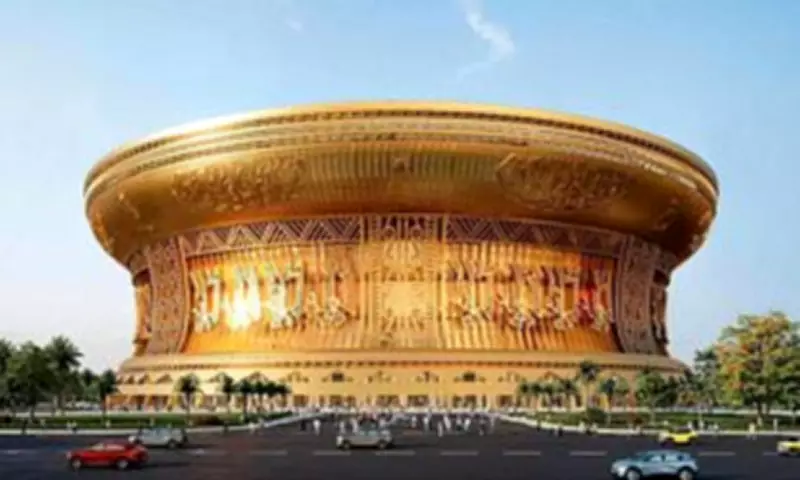
Vietnam has commenced construction on what is set to become the world's largest football stadium, with newly released images showcasing the proposed 135,000-capacity venue. The Hanoi Government formally approved plans for the Trong Dong Stadium in December, as part of the expansive Olympic Sports City project, a residential and sporting district with an estimated total cost of £28 billion.
A Monumental Sporting and Cultural Hub
The stadium is designed to be the centrepiece of this ambitious development. Officials have stated that the venue will host large-scale sports events, cultural gatherings, and socio-political functions, while also playing a crucial role in elevating Vietnam's international profile. According to project organisers, iconic stadiums such as Wembley in the UK, the Bird's Nest in China, and Qatar's Lusail Stadium have demonstrated how such structures can significantly boost national prestige, and Vietnam aims to follow this precedent.
Architectural Design Rooted in Tradition
The architecture of the Trong Dong Stadium is inspired by the Dong Son bronze drum, a symbol of ancient Vietnamese civilisation that represents community spirit, strength, and longevity. This design approach seeks to seamlessly blend Vietnam's rich traditional culture with a modern, state-of-the-art venue, thereby creating an iconic landmark that reflects the nation's heritage and aspirations.

Surpassing Global Stadiums in Capacity
Upon completion, the Trong Dong Stadium will surpass the current record-holder, North Korea's Rungrado 1st of May Stadium, which has a seated capacity of 114,000 spectators. It will also exceed Morocco's Hassan II Stadium, which is under construction ahead of the 2030 World Cup and is projected to hold around 115,000 people. This makes Vietnam's new stadium the largest of its kind globally.
Strategic Vision for National Development
The official website for the Trong Dong Stadium highlights the growing urgency for large-scale, integrated, and internationally standardised sports facilities in Vietnam. This need is particularly pressing as the country seeks to deepen its involvement in regional and global sporting events. As the political, cultural, and diplomatic centre of Vietnam, Hanoi is taking the lead in establishing national-level sports institutions that align with sustainable development and international integration goals.
In this context, the stadium is being developed with a strategic vision that extends beyond its primary sporting function. It is intended to become an architectural and cultural icon that represents Vietnam in the new era. Constructing a stadium of comparable scale and quality to other world-renowned landmarks is viewed as a significant step in enhancing national infrastructure and strengthening Vietnam's position on the global sports map.
Innovative Features and Environmental Considerations
The stadium is reported to feature the world's largest retractable roof, alongside a strong emphasis on energy-saving solutions and the use of environmentally friendly materials. These innovations underscore a commitment to sustainability and modern engineering excellence.
Hosting Major International Events
The venue is expected to provide Vietnam with a robust foundation to bid for and host major international events, including the FIFA World Cup, the Olympic Games, and various continental competitions. This capability could further solidify the country's standing in the international sports community.
Project Timeline and Components
A ground-breaking ceremony was held in December to mark the start of construction. The Olympic Sports City project is divided into four distinct zones, encompassing not only the stadium but also a comprehensive transportation system, a new urban area, and additional sporting facilities. The stadium itself is scheduled for completion by 2028, with the overall project expected to be finished by 2035.