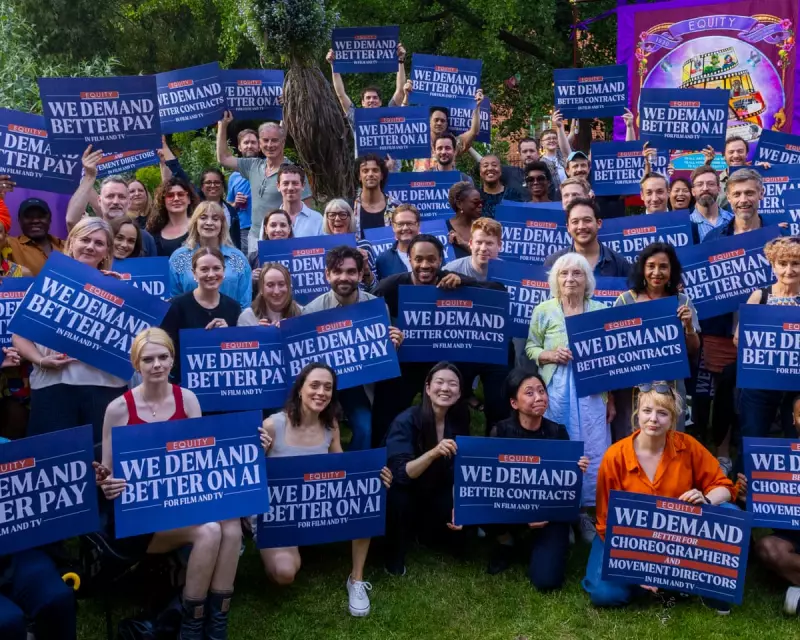
In a powerful show of resistance, performing arts union Equity has revealed that its members have voted overwhelmingly to refuse the practice of being digitally scanned on set, a move aimed at curbing the unchecked use of artificial intelligence in the creative industries.
Overwhelming Mandate for Action
In an indicative ballot, a staggering 99% of the 7,000 Equity members polled voted in favour of refusing body scans. This common practice involves capturing an actor's likeness for potential future use, often without clear agreements on how that digital data will be employed. The ballot saw a strong turnout of 75%, demonstrating the depth of concern within the profession.
Equity's General Secretary, Paul Fleming, stated that the result signals a workforce prepared for industrial action. "Artificial intelligence is a generation-defining challenge," Fleming said. "And for the first time in a generation, Equity's film and TV members have shown that they are willing to take industrial action." He emphasised that with union members making up over three-quarters of artists on major UK film and TV agreements, this stance has the power to significantly disrupt productions.

Stars Rally Behind the Campaign
The push for protections has been backed by some of the UK's most prominent actors, who have urged their fellow union members to take a stand. Hugh Bonneville, Adrian Lester, and Harriet Walter all publicly supported the campaign to enshrine AI safeguards in union agreements.
Bonneville argued that an actor's likeness and voice must not be "exploited for the benefit of others without licence or consent." Adrian Lester highlighted the vulnerability of those starting their careers, noting that new actors often find it difficult to challenge demands for scanning on set.
Actress Olivia Williams articulated the fears of many performers in an interview with The Guardian last October. She revealed that actors are frequently pressured into body scans without any meaningful say over the subsequent use of their data. Williams contended that performers should have the same control over their scanned image as they do over nudity clauses, criticising contract terms that grant studios seemingly perpetual rights to a digital likeness "on all platforms now existing or yet to be devised throughout the universe."
Path to Legal Protection and Industry Negotiations
While the current ballot is indicative and does not yet provide legal protection for actors who refuse scans, it sets the stage for formal negotiations. Equity has announced it will write to Pact, the trade body representing UK producers and production companies, to demand new minimum standards.
These standards would cover pay, terms, and conditions specifically related to AI and digital replication. Depending on the outcome of these talks, the union may hold a formal, legally-binding ballot. Success there would grant actors legal protection if they are pressured to accept scanning on set.
The debate has been intensified by the emergence of the first AI actor, Tilly Norwood, and follows the 2023 Hollywood strikes where AI was a central concern for both writers and actors. They warned that unregulated AI could fundamentally reshape the industry and devalue human creative roles.
This collective action marks a critical moment for the UK's entertainment sector, as it grapples with the ethical and practical implications of rapidly advancing technology on artistic labour and ownership.