Social media platforms have been inundated with sophisticated AI-generated fake news following the reported capture of Venezuelan President Nicolas Maduro, with misleading content amassing tens of millions of views and being shared by high-profile figures.
Hyper-Realistic Fakes Flood Social Feeds
Within hours of an announcement by former US President Donald Trump concerning Maduro's capture on Sunday 11 January 2026, a wave of fabricated media began circulating online. This included hyper-realistic AI-generated photos and videos falsely depicting the arrest and its aftermath.
Elon Musk reposted an AI-generated video, originally from an account called Wall Street Apes, showing Venezuelans crying and thanking Trump. The clip garnered 5.7 million views on X before a community note was added labelling it as AI-generated and misleading. The video contained multiple errors, including incorrect flag patterns and disappearing objects.

Further analysis by BBC Verify's Shayan Sardarizadeh traced the video's origin to a TikTok account named Curious Mind, known for sharing AI content. Despite being removed from TikTok, the video remained live on X.
Prominent Figures Amplify Misinformation
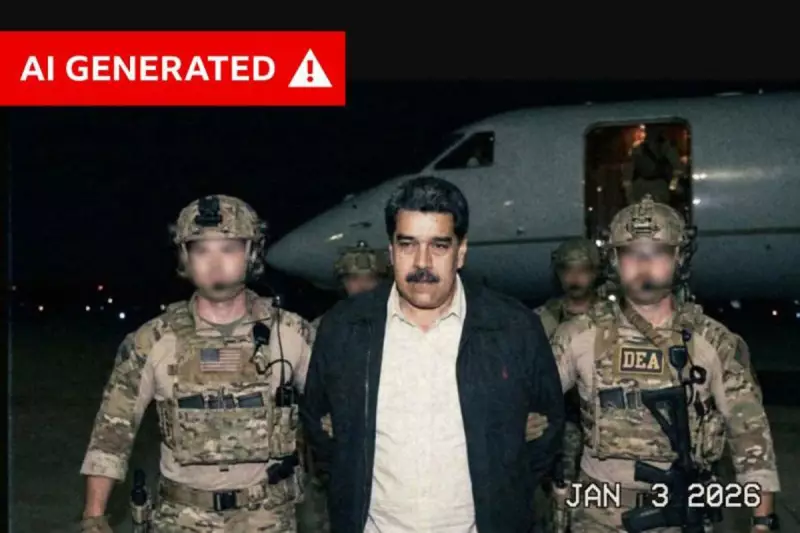
The spread was not limited to anonymous accounts. Vince Lago, the Mayor of Coral Gables in Florida, shared a convincing AI-generated image on Instagram showing Maduro being escorted by US agents. Google's SynthID detection tool later confirmed an invisible AI watermark on the photo.
Musk also shared other "AI slop" videos, including a deepfake of Maduro breakdancing with Trump and another showing the Venezuelan leader in prison with Sean 'Diddy' Combs. The creator of the viral fake photo of Maduro later identified himself to AFP as Ian Weber, a Spanish-based X user with under 100 followers. He stated he created the image using AI software within 20 minutes of Trump's announcement, never expecting it to go viral.
According to a report from misinformation trackers NewsGuard, seven misleading photos and videos linked to the event gained over 14 million views on X alone.
Filling the Information Void with Falsehoods
Experts suggest this deluge of AI fake news exploited an initial lack of verified information. Benjamin Dubow of the Center for European Policy Analysis (CEPA) explained that the shocking news created a high demand for details, which social media users were quick to fill—often with fabricated content.
"Basic media literacy as it existed 20 years ago still applies now," Dubow told The Independent. "It’s a much bigger challenge because the volume of content is hundreds or thousands of times greater." He advised that the public should be most suspicious of content they instinctively agree with.
Sofia Rubinson, senior editor of NewsGuard’s Reality Check, warned: "As AI-generated images and videos improve to the point where visual cues are no longer reliable, it’s more important than ever to approach content on social platforms with skepticism, even when shared by prominent or verified accounts."
The confusion was compounded by the recycling of old, out-of-context footage. Trump himself shared a video on Truth Social claiming to show Venezuelans celebrating Maduro's capture. A reverse image search revealed the clip was actually from a July 2024 protest in Caracas. This same video was reposted by conspiracy theorist Alex Jones to his 4.4 million followers, receiving 2.2 million views.