Europe's Dangerous Reliance on US Technology Exposed
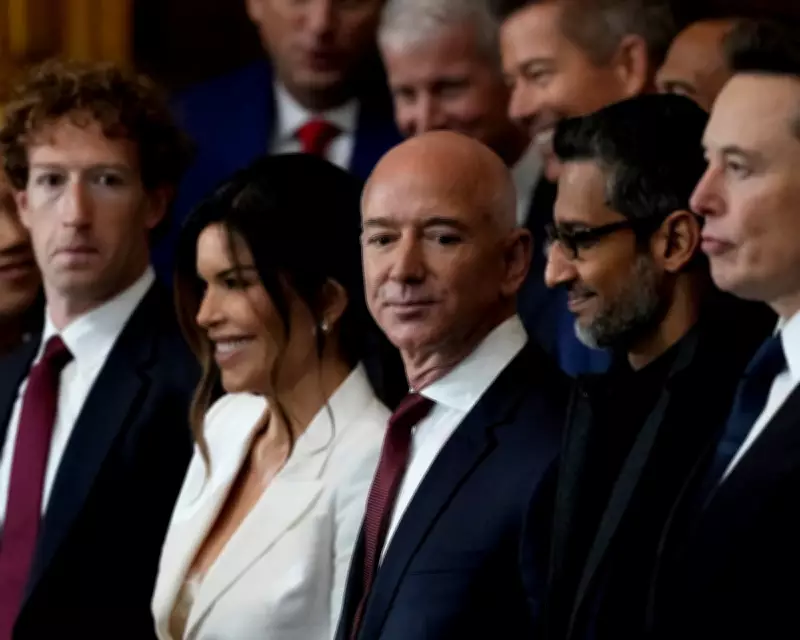
In a stark illustration of Europe's vulnerability, high-profile guests including Mark Zuckerberg, Jeff Bezos, Sundar Pichai, and Elon Musk attended Donald Trump's inauguration in Washington DC on 20 January 2025. This event underscores the deep ties between US tech giants and political power, raising alarms about Europe's digital sovereignty. As Johnny Ryan warns, by trusting US technology, Europe has effectively handed Trump a kill switch over its digital infrastructure, from everyday conveniences to critical defence systems.
The Chilling Reality of US Tech Dominance
The French judge Nicolas Guillou and his colleagues at the international criminal court face severe restrictions due to US sanctions. They cannot use e-commerce, book hotels online, or hire cars, and their smart devices ignore them. European credit cards often fail because the continent lacks a unified EU-wide payments system, relying instead on Visa and Mastercard. Converting euros is fraught with difficulty as transactions pass through dollars, leaving Europeans exposed to Trump's potential to disrupt their digital lives.
This dependence extends beyond consumer tech. Last year, the chairman of the Danish parliament's defence committee expressed regret over purchasing US-made F-35 fighter jets, fearing the US could demand Greenland and threaten to deactivate weapons, leaving Denmark vulnerable to Russian attacks. Spain has since abandoned plans to buy F-35s, highlighting growing security concerns. A decade ago, revelations that US spies recorded millions of European phone calls and bugged leaders' devices should have served as a wake-up call, yet trust in US technology persisted across governments, militaries, businesses, and daily life.

Europe's Path to Digital Sovereignty
Despite these challenges, Europe has a viable path to reclaiming digital sovereignty. Loosening the US grip on word processing, video conferencing, and enterprise software is technically feasible, as veteran tech investor Roger McNamee notes. Much of this technology was perfected decades ago and has since degraded due to monopoly effects. With new coding large language models making it easier to build alternatives, now is an opportune time for Europe to innovate.
Progress is already underway. Austria's military has transitioned to open-source services hosted in Europe, and some German regional governments have followed suit. Danish schools were instructed to abandon Google laptops in 2024 by data protection authorities. The new Dutch government prioritises digital sovereignty, and France has moved 5.7 million public sector workers to Visio, a Zoom alternative running on French infrastructure. The European Commission is developing a system based on Matrix, a European open-source technology enabling communication across apps without ceding control to a single company.
Deep-Seated Challenges and Political Resolve
Europe's real tech hurdles are more profound. First, the EU's 27 member states have diverse business practices and legal requirements, creating friction that stifles startups. The IMF estimates cross-border friction inside the EU is equivalent to a 110% tariff, hindering growth from consumer tech to cloud infrastructure. A recent report by former Italian prime minister Enrico Letta details how this kills innovation. However, a potentially momentous agreement by EU leaders to create a "one market" and "buy European" in strategic sectors like defence, space, clean tech, and AI could signal change.
Second, European startups struggle to access investment and initial public offerings compared to their US counterparts due to fragmented capital markets. A union-wide financing system in development aims to unlock €10tn in savings for investment, offering hope for improvement.
Third, political resolve is crucial. During the Greenland crisis, it was unclear if European leaders stood firm against Trump or if US treasury secretary Scott Bessent intervened to prevent a trade war. Polling shows most western Europeans, including those in the UK, desire less US influence and more EU-level decision-making. Leaders like Friedrich Merz and Giorgia Meloni advocate for economic transformation through deregulation, but enforcing existing data laws rigorously could break the chokehold of Google, Microsoft, and Amazon on the European market.

The Urgent Need for Action
The US tech sector, while an asset, poses a liability due to its dominance in the US economy and Trump's volatile support base. Europe can exploit this vulnerability to undermine Trump's backing. For now, Europe outsources the machinery of its democracy, commerce, and military to US tech firms, effectively giving Trump a kill switch. Before the US president makes further demands or undermines European democracy, leaders must demonstrate they will not capitulate but instead rise and build a resilient digital future. Johnny Ryan, director of Enforce at the Irish Council for Civil Liberties, emphasises that digital sovereignty is an achievable goal if Europe acts decisively.