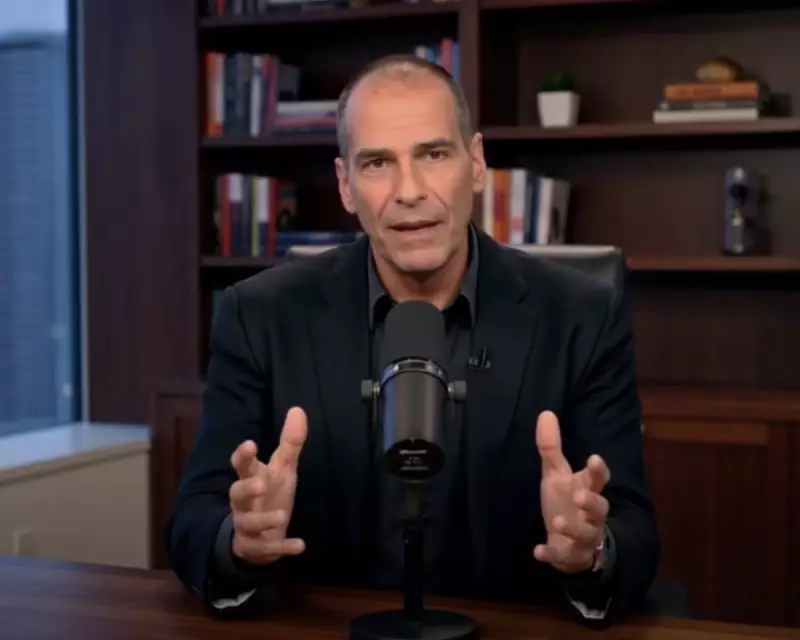
Former Greek finance minister and economist Yanis Varoufakis has issued a stark warning after discovering a flood of AI-generated deepfake videos of himself proliferating across YouTube and social media, depicting him saying things he has never uttered.
The Unsettling Discovery of a Digital Doppelganger
Varoufakis's ordeal began when a colleague sent a congratulatory message about a video talk he had supposedly given on geopolitics. Upon clicking the YouTube link, he grew concerned about his memory. Minutes into the video, he realised something was profoundly wrong. The figure on screen wore a distinctive blue shirt—a gift from his sister-in-law that had never left his island home, let alone been worn in his Athens office. He was witnessing a sophisticated AI deepfake, a digital doppelganger created without his consent.
Since that initial discovery, hundreds of such fabricated videos have spread online. Just this past weekend, a new batch appeared featuring a deepfaked Varoufakis commenting fictitiously on the coup in Venezuela. The videos range from crude to unsettlingly persuasive, mixing plausible statements with outlandish claims. Supporters and opponents alike send them to him, some questioning if he truly said the content, others using them as supposed proof of his folly.

"I find myself in the bizarre position of being a spectator to my own digital puppetry," Varoufakis writes, describing himself as a phantom in a technofeudal machine designed to disempower.
A Futile Battle Against Big Tech Platforms
His first reaction was to demand that platforms like Google (YouTube's parent company) and Meta take the content down. He filled out numerous takedown forms in anger. While some channels were removed after a week or more, they quickly reappeared under different names. He soon gave up the daily battle, finding the process like fighting a Hydra; for every head cut off, more grew back.
This experience forced a shift from rage to contemplation. As a critic who argues big tech has created a new technofeudal order—transforming markets into cloud fiefs and profit into cloud rent—he saw the deepfakes as the ultimate act of feudal enclosure. In this reality, we own nothing: not our data, our social connections, or even our audiovisual identity. Our digital likeness can be appropriated by the new lords of the cloud to sow confusion and drown out genuine dissent.
A Paradoxical Hope: Could Deepfakes Revive Ancient Democratic Principles?
Yet, a sunnier thought emerged from this dystopian reality, one rooted in ancient Athenian democracy. Varoufakis points to the concept of isegoria (ἰσηγορία), which he clarifies is not merely 'free speech' but the right to have one's views judged seriously on their merits, regardless of the speaker's identity or eloquence.
He posits a provocative question: "Might AI deepfakes salvage isegoria from the clutches of our technofeudal dystopia?" If it becomes impossible to verify who is speaking in a video, might we be forced to evaluate the argument itself rather than the speaker's authority? In debasing authenticity, big tech may have inadvertently created a space for this purer form of democratic evaluation.
However, this glimmer of hope is tempered by two colossal advantages retained by tech giants. First, they own the digital agora—the servers, feeds, and algorithms. They can authenticate their own speech while drowning others in noise. Second, their power is structural; their ideology is embedded in the machines that extract data and profit.
The solution, Varoufakis argues, is not to beg for verification but to pursue political action: the socialisation of cloud capital. Until then, he suggests, perhaps the saturation of digital doppelgangers will force the public to stop listening for a familiar voice and start judging arguments on their own terms—a paradoxical shard of hope in a hall of mirrors.