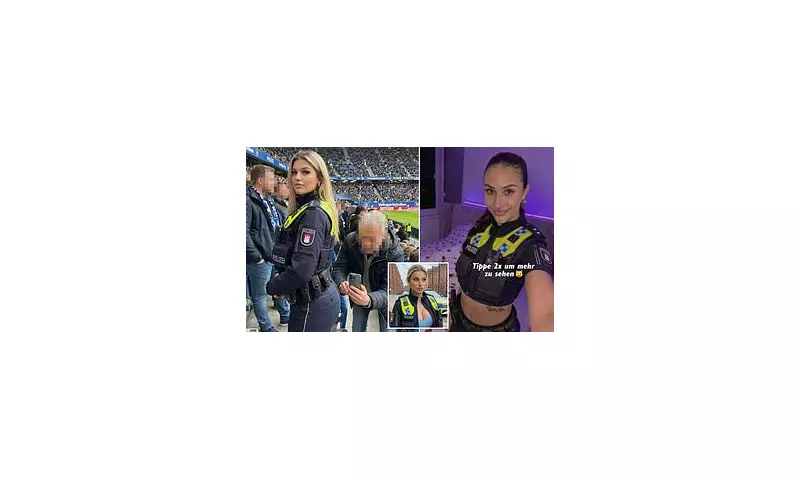
Police in Germany have issued an urgent public warning about a sophisticated online scam that uses artificially generated images of female police officers. The Hamburg force reports a significant increase in fake social media profiles featuring AI-generated deepfakes of attractive women wearing police uniforms.
The Mechanics of the Deepfake Deception
According to officials, these fraudulent accounts are being used to lure predominantly male social media users. The profiles entice individuals to click through to paid websites under the pretence of viewing more realistic images of the AI-generated female cops. Hamburg police confirmed they are receiving a growing number of reports about these deceptive profiles, which falsely claim to depict serving female officers from their department.
Police spokesman Florian Abbenseth strongly condemned the activity, stating: 'Such profiles damage the reputation of the police, which is why we are taking decisive action against them.' The force emphasised that it does not operate any private Instagram accounts for its officers and revealed that legal action against the creators of the AI content is under active consideration.

A New Frontier for Online Fraud
The AI-generated images are described as highly convincing, showing young, attractive women in tight-fitting police uniforms. One widely circulated image features a blonde woman with her jacket partially unzipped, while another shows a fake officer taking a mirror selfie while kneeling. The rise of such easily fabricated yet realistic multimedia content, known as deepfakes, is presenting mounting risks for organisations and individuals worldwide.
In response to the scam, Hamburg police have urged all Instagram users to report any fake social media profiles they encounter. This case highlights a broader, global challenge posed by generative AI technology, which can fabricate convincing images and videos to impersonate real people for fraudulent purposes.
The Global Fight Against Digital Deception
Earlier this year, the United Nations' International Telecommunication Union (ITU) called on companies to adopt advanced tools to detect and stamp out misinformation and deepfake content to combat financial fraud. Bilel Jamoussi, Chief of the Study Groups Department at the ITU's Standardization Bureau, noted a significant drop in trust on social media platforms, stating, 'people don't know what's true and what's fake.'
The ITU advocated for robust standards to fight manipulated media and recommended that content distributors, including social media platforms, use digital verification tools to authenticate images and videos before they are shared. Leonard Rosenthol of Adobe, a company that has been tackling deepfake issues since 2019, stressed the critical need to establish the provenance of digital content. 'We need more of the places where users consume their content to show this information... When you are scrolling through your feeds you want to know: 'can I trust this image, this video,'' he said.
This incident in Germany serves as a stark reminder of the evolving threats in the digital landscape, where AI-powered scams are becoming increasingly sophisticated and difficult for the public to identify.