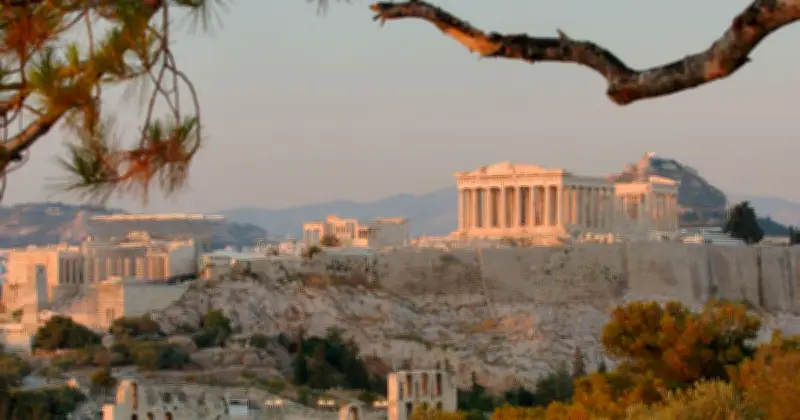
The Parthenon in Athens, one of the world's most famous ancient monuments, has undergone a significant transformation. For the first time in 220 years, a substantial section of scaffolding has been removed following the completion of restoration work. The centuries-old monument, which attracts over 4.5 million visitors annually, now offers a view not seen since the early 19th century.
New Marble Blocks Unveiled
Officially unveiled on Thursday, restorers have slotted two new marble blocks into long-standing gaps on the temple's western end. This is the view visitors see when they first enter the ancient monument in the Greek capital. The restoration of the 25-century-old Parthenon is one of the most meticulous, high-stakes engineering and archaeological projects in human history. It has been ongoing under the supervision of the Acropolis Restoration Service (YSMA) since 1975.
Restoration Techniques
Long-term restoration projects address damage from war, weather, and looting, including the broken outline on the western side. The goal is to stabilise the Parthenon as a perfect ruin using a method called anastylosis. This involves reassembling the monument using its original scattered pieces while introducing new material only when structurally necessary. To repair and reinforce the structure safely, master stonemasons splice damaged ancient blocks with fresh marble cut from the original ancient quarries on Mount Penteli. These are reassembled using titanium rods and clamps, a metal that will never rust or expand, compared with the iron clamps previously used.

Cultural Significance
Culture Minister Lina Mendoni described the sight after the latest restoration as “truly stunning.” She added that the western facade's new stones do more than just fill the gap: “They allow the unique proportions and the geometric perfection of the Parthenon’s western face to be seen once again.” The Parthenon is a former temple dedicated to the Greek goddess Athena. Its decorative sculptures are considered among the high points of classical Greek art, and it is viewed as an enduring symbol of ancient Greece, Western civilisation, and democracy.
Historical Context
It was built in the 5th century BC in thanksgiving for the Greek victory over the Persian invaders during the Greco-Persian Wars. Construction started in 447 BC when the Delian League was at the peak of its power. It was completed in 438 BC, while work on the artwork and decorations continued until 432 BC. During the Morean War, a Venetian bomb struck the Parthenon, which the Ottomans had used as a munitions dump, during the 1687 siege of the Acropolis. The resulting explosion severely damaged the Parthenon.
Visitor Management
Last year, the iconic monument attracted about 4.6 million visitors. To combat overtourism, as roughly half of all visitors arrive before midday, Greek authorities have capped daily attendance at 20,000 visitors via timed-entry slots. The nearby modern museum, which houses ancient artefacts, welcomes over two million visitors annually.