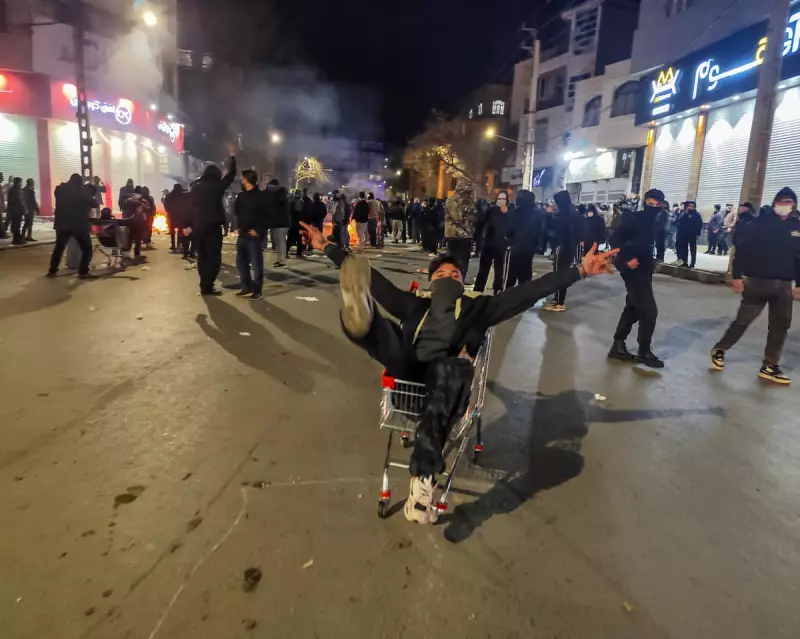
Iran has plunged into a sophisticated and severe digital blackout, now entering its 36th hour, as authorities attempt to quell escalating anti-government protests. Experts describe the move as a "new high-water mark" in state-imposed internet censorship, noting its unprecedented precision and potential to last a considerable time.
A New Level of Digital Disconnection
When the blackout began, an estimated 90% of Iran's internet traffic evaporated. International calls to the country appeared blocked, and domestic mobile services failed, according to Iranian digital rights expert Amir Rashidi. He described the experience for citizens as being akin to living "in the middle of nowhere," with no connection to cellular towers.
This is not the first instance of a nation blocking the internet for political control. Egypt under Hosni Mubarak enacted a six-day blackout during the 2011 Tahrir Square protests, and the Taliban shut down Afghanistan's internet for 48 hours last September. However, the current Iranian shutdown is considered far more severe and advanced than even its own 2019 digital blackout, which was labelled the most "severe disconnection" observed at the time.

Even potential workarounds like Elon Musk's Starlink satellite system, which provided a lifeline during the 2022 protests following Mahsa Amini's death, are reportedly being jammed, though the effectiveness varies by neighbourhood.
Selective Access and Government Communication
What sets this blackout apart is its selective nature. While ordinary Iranians were cut off, the country's Supreme Leader, Ayatollah Ali Khamenei, continued posting on X (formerly Twitter), doing so at least a dozen times in one day to criticise figures like Donald Trump.
Doug Madory, an expert in internet infrastructure, explains this indicates a more fine-tuned approach. The shutdown is sweeping for the public but allows whitelisted access for government communications. This precision, Madory suggests, means Tehran could sustain the blackout for longer without crippling its own operations.
"There are things that are important for the government to do," Rashidi noted. "If they want to put out their propaganda they need to have access to Telegram, they need to have access to Twitter, they need to access Instagram."
A Long-Term Strategy for Control
Both Rashidi and Madory believe Iran has been working for years to develop a national internet system, similar to China's, that would connect domestic users while severing links to the global web. This latest event appears to be a step towards that model, though Rashidi notes sites linked to the national system are currently inaccessible.
The tactic of a whitelist—allowing only approved sites and users—could enable the regime to operate in a "degraded state for an extended period of time," Madory stated. "They want just the bare necessities to be able to communicate and then shut everything else off."
Iran is not alone in refining state control over digital spaces. India is developing a government-managed messaging app to rival WhatsApp, and Russia is promoting a state-backed "super app" akin to WeChat.
However, the immediate consequence in Iran is a profound isolation for its citizens. Based on the sophistication of the shutdown, Madory suspects "this might be for the long haul," warning, "I've been doing this for a while and I think it's going to be a big one."