Prime Minister Declares No Exemptions for Digital Platforms on Child Protection
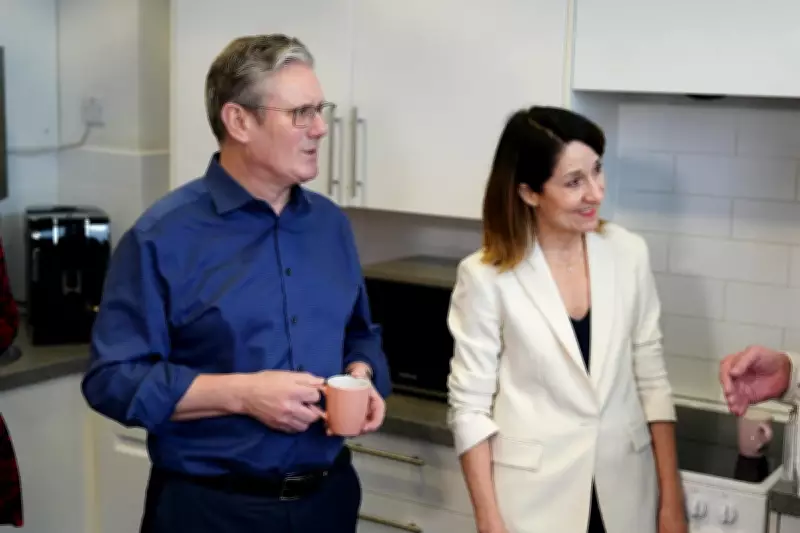
Prime Minister Sir Keir Starmer has emphatically stated that no online platform will receive a "free pass" regarding children's safety on the internet. The declaration comes as the Government unveils comprehensive new plans designed to significantly bolster the protection of young people in digital spaces.
Proposed Measures to Shield Children from Online Harms
The proposed initiatives include preventing children from using virtual private networks (VPNs) to illicitly access pornography and limiting their interactions with online chatbots. Furthermore, the Government plans to launch a formal consultation on potentially banning children from social media platforms entirely and restricting features like infinite scrolling that can promote excessive usage.
Sir Keir, who is scheduled to meet with parents and young people on Monday, will insist that his administration is committed to doing everything within its power to ensure children's safety online. The Government vows to close legal loopholes that have allowed AI chatbots to generate deepfake nude images and is preparing additional curbs on social media companies.

Addressing Past Failures and Future Threats
This action follows a highly publicized dispute earlier this year between Government ministers and tech billionaire Elon Musk. The controversy centered on Musk's Grok AI chatbot, integrated into the social media platform X, which was widely exploited to create fake nude images of women.
Ahead of launching the consultation, Prime Minister Starmer stated: "As a dad of two teenagers, I know the challenges and the worries that parents face making sure their kids are safe online. Technology is moving really fast, and the law has got to keep up. With my Government, Britain will be a leader, not a follower, when it comes to online safety."
"The action we took on Grok sent a clear message that no platform gets a free pass. Today we are closing loopholes that put children at risk, and laying the groundwork for further action. We are acting to protect children’s wellbeing and help parents to navigate the minefield of social media."
Legislative Framework and Consultation Process
The consultation on new social media protections is set to launch in March and will be directly informed by feedback from parents and children. Ministers also intend to introduce powers through the forthcoming Children’s Wellbeing and Schools Bill, enabling the law to be updated rapidly in response to evolving online behaviors.
Concurrently, amendments to the Crime and Policing Bill will be utilized to mandate that chatbots protect users from illegal content. Technology Secretary Liz Kendall emphasized the urgency: "I know that parents across the country want us to act urgently to keep their children safe online. That’s why I stood up to Grok and Elon Musk when they flouted British laws and British values."
"We will not wait to take the action families need, so we will tighten the rules on AI chatbots and we are laying the ground so we can act at pace on the results of the consultation on young people and social media. We are determined to give children the childhood they deserve and to prepare them for the future at time of rapid technological change."
Data Preservation and Campaigner Responses
The updated Crime and Policing Bill will also incorporate measures to preserve children's social media and online data, a key demand of the campaign group Jools’ Law. The campaign was initiated by Ellen Roome after inquiries into the death of her 14-year-old son Jools were hindered because records of his digital activity were inaccessible.
Lord Nash, a Conservative former minister who has long advocated for stricter social media controls for children in the House of Lords, welcomed the Government's adoption of Jools’ Law. However, he cautioned: "However, we have a moral duty to try and ensure it is never needed in future by avoiding future tragedies. There are too many children who are still being catastrophically harmed by social media every day, and this announcement will not prevent that. This consultation is just delay dressed up as process."

"Instead of more deliberation, the Government must raise the age limit to 16 for the most harmful platforms now and has the opportunity to do so when the amendment effecting this – which passed overwhelmingly in the House of Lords – returns to the Commons. For every day we delay, the more children we fail."
Political Criticism and Calls for Stronger Action
Shadow Education Secretary Laura Trott criticized the announcement as "more smoke and mirrors from a Government that has chosen inaction when it comes to stopping under-16s accessing social media." She added: "Labour have repeatedly said they do not have a view on whether under-16s should be prevented from accessing social media. That is not good enough. I am clear that we should stop under-16s accessing these platforms. The evidence of harm is clear and parents, teachers and children themselves have made their voices heard. Britain is lagging behind while other countries have recognised the risks and begun to act."
Liberal Democrat education spokeswoman Munira Wilson stated: "There is no time to waste, but the Government continues to kick the can down the road. We need a much clearer, firm timeline for when they will take action. Parliament deserves a real say and the chance to properly scrutinise the Government’s plans. Instead, the Prime Minister is desperate to buy himself time with his MPs with an approach that will limit oversight now and in the future."
Andy Burrows, chief executive of the Molly Rose Foundation, offered a measured response: "This a welcome down payment but the Prime Minister must now go further. Sir Keir Starmer should commit to a new Online Safety Act that strengthens regulation and makes clear that product safety and children’s wellbeing is the cost of doing business in the UK."