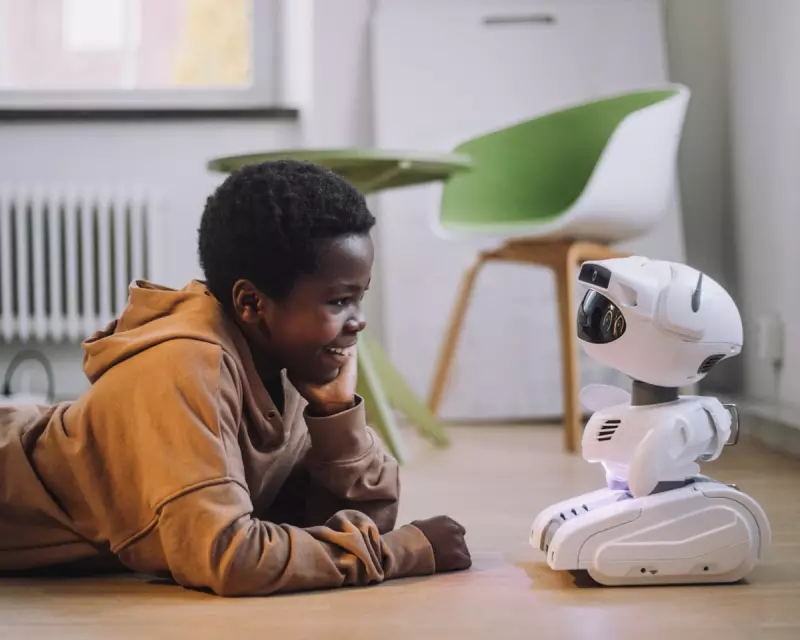
Watching daytime television on mute at the gym can feel like a dystopian movie montage. Amidst the pop music and exercise machines, a new horror slid across the screen: the launch of NEO, billed as the world's first consumer-ready humanoid robot designed for domestic life. Its soft, grey body and chilling blank face with small camera eyes prompted an immediate, visceral reaction. Who, in their right mind, would invite such a walking, talking surveillance machine into their home?
The Creepy Reality Behind the 'Service' Robot
The privacy invasion required for robots like NEO to function is profound. It extends far beyond the data collection of smart speakers, pet feeders, or mapping Roombas. This robot, priced at around A$30,000 (approximately £15,500), relies on an 'expert mode' for complex tasks. This is essentially a euphemism for a remote employee seeing inside your home and controlling the robot via a VR headset. The prospect transforms a piece of domestic technology into a conduit for unprecedented live intrusion.
This scenario is not an isolated case of technological overreach. It represents a recurring pattern where the fantasy of automation fails to match reality. Tech firms frequently market products as more intelligent than they are, often depending on teams of invisible human workers to make the devices function. Examples abound, from 'self-driving' cars that require remote human intervention to the 18th-century hoax of the Mechanical Turk, a supposed automaton secretly controlled by a hidden chess master.

This phenomenon has been aptly termed 'fauxtomation' by scholar Astra Taylor—a marketing ploy to make pointless products seem cutting-edge. Similarly, Jathan Sadowski calls it 'Potemkin AI', a facade that rationalises unseen exploitation under the banner of progress.
The Unfulfilled Promise of Labour-Saving Technology
Beyond the glaring privacy concerns and marketing deception lies a fundamental question: what are these robots actually for? The promise of technology alleviating household drudgery is longstanding. Historians like Helen Hester and Nick Srnicek have charted attempts to transform housework through domestic tech, from gas ovens to washing machines.
Yet, a paradox emerges. Despite these revolutionary tools, the overall amount of labour in the home did not decrease. This is known as the Cowan Paradox. One key reason is that such technologies facilitated a shift from collectively shared work to individualised, undervalued labour centred on the lone housewife. Tasks like laundry became solitary, unpaid endeavours. Furthermore, standards of cleanliness rose, creating more work. This process systematically devalued the essential labour—predominantly performed by women—that sustains daily life and underpins the formal economy.
Recent developments in generative AI follow a similar pattern, often generating 'workslop' that creates more tasks rather than reducing them. Given this history, a heavy dose of scepticism is warranted towards robots pitched as the ultimate solution to chores.
Funwashing and the Capitalist Smart Home
Since that initial gym encounter, social media feeds have been flooded with clips of humanoid robots. They range from embarrassing fails—grimly struggling to close a dishwasher—to waving and dancing for impressed onlookers. This tactic is a form of 'funwashing', an attempt to humanise and make light of disturbing technology. It recalls warfare robots performing DJ sets or Boston Dynamics' robot dogs featured in 'joyful' art exhibitions.
The modern smart home, now offering humanoid servants, is a thoroughly capitalist product with aims of profit, data harvesting, and control. At its current high price point, it may not grace many kitchens soon. But the direction of travel is clear. When such robots eventually become affordable, the critical question remains: is this a future we want to invite in? For many, the answer, considering the surveillance, the false promises, and the historical lessons, will be a firm 'count me out'.
Analysis inspired by the commentary of digital rights advocate Samantha Floreani.