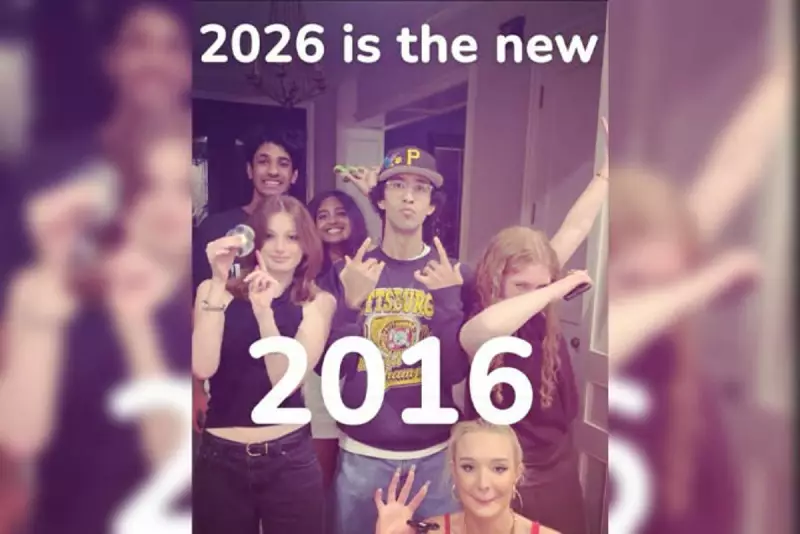
A powerful wave of digital nostalgia is sweeping across social media platforms, with users declaring "2026 is the new 2016." This viral movement, often tagged as #BringBack2016, sees millions sharing throwback content from a decade ago, yearning for the pop culture moments that defined that year.
The Data Behind the Digital Time Capsule
The trend is not just a fleeting meme; it's backed by staggering engagement data. TikTok reported a colossal 452 percent increase in searches for "2016" within a single week. Furthermore, content creators have uploaded over 56 million videos employing a signature hazy, vintage filter designed to evoke the aesthetic of that period.
This collective look back is focused on specific cultural touchstones from 2016. Users are revisiting Beyoncé's groundbreaking visual album Lemonade, the global phenomenon of the Mannequin Challenge, and the chart dominance of artists like Drake and The Chainsmokers. The trend has even captured the attention of celebrities, with figures such as Selena Gomez and Charlie Puth joining in by posting their own personal archives from that year.

Why 2016? The Search for Simplicity
Analysts and participating users suggest the trend's massive appeal lies in a desire to reminisce about a perceived simpler world. Against the backdrop of a complex and often challenging current climate, 2016 represents a recent past that many view through a rose-tinted lens. The trend is less about recreating the exact year and more about recapturing the associated feelings and cultural unity of that era.
The movement has found a particularly strong home on Instagram and TikTok, where short-form video and photo memories are perfectly suited for this kind of shared retrospection. It transforms personal memories into a communal experience, allowing a generation to define its recent history collectively.
A Trend With Staying Power?
While internet trends are notoriously ephemeral, the scale of engagement with the #BringBack2016 movement indicates it has significant momentum. It highlights how social media platforms have become the primary archives for cultural memory, with algorithms now actively surfacing a decade-old past to a massive new audience.
This surge in nostalgia may also influence current content creation, with the visual and musical styles of 2016 potentially seeing a revival. Whether it's a brief escape or a longer-term shift in the digital mood, the message from millions online is clear: there's a strong appetite to look back before moving forward into 2026.