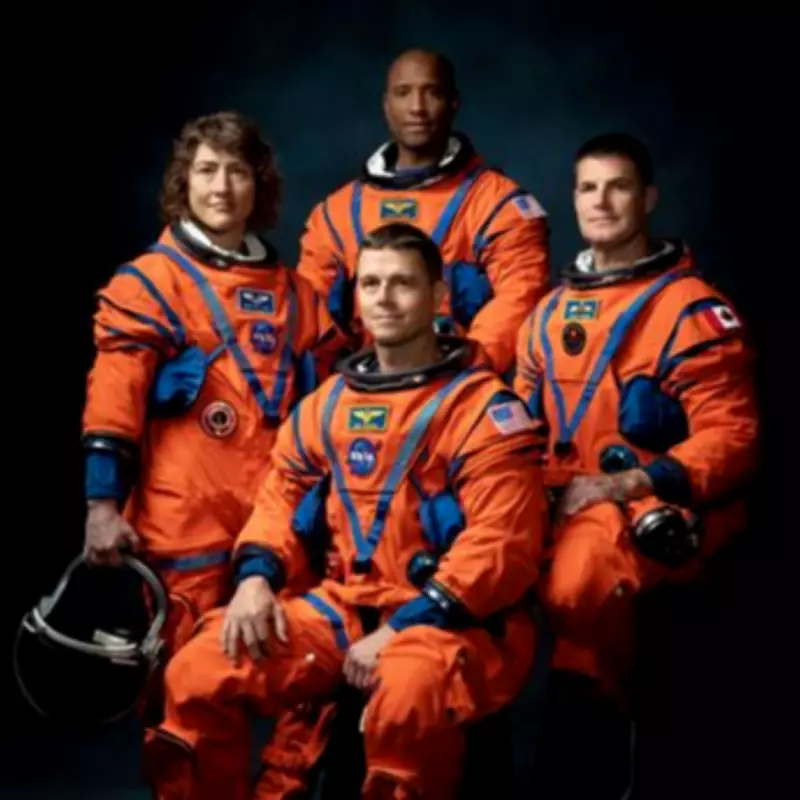
Artemis II Crew Prepares for Historic Lunar Return After Half-Century Gap
Four astronauts are poised to make history as they gear up for NASA's Artemis II mission, which will mark the first crewed journey to the moon in over fifty years. The mission represents a monumental step in lunar exploration, reviving ambitions that have lain dormant since the iconic Apollo 17 mission concluded in December 1972.
Mission Details and Crew Composition
The Artemis II crew consists of Commander Reid Wiseman, Pilot Victor Glover, Mission Specialist Christina Koch, and Mission Specialist Jeremy Hansen. While this mission will not involve a lunar landing, it is designed to send the astronauts on a trajectory around the moon and back to Earth, testing critical systems and procedures for future Artemis missions that aim to establish a sustained human presence on the lunar surface.
NASA has scheduled a crucial dress rehearsal for the mission, though the launch has faced setbacks due to adverse weather conditions. Initially planned for earlier, the launch is now targeted for no earlier than February 8, a delay attributed to near-freezing temperatures at the launch site that could compromise equipment.

Technical Challenges and Timeline Pressures
The space agency is contending with a tight launch window, with only three days available from February 8 to February 11 to initiate the mission this month. Any further postponements would necessitate a rescheduling to March, as NASA officials have emphasised that delays would result in a day-for-day shift in the timeline.
To mitigate the cold weather impacts, NASA has implemented measures such as using heaters to maintain the Orion capsule's temperature atop the rocket and adapting rocket-purging systems. A fuelling test of the 98-metre moon rocket, originally slated for last Saturday, was cancelled due to weather, underscoring the challenges faced in preparing for this historic endeavour.
Crew Backgrounds and Current Status
The astronauts are currently in quarantine in Houston, with their arrival at Kennedy Space Centre in Florida remaining uncertain due to the launch delays. Each crew member brings a wealth of experience to the mission:
- Reid Wiseman: A 27-year Navy veteran and engineer, Wiseman served as Flight Engineer on the International Space Station in 2014, conducting over 300 scientific experiments and logging nearly 13 hours in spacewalks. He previously led NASA's astronaut office from 2020 to 2022.
- Victor J. Glover: Selected as an astronaut in 2013, Glover piloted SpaceX's Crew Dragon spacecraft in 2020-2021, spending 168 days in space and completing four spacewalks during his tenure on the International Space Station.
- Christina Koch: An engineer and explorer, Koch set a record with 328 consecutive days in space in 2019 and participated in the first all-female spacewalks. Her background includes scientific fieldwork in polar regions and roles in NASA's technical integration.
- Jeremy Hansen: The first Canadian to venture to the moon, Hansen is a former fighter pilot recruited by the Canadian Space Agency in 2009. He made history by leading a NASA astronaut class in 2017, training candidates from both the US and Canada.
Broader Implications and Coordination Challenges
The Artemis II mission is part of NASA's broader strategy to push human exploration farther than ever before, laying the groundwork for a permanent lunar presence. However, the mission's timing introduces coordination complexities with other space operations.
NASA must also launch a fresh crew to the International Space Station promptly, accelerated due to the early return of the previous crew for medical reasons. Mission managers have indicated that the moonshot will take priority if it can launch by February 11, potentially delaying the next station crew's departure until the Artemis astronauts return later in the month.

Reflecting on the simultaneous preparations, NASA astronaut Jack Hathaway, part of the upcoming station crew, remarked on the excitement of launching two rockets around the same time, highlighting a dynamic period for the agency. As NASA navigates these logistical hurdles, the Artemis II mission stands as a testament to renewed global interest in lunar exploration and technological advancement.