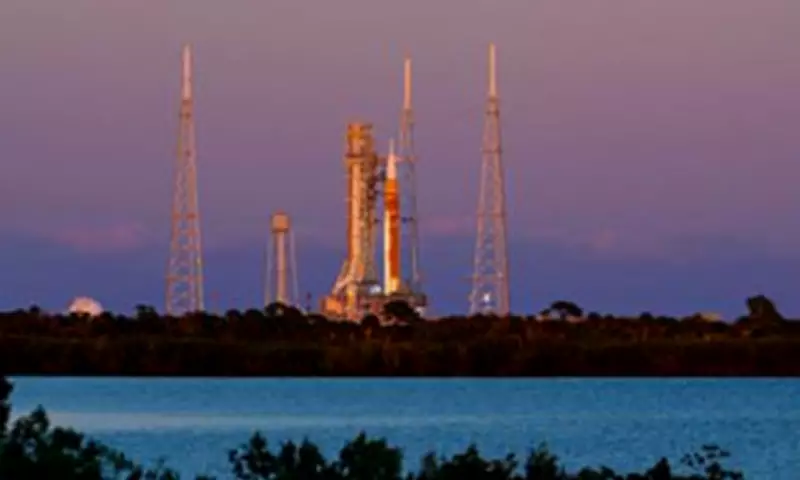
NASA Postpones Artemis II Moon Mission Launch After Test Setback
NASA's highly anticipated Artemis II mission, which aims to send astronauts around the moon, has been delayed by at least a month. The space agency had originally targeted a launch window between February 6 and 11, but will now aim for March following issues during a critical pre-flight test.
Wet Dress Rehearsal Halted by Technical Glitch
The decision to delay came after a so-called 'wet dress rehearsal' failed at the last minute. During this test, ground crews at the Kennedy Space Centre in Florida practice loading the Space Launch System (SLS) rocket with propellant, running through a countdown, and emptying the fuel tanks. However, the rehearsal, which began on January 31, was stopped with just five minutes left due to a spike in the liquid hydrogen leak rate.
In a statement, NASA explained: 'Engineers conducted a first run at terminal countdown operations during the test; however, the countdown stopped at 5 minutes left due to a spike in the liquid hydrogen leak rate.' This issue was compounded by cold weather interfering with the fuelling process, leading to the leak that brought proceedings to a halt.

Crew Adjustments and Safety Priorities
As a result of the delay, the Artemis II crew – Commander Reid Wiseman, Pilot Victor Glover, and Mission Specialists Christina Koch and Jeremy Hansen – will leave the quarantine they entered on January 21 and will not travel to the Kennedy Space Centre as planned. NASA Administrator Jared Isaacman emphasised safety in a post on X: 'As always, safety remains our top priority, for our astronauts, our workforce, our systems, and the public. We will only launch when we believe we are as ready to undertake this historic mission.'
The agency now plans to allow teams to review data and conduct a second wet dress rehearsal. The crew will re-enter quarantine about two weeks before the next launch window. If the March window is missed, NASA will target a final opportunity between April 1 and 6.
Background and Mission Details
Artemis II represents NASA's first manned lunar mission since the Apollo era over 50 years ago, although it will not involve landing on the moon. The mission aims to complete a lunar flyby, passing the 'dark side' of the moon and testing systems for future lunar landings. Key facts include:
- Mission Duration: 10 days
- Total Distance: 620,000 miles (one million km)
- Estimated Cost: $44 billion (£32.5 billion)
- Crew: Four astronauts, as listed above
During the mission, the Orion spacecraft will launch using the SLS rocket, orbit Earth, and then perform a 'translunar injection' to loop around the moon before returning to Earth for a splashdown in the Pacific Ocean.