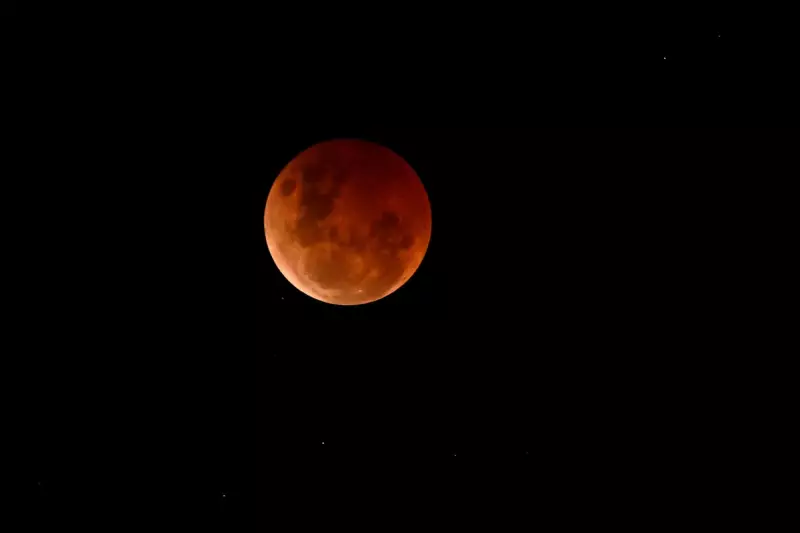
Stargazers across the globe are preparing for a breathtaking celestial event next month, as a total lunar eclipse will transform the Moon into a striking 'blood moon'. The phenomenon is scheduled for 3 March 2026 and will be visible from large parts of the world, offering a spectacular free show in the night sky.
What Creates the Blood Moon's Red Hue?
During a total lunar eclipse, the Earth moves directly between the Sun and the Moon, casting its shadow upon the lunar surface. Unlike the darkness of a solar eclipse, the Moon doesn't disappear. Instead, it often glows with a dramatic coppery-red colour.
This famous blood red hue is caused by sunlight passing through the Earth's atmosphere. Our atmosphere scatters the shorter blue wavelengths of light, while bending the longer red and orange wavelengths into the Earth's shadow. This filtered red light then illuminates the Moon, creating the eerie and beautiful effect that gives the event its name.

Best Viewing Times and Locations
The eclipse will be visible across the United States, Australia, and Asia. For observers on the US West Coast, the viewing conditions are set to be particularly favourable.
The moment of totality – when the Moon is fully within Earth's shadow – is expected to begin at approximately 3:33am EST. Major cities like San Francisco, Los Angeles, and Seattle will have prime seats for the show. The total phase of the eclipse, where the blood red colour is most intense, will last for just under an hour.
The entire celestial event, including partial phases before and after totality, will span several hours, concluding around 5:17am PST.
How to Safely Watch the Lunar Eclipse
One of the great advantages of a lunar eclipse is its safety and accessibility. No special protective equipment is required, unlike during a solar eclipse. You can simply look up with your naked eye.
For an enhanced view, binoculars or a telescope can provide a closer look at the changing colours and details on the lunar surface. The best advice is to find a location with a clear, unobstructed view of the sky, away from bright city lights if possible.
This upcoming blood moon serves as a powerful reminder of the predictable yet awe-inspiring mechanics of our solar system. It's a cosmic event that connects viewers across continents, all looking up at the same extraordinary sight.