On a crisp January morning in 1986, millions of viewers worldwide watched with anticipation as the Space Shuttle Challenger prepared for its historic launch from Kennedy Space Center. What began as a routine mission would soon become one of the most tragic chapters in space exploration history.
The Fateful Launch Sequence
At precisely 11:38 AM Eastern Time on January 28th, Challenger ascended into the clear Florida sky. Commander Francis Scobee maintained communication with mission control, calmly confirming instructions with the standard phrase, "go throttle up." For the first minute of flight, everything appeared normal as the shuttle climbed through the atmosphere.
A Sudden Change in Tone
Just three seconds after Scobee's transmission, the final communication from the cockpit emerged. Pilot Michael Smith uttered only two simple words that would become hauntingly significant: "uh oh." This brief expression revealed that at least one crew member recognized something had gone terribly wrong with their spacecraft.

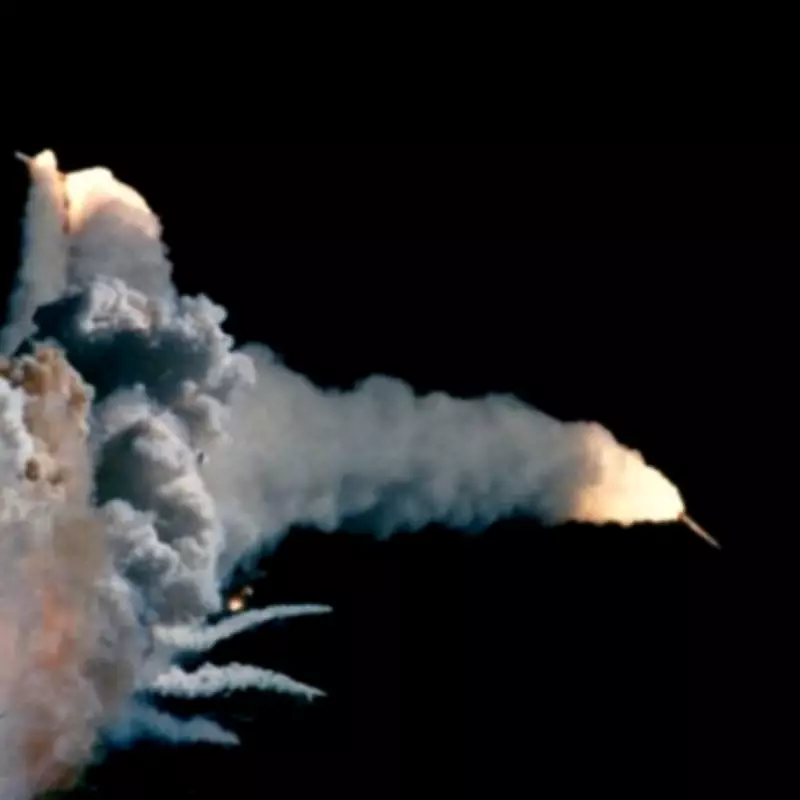
Seventy-three seconds after launch, the shuttle was engulfed in a massive fireball and tore apart in mid-air, killing all seven astronauts aboard. From the ground, observers witnessed what appeared to be a catastrophic explosion that instantly destroyed the spacecraft.
Disturbing New Revelations
For years following the disaster, the public understanding was that the crew perished immediately in the initial explosion. However, subsequent investigations uncovered deeply unsettling details that painted a far more disturbing picture of the final moments.
The Mechanical Failure
Contrary to popular belief, Challenger did not explode in the traditional sense. A critical failure occurred in a booster seal designed to prevent fuel leaks, allowing scorching gases to escape. This compromised the structural integrity of the external fuel tank, which ultimately failed as the shuttle continued its ascent.
The resulting fireball ripped the vehicle apart, but investigators made a crucial discovery: the crew compartment remained largely intact initially. Rather than disintegrating immediately, the compartment broke free and continued ascending for approximately twenty-five seconds before beginning its long, fatal descent toward the Atlantic Ocean.
Evidence of Consciousness
Perhaps most disturbing were findings that suggested some crew members might have been conscious during the descent. Investigators discovered that several of the astronauts' personal emergency air packs had been manually activated after the initial breakup.
The Horrifying Possibility
This evidence raised the terrifying possibility that at least some crew members remained alive and aware after the spacecraft disintegrated, fully conscious of their helpless fall back to Earth. NASA maintained that sudden cabin pressure loss might have caused rapid unconsciousness, but experts noted that physical evidence within the crew module didn't fully support this explanation.
The exact sequence of events during those final moments remains unclear, but what is certain is that the impact with the ocean was unsurvivable. The crew compartment slammed into the sea at tremendous velocity, bringing the tragedy to its brutal conclusion.
Legacy and Recovery
The remains of all seven astronauts were eventually recovered from the ocean floor, though specific details about their final moments have never been publicly disclosed. The Challenger disaster prompted extensive safety reforms within NASA and fundamentally changed how space missions were conducted and perceived by the public.
Nearly four decades later, the memory of that January morning continues to serve as a sobering reminder of the risks inherent in space exploration and the human cost of pushing technological boundaries. The simple words "uh oh" uttered by Pilot Michael Smith stand as a poignant testament to the sudden transition from routine mission to catastrophic failure.