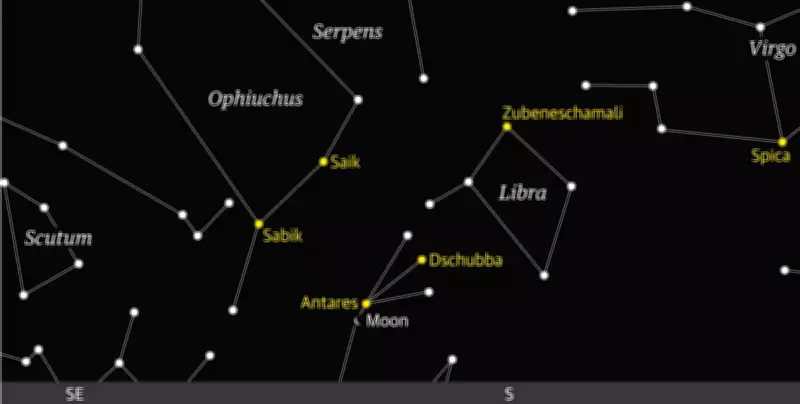
Stargazers across the UK are in for a treat early on the morning of 11 February, as the waning crescent moon makes a close pass by Antares, the brightest star in the constellation Scorpius. This celestial alignment offers a rare opportunity to observe two contrasting luminaries in the pre-dawn sky.
A Guide to Viewing the Celestial Pair
To catch this event, observers should find an unobstructed view of the south-eastern horizon. The moon, a thin waning crescent with approximately 34% of its visible surface illuminated, will rise shortly after Antares. The two will be separated by just a few degrees, making the moon an excellent guide to locating the star.
Optimal Viewing Times and Conditions
The best time to watch is from around 05.30 GMT, with the pair becoming visible as they rise a few degrees above the horizon. Viewing should conclude before sunrise at 07.21 GMT, though dawn's light will likely obscure Antares well before then. Due to the low altitude, atmospheric haze may dim Antares' brilliance, but the moon's crescent will remain visible to the naked eye, ensuring observers can pinpoint the correct spot in the sky.

The Significance of Antares
Antares is a red supergiant star located approximately 550 light years from Earth. From the UK, it never ascends far above the horizon, making any sighting a notable achievement for amateur astronomers. Its reddish hue provides a striking contrast to the silver light of the moon, enhancing the visual appeal of this alignment.
Practical Tips for Observers
For those in London, a chart depicting the view looking south-south-east at 06.00 GMT on 11 February can serve as a useful reference. Key recommendations include:
- Seek a location with a clear, unobstructed view of the south-eastern horizon.
- Begin observations around 05.30 GMT to catch the rise of both celestial bodies.
- Use the moon's crescent as a guide to locate Antares, especially if haze affects star visibility.
- Cease watching before sunrise to avoid interference from daylight.
This event underscores the dynamic nature of our night sky and offers a chance to engage with astronomy from urban or rural settings alike. Whether you're an experienced stargazer or a curious beginner, the alignment of the moon and Antares promises a memorable pre-dawn spectacle.