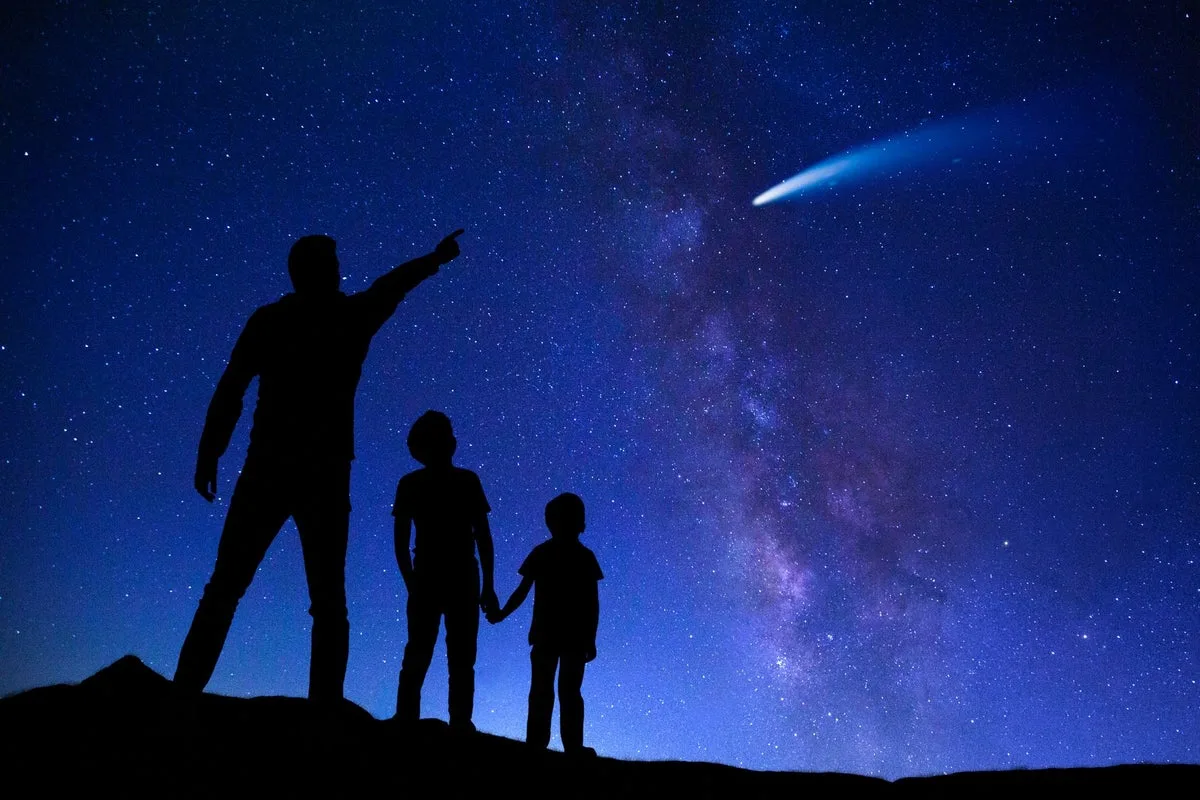
New 'Great Comet' MAPS Could Illuminate Daytime Skies in April 2026
Daytime Comet MAPS May Dazzle in April 2026

New 'Great Comet' MAPS Could Illuminate Daytime Skies in April 2026

A newly discovered comet has captured the attention of astronomers worldwide, with the potential to become a spectacular celestial event visible in broad daylight during early April 2026. Designated C/2026 A1 (MAPS), this celestial visitor was first spotted on January 13, 2026, by a team of four amateur astronomers using a remotely operated telescope located in Chile's Atacama Desert.

Discovery and Classification

Following its initial detection, astronomers quickly identified Comet MAPS as a member of the Kreutz sungrazing comet family. This group includes some of the brightest and most spectacular comets ever recorded in human history. The comet follows an extreme, highly elongated orbit around the Sun and is currently on a trajectory that will bring it perilously close to our star.

In early April 2026, Comet MAPS is predicted to pass within approximately 120,000 kilometres of the Sun's surface. This remarkably close approach raises both excitement and uncertainty among the astronomical community. If the comet survives this fiery encounter, it could transform into a magnificent sight in the evening sky during early April, potentially becoming visible even during daylight hours.

The Kreutz Sungrazing Family Legacy

The Kreutz sungrazing comets represent fragments of what was once a massive cometary nucleus, estimated to have been more than 100 kilometres in diameter. This ancient mega-comet made a dangerously close approach to the Sun sometime between the 3rd and 4th centuries BCE. Following this encounter, the comet fragmented into numerous pieces that continue to return on their long orbital journeys around our star.

Historical records reveal that fragments of this original comet have produced some of the most spectacular celestial displays ever witnessed:

  • The Great Comet of 1965 (C/1965 S1 Ikeya-Seki) became the brightest comet of the 20th century, shining as brightly as the full Moon and visible to the naked eye during daylight
  • The Great Comet of 1882 (C/1882 R1) reached a brilliance approximately one hundred times greater than the full Moon, dazzling observers for several months
  • Reports from 363 CE suggest multiple comets may have been visible simultaneously in broad daylight

Comet MAPS: Potential and Uncertainties

Comet MAPS already holds one significant record: at the time of its discovery, it was farther from the Sun than any previously discovered sungrazer. This unusual characteristic suggests it might represent a larger-than-average fragment of the original Kreutz comet, though astronomers caution against drawing direct comparisons to historical great comets.

"The previous holder of this distance record was comet Ikeya-Seki in 1965, which proved to be the brightest comet of the 20th century," explains Professor Jonti Horner, an astrophysicist at the University of Southern Queensland. "However, technological advances over the past seventy years mean we're detecting comets much earlier in their approach, making direct brightness comparisons challenging."

Recent observations indicate Comet MAPS has been steadily brightening, suggesting it may indeed be a reasonably large Kreutz fragment rather than one already undergoing disintegration. Nevertheless, significant uncertainties remain about its ultimate fate and visibility.

What to Expect in April 2026

The comet's future visibility depends entirely on whether it survives its close solar approach, known as perihelion. Several potential scenarios could unfold:

  1. If the comet survives intact, it could become visible in the evening sky during early to mid-April 2026, potentially reaching brightness levels that make it observable in broad daylight
  2. If the comet fragments during or after perihelion, it could brighten suddenly and unexpectedly, creating a particularly dazzling display
  3. Even if the comet disintegrates completely, NASA's Solar and Heliospheric Observatory (SOHO) will capture valuable images of the event

Due to its orbital characteristics, like all Kreutz comets, Comet MAPS will be far easier to observe from the southern hemisphere following its solar encounter. Astronomers worldwide will be monitoring its progress closely in the coming months, watching for signs of stability or disintegration.

The potential appearance of Comet MAPS represents a rare opportunity to witness a celestial phenomenon that has captivated humanity for millennia. While uncertainties remain about its ultimate brightness and visibility, the astronomical community agrees that this discovery warrants careful observation and anticipation as April 2026 approaches.