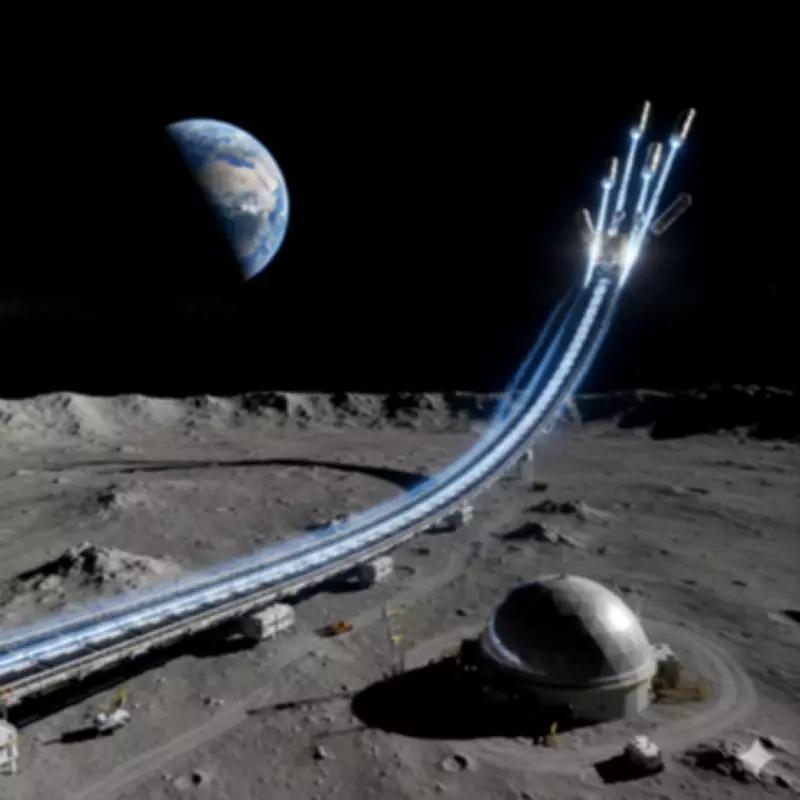
Elon Musk, the billionaire entrepreneur, has unveiled an ambitious plan that seems straight out of science fiction: constructing a lunar factory and a giant electromagnetic catapult on the Moon to launch AI satellites into space. This bold vision aims to establish a vast network of AI-powered orbiting data centres, which Musk likens to building a 'sentient sun' that harnesses near-limitless solar energy.
From Mars to the Moon: A Strategic Pivot
For years, Musk has prioritised Mars colonisation, often dismissing Moon missions as a distraction. However, in a recent shift, he now pitches the Moon as a crucial stepping stone. According to reports from the New York Times, Musk told employees at his artificial intelligence venture, xAI, that the company needs a lunar facility to manufacture smart satellites. He urged staff to "go to the Moon," emphasising that the scale of intelligence achievable with space-based computing would be "incredibly exciting."
The Lunar Catapult Concept
The centrepiece of this plan is a colossal electromagnetic catapult designed to hurl payloads from the lunar surface without traditional rockets. This catapult would use magnetic forces to accelerate satellites and other cargo to escape velocity, leveraging the Moon's low gravity and airless environment. The idea dates back to Cold War-era space settlement studies, where such technology was theorised for efficient space launches.

Musk has suggested that building a 'self-sustaining city' on the Moon could be achievable in under a decade, acting as a springboard for future missions to Mars and beyond. In contrast, he estimates a Martian city would take over 20 years, making the Moon a faster option to secure civilisation's future. He has also mentioned beginning Mars city-building efforts within five to seven years, but the "overriding priority" remains accelerating progress through lunar initiatives.
Technological Challenges and Advantages
Despite its potential, the lunar catapult plan presents significant technological hurdles. These include constructing multi-kilometre-long tracks in abrasive lunar dust, generating and storing massive bursts of power, protecting delicate satellites from violent shaking during launch, and precisely steering payloads into correct orbits. Additionally, transporting all necessary equipment to the Moon poses a formidable logistical challenge.
On the upside, space-based data centres would benefit from continuous sunlight, especially in certain lunar regions and high Earth orbits, avoiding Earth's limitations such as land constraints, cooling issues, and grid dependencies. A private space computing platform would allow Musk's AI ambitions to expand far beyond terrestrial boundaries, though it raises important questions about regulation and access in the burgeoning space economy.
Broader Implications for AI and Space Exploration
This lunar strategy marks a significant evolution in Musk's spacefaring goals, blending his interests in AI, renewable energy, and interplanetary settlement. By creating orbiting AI data centres, he envisions a future where computing power is vastly enhanced, potentially revolutionising industries from telecommunications to scientific research. However, experts caution that the feasibility of such projects depends on overcoming not only technical barriers but also international regulatory frameworks and ethical considerations.
As Musk continues to push the boundaries of innovation, his lunar catapult idea underscores a growing trend towards commercialising space and integrating advanced technologies like AI into extraterrestrial ventures. Whether this vision becomes reality remains to be seen, but it certainly sparks excitement and debate about humanity's next steps beyond Earth.