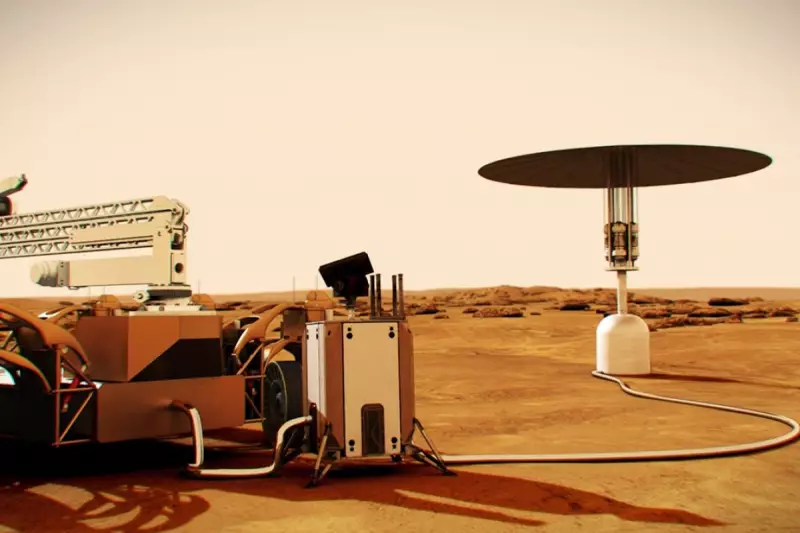
The United States has set an ambitious new target in the new space race, with NASA and the Department of Energy formally committing to develop and deploy a nuclear fission reactor on the moon by the year 2030. This groundbreaking technology is seen as essential for powering a sustained human presence on the lunar surface and enabling future crewed missions to Mars.
The Geopolitical Drive Behind the Accelerated Timeline
This commitment, solidified by a memorandum of understanding, comes amid heightened international competition. The timeline was expedited following announcements from China and Russia detailing their own plans to construct a nuclear reactor for a lunar base by 2035. Former NASA Acting Administrator Sean Duffy warned last summer that the first nation to establish such a capability could potentially declare an exclusion zone, hindering American ambitions for the Artemis campaign.
Newly-confirmed NASA Administrator Jared Isaacman, a SpaceX astronaut, framed the initiative within President Trump's national space policy. "America is committed to returning to the moon, building the infrastructure to stay and making the investments required for the next giant leap to Mars and beyond," he stated, adding that "Achieving this future requires harnessing nuclear power."

How a Lunar Reactor Would Work
According to the Department of Energy, the proposed fission surface power system would operate similarly to terrestrial reactors. It would split uranium atoms inside a compact core to generate heat, which is then converted into electricity. The key advantages for lunar operations are profound:
- It can provide consistent power regardless of the long lunar nights or environmental conditions.
- It must be designed to operate for years without the need for refuelling.
- The system needs to be lightweight and small, yet generate at least 40 kilowatts of power—enough to run 30 households for a decade.
Experts Debate the Feasibility of the 2030 Goal
While the agencies are bullish, some experts question the aggressive schedule. National security analyst and nuclear expert Joseph Cirincione pointed to previous, unmet targets, asking pointedly, "Oh, really? So, where is it?" He referenced a Trump-era announcement aiming for a 2026 readiness date.
However, others within the space and nuclear communities believe it is achievable with sufficient focus. Dr. Bhavya Lal, a former NASA associate administrator, told The Independent that it is "possible, but it will require serious commitment." Sebastian Corbisiero, who leads the Energy Department's space reactor programme at Idaho National Laboratory, was more direct, stating that a lunar reactor by 2030 is "doable."
The project represents a significant acceleration. NASA first announced its intent to place a reactor on the moon "within a decade" in 2021. By 2024, the target for delivering a reactor to a launchpad had shifted to the early 2030s. The new 2030 deployment goal underscores the strategic urgency now driving American space policy.