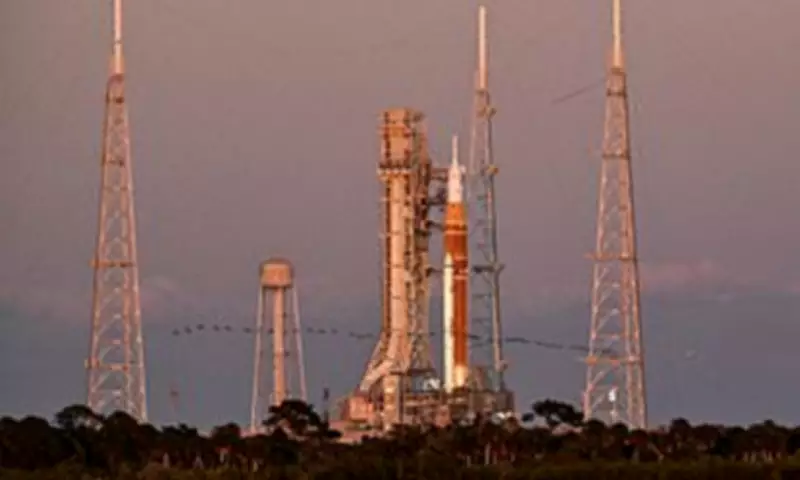
Conspiracy theories have surged across social media platforms following NASA's announcement of yet another delay to its historic Artemis II moon mission. The space agency confirmed this morning that the crewed lunar flyby has been pushed back to March after a critical wet dress rehearsal encountered last-minute failures.
Safety Testing or Secret Agenda?
NASA Administrator Jared Isaacman emphasised that the postponement demonstrates safety protocols are functioning as intended. "As always, safety remains our top priority," Mr Isaacman stated in a social media post. "We will only launch when we believe we are as ready to undertake this historic mission."
However, this represents merely the latest setback for NASA's lunar ambitions. The Artemis programme has experienced multiple delays since its inception:

- Artemis II was originally scheduled for mid-2025
- Artemis III aimed to land astronauts on the moon by late 2024
- The entire timeline shifted back a year following safety concerns from the uncrewed Artemis I mission
Social Media Frenzy Erupts
The announcement triggered immediate reactions from sceptical online communities. On platform X, formerly Twitter, commenters expressed everything from disappointment to outright disbelief in NASA's lunar capabilities.
One user remarked: "Lmao always a delay. This ain't happening." Another added: "I told you guys they would find a reason to cancel their fake trip to the moon."
Some responses revealed deeper conspiracy beliefs, with one commenter suggesting: "Honestly for the American people to believe we lost the 'technology' to go back to the moon is the biggest conspiracy ever."
Technical Challenges Behind the Delay
Behind the online speculation lies more mundane engineering challenges. The wet dress rehearsal, conducted on January 31st, encountered multiple technical issues:
- A liquid hydrogen leak was detected in the propellant transfer interface
- Unusually cold weather at Florida's Kennedy Space Center interfered with rocket systems
- The countdown halted approximately five minutes before simulated launch
NASA's Space Launch System represents the agency's most complex rocket ever built, requiring over two million litres of supercooled liquid hydrogen fuel maintained at -252°C. This marks only the third flight attempt for this specific rocket configuration, making technical difficulties statistically likely.
Historical Context and Future Timeline
The Artemis programme, established during President Donald Trump's administration, has faced consistent scheduling challenges. The uncrewed Artemis I mission in November 2022 revealed significant issues upon its return, including:
- Substantial damage to the Orion spacecraft's heat shield
- Battery malfunctions
- Failures in environmental control circuits
These discoveries necessitated extensive investigation and repair work, contributing to the current delays. NASA now anticipates Artemis III will launch no earlier than mid-2027, with Artemis IV following in 2028.
The Artemis II Crew Profile
The delayed mission features an experienced international crew:
- Reid Wiseman (Commander): US Navy aviator with 165 days of space experience
- Victor Glover (Pilot): Test pilot with 3,500 flight hours across 40 aircraft types
- Christina Koch (Mission Specialist): Engineer holding the women's spaceflight duration record
- Jeremy Hansen (Mission Specialist): Canadian fighter pilot and physicist selected by the Canadian Space Agency
Their ten-day mission aims to complete a lunar flyby, testing systems for future landing attempts while travelling approximately 620,000 miles.
Balancing Caution and Ambition
NASA's current risk tolerance differs significantly from the Apollo era, incorporating more complex fail-safe systems and rigorous testing protocols. This cautious approach, while frustrating to observers eager for lunar exploration milestones, reflects lessons learned from decades of spaceflight experience.

As conspiracy theories continue circulating online, NASA engineers will analyse data from the failed rehearsal and prepare for another test attempt ahead of the March launch window. The agency maintains that technical diligence, rather than hidden agendas, drives their scheduling decisions.
With an estimated total programme cost exceeding $44 billion, the stakes for successful lunar missions remain extraordinarily high. Whether public confidence can withstand further delays while conspiracy narratives proliferate represents an additional challenge for space agency communicators.