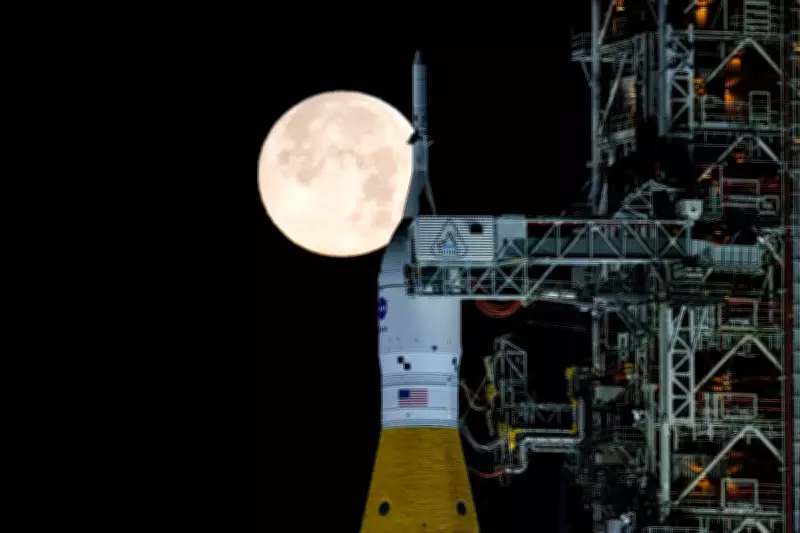
NASA Postpones Historic Moon Return After Critical Test Encounter
NASA has officially delayed its highly anticipated return to the Moon, pushing the launch of the Artemis mission into March at the earliest. This setback follows a significant fuel leak discovered during a crucial "wet dress rehearsal" test conducted early on Tuesday at the Kennedy Space Center in Florida.
Fuel Leak Halts Critical Pre-Launch Testing
The space agency encountered excessive hydrogen buildup near the base of its massive 322-foot (98-meter) rocket during the daylong fueling operation. Launch controllers, who began loading the rocket with super-cold hydrogen and oxygen at midday, had to halt hydrogen loading at least twice as they scrambled to address the problem.
More than 700,000 gallons (2.6 million liters) of fuel needed to flow into the tanks and remain on board for several hours to properly mimic the final stages of an actual countdown. The recurring leak issues forced NASA to postpone the test at a late stage, reminiscent of similar hydrogen leak problems that plagued the rocket's delayed debut three years ago during its first test flight.

Astronaut Quarantine and Mission Timeline Affected
The four astronauts assigned to the mission—three Americans and one Canadian—have been moved out of their nearly two-week quarantine period. NASA confirmed they will re-enter quarantine "about two weeks" before the next available launch window for the lunar journey.
The space agency faces significant scheduling constraints, with only a few days available each month for launch attempts. February's launch window had already been shortened by two days due to extreme cold weather conditions, further complicating mission planning.
Technical Challenges and Communication Issues
Beyond the fuel leak, NASA noted additional complications during the test. Delays occurred in close-out operations, and ground crew communications suffered from recurring audio dropout issues. Launch teams utilized techniques developed during the previous Space Launch System countdown in 2022 to work around the hydrogen problems.
The astronauts monitored the critical dress rehearsal from nearly 1,000 miles (1,600 kilometers) away at the Johnson Space Center in Houston. Countdown clocks began ticking Saturday night, giving controllers opportunity to work through procedures, but were set to stop a half-minute before reaching zero, just before engine ignition would have occurred in an actual launch.
Mission Objectives and Historical Context
The planned nearly 10-day mission aims to send astronauts past the Moon, around its mysterious far side, and directly back to Earth. This journey will test the capsule's life support systems and other vital components, though the crew will not enter lunar orbit or attempt a landing.
NASA last sent astronauts to the Moon during the legendary Apollo program of the 1960s and 1970s. The new Artemis program represents a more ambitious effort toward establishing sustained lunar presence, with this crew setting the stage for future Moon landings by other astronauts.
The space agency has not provided an official launch target date for March, stating that teams must first "fully review data from the test, mitigate each issue, and return to testing" before proceeding with launch preparations.