NASA is advancing toward a monumental milestone in space exploration as it prepares to send astronauts around the moon for the first time in more than 50 years. The space agency has successfully moved the rocket for the Artemis II mission to the launchpad, setting the stage for a historic journey that could redefine humanity's presence in space.
Artemis II Mission Timeline and Objectives
The launch window for the Artemis II mission officially opens on February 6, 2026, with the 10-day manned flight planned to orbit the moon and return to Earth. This mission represents the first crewed lunar flyby since the Apollo 17 mission in 1972, bridging a gap of over half a century in human deep space exploration. NASA has outlined that Artemis aims to send astronauts to explore the moon for scientific discovery, foster economic benefits, and establish the groundwork for future crewed missions to Mars.
Rollout and Technical Preparations
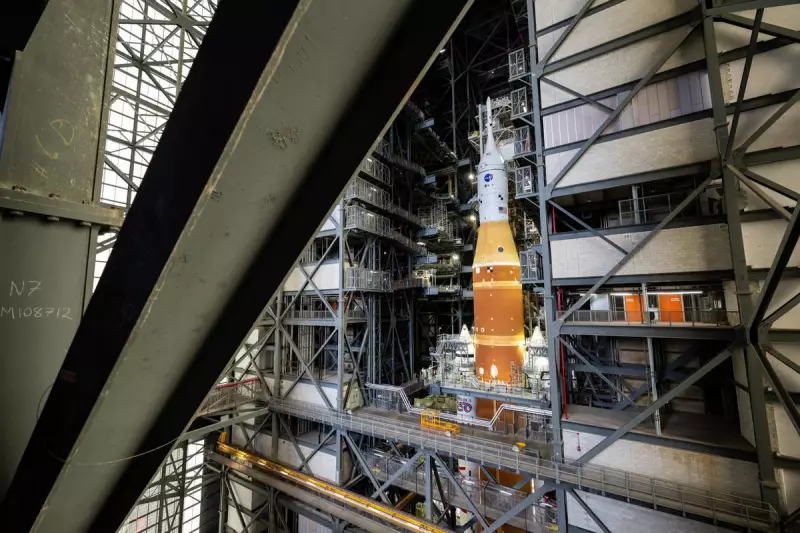
On a recent Saturday, NASA's crawler-transporter 2 vehicle meticulously carried the Space Launch System (SLS) rocket and Orion spacecraft along a four-mile route from the Vehicle Assembly Building to the launchpad at the Kennedy Space Centre in Florida. This critical journey, which can take up to 12 hours, marks a pivotal phase in the mission's pre-launch preparations. Engineers will now focus on conducting a rehearsal test that involves loading all propellants into the rocket, ensuring everything is set for the upcoming launch.

Crew Composition and International Collaboration
The Artemis II mission crew comprises a diverse and experienced team of astronauts, including NASA commander Reid Wiseman, pilot Victor Glover, mission specialist Christina Koch, and Canadian Space Agency astronaut Jeremy Hansen. This international collaboration underscores the global significance of the mission, with Hansen expressing that the endeavour is "good for humanity" and reflects a renewed appreciation for lunar exploration.
Strategic Vision and Future Implications
NASA Administrator Jared Isaacman emphasised that the mission fulfills "a promise to the American people that we will return to the moon." He highlighted the moon's role as a "perfect proving ground" for autonomous capabilities in spacecraft, which could pave the way for advanced technologies in future missions. Isaacman discussed long-term goals, such as building a moon base, starting with autonomous rovers for mining and mineral extraction, and incorporating AI into robotic missions, including a potential mission to Venus.
Scientific and Exploratory Insights
Astronaut Christina Koch provided insights into the scientific value of the mission, noting that the moon acts as a "witness plate" for Earth's geological history, offering clues about solar system formation and the potential for life elsewhere. She stressed the importance of adaptability in space missions, preparing for unforeseen challenges while leveraging the moon's unique environment for discovery.
Mission Conclusion and Recovery Plans
Upon completion of the lunar orbit, the Orion spacecraft is scheduled to splash down in the Pacific Ocean, where the crew and spacecraft will be recovered with assistance from the US Navy. This phase ensures a safe return for the astronauts, capping off a mission that not only revisits past glories but also opens new frontiers in space exploration.
As NASA progresses with the Artemis II mission, the world watches with anticipation, recognising this as a critical step toward sustained human presence beyond Earth's orbit and a testament to international cooperation in the quest for knowledge and innovation.