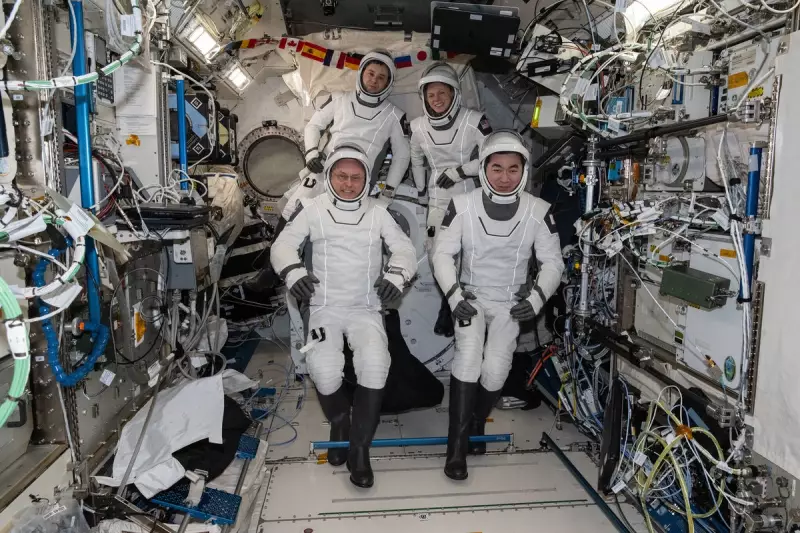
In an unprecedented move for NASA, four astronauts have made an early return to Earth from the International Space Station (ISS) due to a medical issue requiring attention on the ground. This marks the first medical evacuation in the US space agency's 65-year history of human spaceflight.
An Unexpected Departure
The crew, known as Crew-11, undocked from the orbiting laboratory and splashed down in the Pacific Ocean near San Diego in the early hours of Thursday, 15th January 2026. The decision, made by NASA's new administrator Jared Isaacman, cut their mission short by over a month. The astronauts were originally scheduled to remain on the station until late February.
The returning team comprised NASA astronauts Zena Cardman and Mike Fincke, Japan's Kimiya Yui from JAXA, and Russian cosmonaut Oleg Platonov of Roscosmos. Officials have not identified which crew member required medical care, citing privacy, but confirmed the individual was "stable, safe and well cared for." They stressed the situation was not an emergency and was unrelated to spacewalk preparations or other station operations.

"Our timing of this departure is unexpected, but what was not surprising to me was how well this crew came together as a family to help each other and just take care of each other," said NASA astronaut Zena Cardman.
Operational Ripple Effects
The evacuation has significant operational consequences for the ISS. With only one American and two Russian astronauts remaining aboard, the station's crew is reduced by more than half. NASA stated it was riskier to leave the astronaut without proper medical attention for another month than to operate with a reduced crew. As a result, all routine and emergency spacewalks—a two-person task requiring internal backup—are now on hold until a replacement crew arrives.
NASA and SpaceX are working to move up the launch of the next four-person crew from Florida, currently targeted for mid-February. The return was handled by SpaceX, with the capsule splashing down less than 11 hours after undocking—another middle-of-the-night recovery operation.
Historical Context and Crew Background
While this is a first for NASA, the Russians have experienced similar situations. In 1985, Soviet cosmonaut Vladimir Vasyutin returned early from the Salyut 7 station due to a serious infection.
For two of the returning astronauts, this truncated mission was a particular disappointment. For 38-year-old biologist Zena Cardman, it was her debut spaceflight, and she missed out on planned spacewalking. For 39-year-old Russian pilot Oleg Platonov, the flight came after extra years of waiting due to an earlier, undisclosed health issue. Veteran fliers Mike Fincke and Kimiya Yui have extensive previous experience in orbit.
"The health and the well-being of our astronauts is always and will be our highest priority," said NASA Administrator Jared Isaacman, affirming the decision that sets a new precedent for orbital operations.