In a groundbreaking astronomical endeavour, scientists are preparing to capture the first-ever moving image of a supermassive black hole. The ambitious project, led by the global Event Horizon Telescope (EHT) collaboration, aims to transform our static snapshot of the cosmos into a dynamic film, revealing the violent dance of matter at the edge of reality.
The Cinematic Quest for Cosmic Understanding
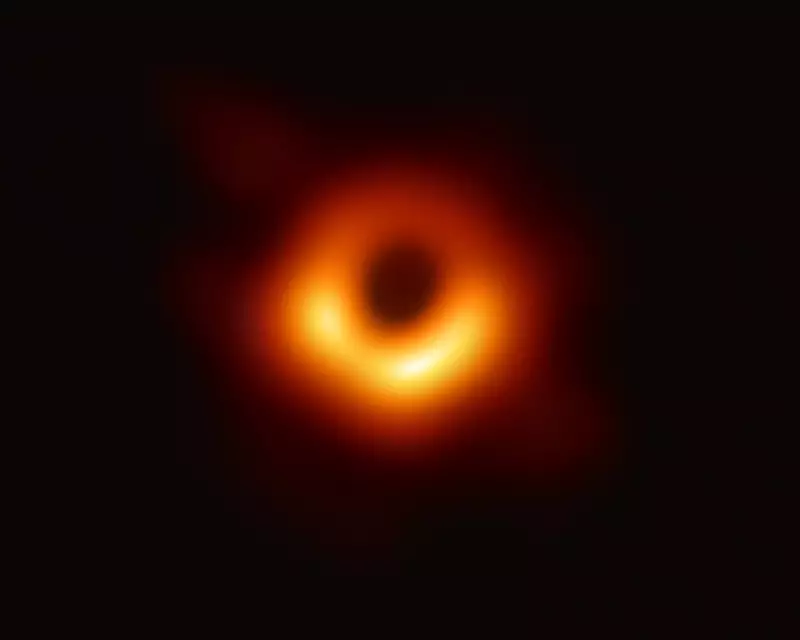
The target is the colossal black hole at the centre of the Messier 87 (M87) galaxy, first imaged in its now-iconic "shadow" form in 2019. Throughout March and April, the EHT's network of twelve radio telescopes, scattered from Antarctica to Spain, will train their collective gaze on this cosmic giant. Their goal is to film the swirling accretion disc—the superheated maelstrom of gas and dust tracing the event horizon, the point of no return for light and matter.
Professor Sera Markoff, the newly appointed Plumian Professor of Astronomy at the University of Cambridge and a founding EHT member, calls the campaign "revolutionary." She states it will not only push technological boundaries but is set to accelerate scientific knowledge "by an order of magnitude." The moving images could finally answer two monumental questions: how fast the black hole spins and the mysterious mechanism behind the powerful jets it launches.

Why a Black Hole Movie Matters
Far from being mere cosmic vacuum cleaners, black holes are now seen as crucial architects of the universe. "They actually play a very important role in the ecosystem of the universe," Professor Markoff explains, noting they hold keys to understanding how the first galaxies formed and evolved.
The planned observations are meticulously timed. As Earth rotates, the M87 black hole will come into view of different telescopes, allowing the team to capture a complete image roughly every three days. The black hole's staggering scale—with a mass equivalent to six billion suns and a size spanning our solar system—means it moves slowly enough for these snapshots to be stitched into a coherent sequence.
Measuring its spin is critical. A rapidly spinning black hole would suggest it grew primarily by steadily accreting nearby material. A slower spin, however, would point to a violent history of mergers with other black holes, each collision acting as a cosmic brake.
Unravelling the Mystery of Galactic Jets
The movie may also illuminate the origin of black hole jets, among the most energetic phenomena in the universe. M87 fires vast columns of charged gas that punch through its galaxy, regulating star formation and influencing galactic evolution. "They can change the entire evolution of the galaxy and even surrounding galaxies," Markoff notes.
While data collection happens this spring, the world will need to be patient. The sheer volume of information—recorded on physical hard drives—must wait for the Antarctic summer to be shipped to processing centres in Germany and the US. The final reveal of the black hole in motion is still some time away.
Professor Markoff, the 17th holder of a prestigious professorship established with oversight from Sir Isaac Newton in 1704, hopes her journey from science fiction fan to leading astrophysicist will inspire others. "I didn't come from a scientific or academic family," she said, crediting comic books and supportive teachers. "Now I like to joke that I do sci-fi for a living."