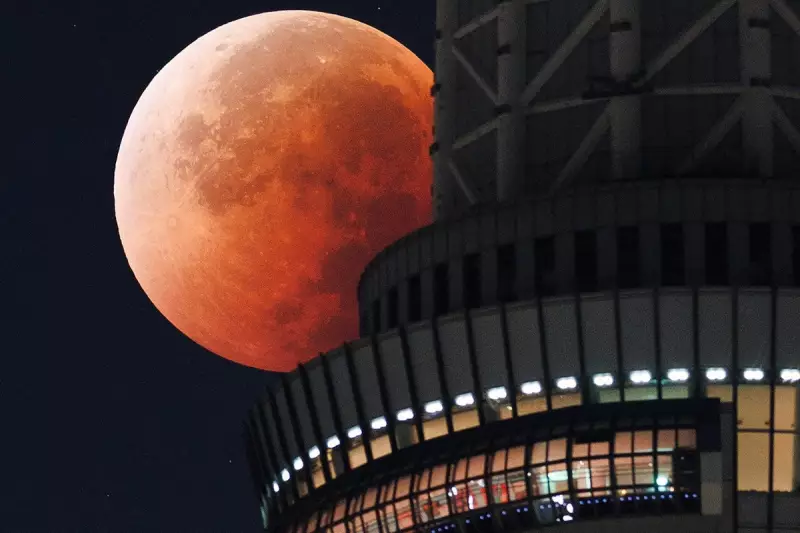
Skywatchers across the United States, Australia, and Asia are in for a spectacular treat next month, as a total lunar eclipse will transform the moon into a striking blood red colour. The celestial event, set for March 3, 2026, promises a dramatic display for those with clear skies.
When and Where to See the Blood Moon
According to NASA, the eclipse will be best viewed along the West Coast of the United States in the early hours of the morning. Residents of major cities like San Francisco, Los Angeles, and Seattle will witness totality—the moment the moon passes completely into Earth's shadow—at precisely 3:33 a.m. EST.
Emily Speck from AccuWeather notes that viewers farther east will still catch portions of the partial eclipse, but will miss the full, dramatic totality. The complete eclipse, from partial phases to end, will span several hours, concluding around 5:17 a.m. PST, with the total phase lasting just under an hour.

The Science Behind the Crimson Hue
But what causes the moon to take on its eerie, ruddy glow? The explanation is elegantly simple. Normally, the moon shines with a pearly, cream colour by reflecting direct sunlight. During a total lunar eclipse, however, the Earth moves directly between the sun and the moon.
The moon enters the Earth's umbra, the darkest part of its shadow. As sunlight filters through our planet's atmosphere, shorter blue wavelengths are scattered away. The longer red and orange wavelengths bend around the Earth and are cast onto the lunar surface, creating the iconic blood moon effect.
How to Watch the Celestial Show
The good news for enthusiasts is that, unlike a solar eclipse, viewing a lunar eclipse requires no special protective equipment. It is perfectly safe to watch with the naked eye.
A telescope or binoculars can certainly enhance the view, bringing the moon's detailed, copper-toned surface into sharper focus. For the best experience, find a location away from bright city lights with a clear, unobstructed view of the night sky.
If you miss this event, you'll face a significant wait for the next opportunity. The following total lunar eclipse is not slated until December 21, 2028. A partial lunar eclipse will occur sooner, on August 28, 2026, but this involves only an imperfect alignment where the moon passes through part of Earth's shadow without being fully enveloped.