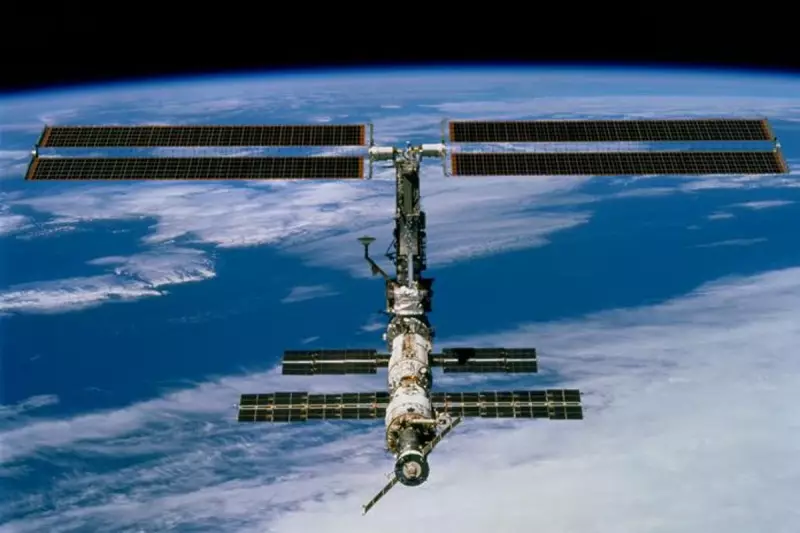
Scientists have uncovered a startling discovery aboard the International Space Station (ISS): viruses appear to be getting stronger in the unique environment of space, and researchers are still working to understand the full implications. A new study reveals that the fundamental interactions between viruses and bacteria are altered in microgravity, leading to unexpected evolutionary paths.
Microgravity Alters the Rules of Infection
Researchers found that bacteria-infecting viruses, known as phages, behave very differently in space compared to on Earth. While these interactions are well-studied in terrestrial labs, how bacteria develop defences against viral attacks in near-weightless conditions has remained a mystery. The study, published in the journal PLOS Biology, states clearly that "space fundamentally changes how phages and bacteria interact."
The research team, led by Srivatsan Raman from the University of Wisconsin-Madison, conducted a direct comparison. They infected samples of E. coli bacteria with a T7 phage virus, incubating one set on Earth and another aboard the ISS. The results were revealing. Infection in the space station samples was initially slower, but both organisms then evolved along a distinct trajectory.

Genetic Mutations Boost Infectivity
By sequencing the genomes of both the space and Earth samples, scientists identified marked differences in genetic mutations. The phages cultivated on the ISS gradually accumulated specific mutations that enhanced their infectivity, improving their ability to bind to receptors on bacterial cells.
Interestingly, the E. coli in space also mutated, developing potential protections against phages and adaptations that improved survival in the microgravity environment. A key finding was that the T7 protein, crucial for viral infection, showed significant differences when grown in space compared to on Earth.
From Orbital Lab to Earthbound Cures
This microgravity-driven change in the T7 protein is linked to increased phage infection of E. coli strains that cause urinary tract infections in humans. This unexpected result points to a significant potential benefit. "By studying those space-driven adaptations, we identified new biological insights that allowed us to engineer phages with far superior activity against drug-resistant pathogens back on Earth," the researchers noted.
The findings, reported on Wednesday 14 January 2026, highlight the ISS's role as a unique laboratory for fundamental biological research. According to lead author Raman, speaking to Space.com, "We're just beginning to scratch the surface. We just have to do more experiments with more complex conditions."
This pioneering work underscores the dual relevance of such studies: they are critical for ensuring astronaut health during long-term space exploration and hold immense promise for developing novel therapies to combat stubborn, drug-resistant infections on our own planet.