The Philippines has initiated a major evacuation, moving nearly 3,000 residents from the foothills of the iconic Mayon Volcano after scientists detected increased activity and raised the official alert level.
Volcanic Unrest Prompts Swift Evacuation
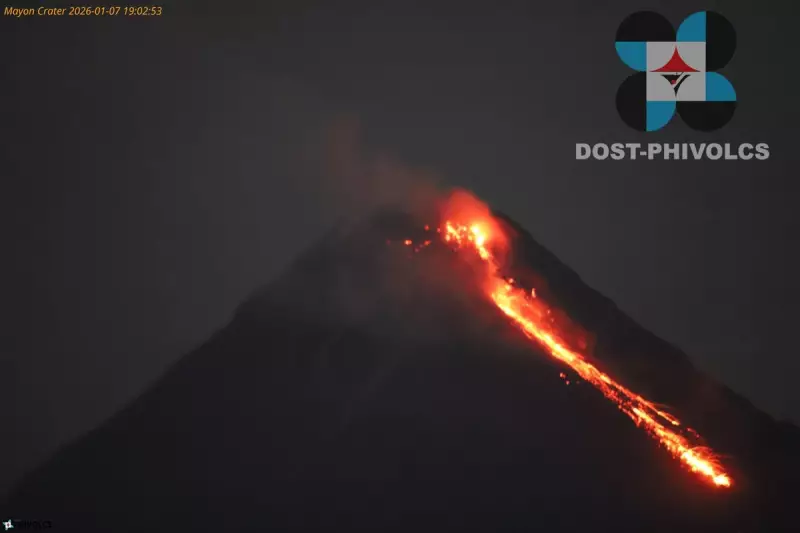
On Tuesday, 6 January 2026, authorities escalated the alert status for Mayon Volcano in Albay province to level 3 on its five-step scale. This decision followed days of intermittent rockfalls from the peak crater, some involving boulders the size of cars, and the observation of deadly pyroclastic flows. These fast-moving avalanches of super-heated rock, ash, and gas represent a significant escalation in the volcano's behaviour.
Teresito Bacolcol, the nation's chief volcanologist, clarified to The Associated Press that an eruption is already in progress. "This is already an eruption, a quiet one, with lava accumulating up the peak and swelling the dome, which cracked in some parts and resulted in rockfalls," he explained. He noted, however, that it is too early to predict if this activity will culminate in a major explosive eruption, as key indicators like a surge in volcanic earthquakes remain absent.

Thousands Moved from Permanent Danger Zone
In response to the heightened threat, disaster response teams, including troops and police, assisted in the evacuation of more than 2,800 villagers from 729 households. These individuals were living inside a strictly enforced 6-kilometre (3.7-mile) permanent danger zone surrounding the volcano's crater, an area marked by concrete warnings.
Claudio Yucot, regional director of the Office of Civil Defense, reported that an additional 600 villagers living just outside the mandatory zone had chosen to evacuate voluntarily, seeking safety in government-run emergency shelters. This highlights the pervasive anxiety caused by the volcano's restiveness.
A History of Danger in a Volcanic Landscape
The 2,462-metre (8,007-foot) Mayon Volcano, renowned for its perfect cone shape, is a top tourist destination but also the most active of the Philippines' 24 volcanoes. This marks its 54th recorded eruption since 1616. Despite the permanent danger zone prohibition, generations of impoverished villagers have flouted the rules, establishing homes and farms on its fertile slopes, while quarrying and tourism businesses have also operated openly.
The volcano's deadly potential is starkly symbolised by the surviving belfry of a 16th-century church in Cagsawa. It is all that remains after an 1814 eruption buried the town and church in volcanic mudflow, killing approximately 1,200 people. The current evacuations underscore a recurring plight across the Philippine archipelago, where many are forced by poverty to live in hazardous areas near active volcanoes, on unstable slopes, and along vulnerable coastlines.
The nation, situated on the seismically active Pacific "Ring of Fire," is battered by around 20 typhoons annually and remains persistently at risk from earthquakes and volcanic events like the ongoing activity at Mayon.