Flight Attendant's Warning: Your Seat Choice Could Be Ruining Your Sleep
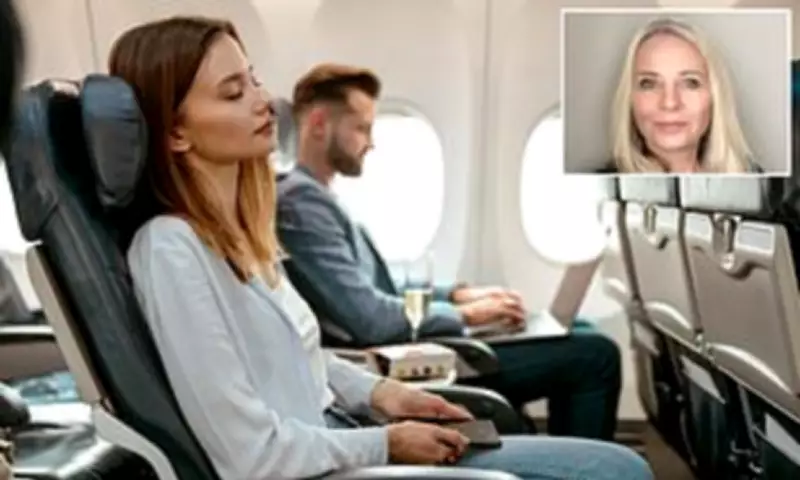
Selecting the wrong seat on an aircraft might be the primary reason you disembark feeling utterly exhausted, according to a seasoned flight attendant who highlights one frequent error that can entirely disrupt your ability to rest. Sherry Peters, an international flight attendant with 27 years of experience, has visited 65 countries and flies as many as 12 times each month. She has disclosed the specific seats that travellers must avoid at all costs if they hope to achieve any semblance of sleep during a flight.
The Noisiest and Most Disruptive Seats to Steer Clear Of
'Seats positioned near the galley or toilets are absolutely the worst if you are attempting to sleep,' Peters explained to the Daily Mail. 'There is perpetual foot traffic, queues forming, lavatory doors slamming shut, and continuous crew activity. It is nearly impossible to obtain uninterrupted rest in these areas.' These high-traffic zones, typically found at the front and rear sections of the plane, rank among the loudest locations onboard. For passengers aiming to secure even a few hours of rest, Peters asserts that these seats can 'ruin your sleep' even before the aircraft has taken off.
Aisle seats can also present significant problems, especially on long-haul journeys where passengers regularly stand up, stretch, or move about the cabin. Opting for an aisle seat means you are likely to be repeatedly jostled, awakened, or requested to move aside—all of which can interrupt sleep cycles and result in travellers feeling more fatigued upon arrival.

Why Window Seats Are the Superior Choice for Rest
For numerous Australians, attaining quality sleep while travelling is inherently challenging—a issue that sleep experts, such as those at Sleepy's, note can profoundly affect how refreshed you feel when you land. Consequently, Peters strongly recommends selecting a window seat whenever feasible. 'Being adjacent to the window provides you with considerably more control over your environment, which is crucial for falling asleep,' she stated.
'You have the ability to close the shade, lean against the wall for additional support, and avoid being elbowed by individuals passing in the aisle. It represents one of the closest approximations to a controlled sleep environment available on an aircraft.' The expert emphasised that the most significant factor influencing sleep in the air is control. 'Most individuals attribute fatigue to jet lag or the flight itself, but frequently it boils down to how you manage your surroundings and whether you remain adequately hydrated,' Peters elaborated.
'I may not have control over the time of day, but I can regulate noise and light by shutting the window shades and utilising noise-cancelling headphones. I may not be able to control being surrounded by 300 wide-awake passengers, but I can control how much I am jostled. That is how I deceive my body into believing it is time to sleep, even midway through a flight.'
Additional Common Mistakes That Hinder Sleep on Flights
Beyond the critical aspect of seat selection, Peters points out several common errors travellers make that further complicate rest. One of the most prevalent is assuming sleep will 'just happen' without any prior preparation. Others encompass failing to use the seat correctly for support or not adjusting posture to alleviate strain on the neck and back.
'I lean slightly toward the window and support my arm so my shoulders and neck can genuinely relax,' she said. She also advocates for minor yet effective adjustments, such as employing a lumbar pillow or slightly reclining the seat to prevent lower back pain. 'I use an adjustable eye mask that loops over the headrest so my head does not bob, and it also keeps my head from twisting and prevents stiff necks during the flight,' she added. 'Just bear in mind that not every airline permits this setup, so it is worthwhile to verify their guidelines before you travel.'

Taking Control of Light and Creating a Sleep Bubble
Light constitutes another major factor, with Peters advising passengers to take command of their environment from the instant they settle into their seat. 'Closing the shade as soon as I am able signals to my brain that it is time to sleep,' she remarked. For frequent flyers, establishing a sense of privacy can also be beneficial. 'I create a small sleep bubble by draping a blanket over my head or using my jacket. Even if the plane is noisy, I trick my brain into perceiving that it is quiet and dark.'
Ultimately, Peters concludes that where you sit can exert a more substantial influence than most people realise. 'Your seat choice alone can make or break your sleep on a plane,' she affirmed.