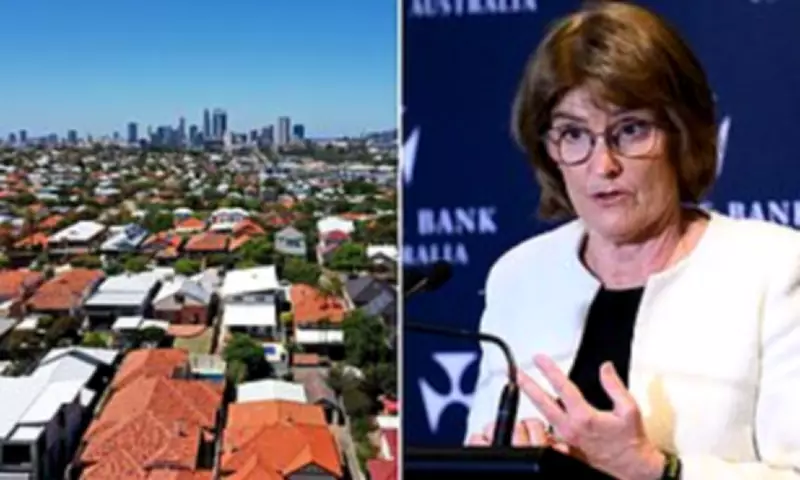
Australian Mortgage Holders Face Fresh Rate Hike as RBA Battles Inflation
The Reserve Bank of Australia has delivered a significant blow to household budgets by lifting the cash rate on Tuesday, marking the first increase since November 2023. The central bank raised the rate by 25 basis points to 3.85 per cent, intensifying its ongoing war against stubbornly high inflation.
Global Divergence and Economic Concerns
This decision places the RBA further out of step with global monetary policy trends, as most major central banks are currently pausing or preparing to ease their rates. The move risks tightening financial pressure on heavily indebted Australian households at a time when the economy shows clearer signs of losing momentum.
REA Group senior economist Angus Moore noted that the Reserve Bank's decision had been widely anticipated by market observers. 'This comes in response to higher-than-expected inflation in the December quarter, and unemployment dropping down to 4.1 per cent,' he explained.

'The RBA remains focused on inflation, and with underlying inflation above both the RBA's target band and what it had forecast back in November, the argument for a rate cut to start the year was strong.'
Housing Market Dynamics and Price Pressures
Despite the rate hikes, Mr Moore indicated that Australian home prices are still expected to rise through 2026, supported by last year's rate cuts and strong economic and housing fundamentals. 'The unemployment rate remains very low, population growth is solid, and new housing supply remains relatively constrained,' he stated.
'However, higher interest rates this year are likely to slow the pace of price growth compared with last year.'
The upward pressure on home prices is unlikely to ease, with new ABS figures revealing the number of approved dwellings fell 14.9 per cent in December to just 15,542. Daniel Rossi, ABS head of construction statistics, confirmed the drop was driven by a near 30 per cent fall in approvals for private dwellings like townhouses and apartments.
Immediate Financial Impact on Households
If banks pass on this hike in full, mortgage holders with an average new home loan of $694,000 would see their monthly repayments increase by $109 to $4,025. This comes as new data shows just over 25 per cent of Australians surveyed in January listed mortgage or rental costs as their biggest budget pressure over the past 12 months.
Analysts at NAB, Citi, RBC Capital Markets, UBS and Barrenjoey Markets have forecast a second increase this year, adding to the financial strain on households.
Inflation Challenges and Future Rate Expectations
Mr Moore emphasised that how inflation evolves early in 2026 will be the primary driver for where interest rates go from this point. 'At the moment, another hike is expected by mid-to-late 2026, but whether that happens will be dictated by how persistent inflation is,' he said.
Compare the Market's Economic Director David Koch described the rate rise as a direct response to last week's concerning inflation figures. 'Last week's December quarter CPI result was a shocker. And it's not just that headline figure - it's the pace at which inflation is accelerating that really has them spooked,' he remarked.
'It was only a couple of months ago that some of the punters were talking about interest rate cuts this year. They're certainly off the table. Inflation has been running too hot for too long and it's really important we get ahead.'
Mr Koch added that 'The RBA is walking a tightrope right now. They've got to factor in the uncertainty we're seeing overseas and how the Aussie dollar is faring before moving too quickly.'
Inflation Data and Policy Context
The rate increase follows ABS data released last week revealing the Consumer Price Index rose 3.8 per cent in the 12 months to December, up from 3.4 per cent in November. The RBA has been battling to keep Australia's stubbornly high inflation rate between 2 and 3 per cent, a target that has proven challenging to maintain.

The increase in official estimates of inflation led to the Reserve Bank's decision to leave interest rates unchanged for its last three meetings in October, November and December 2025, making Tuesday's move particularly significant in the current economic climate.