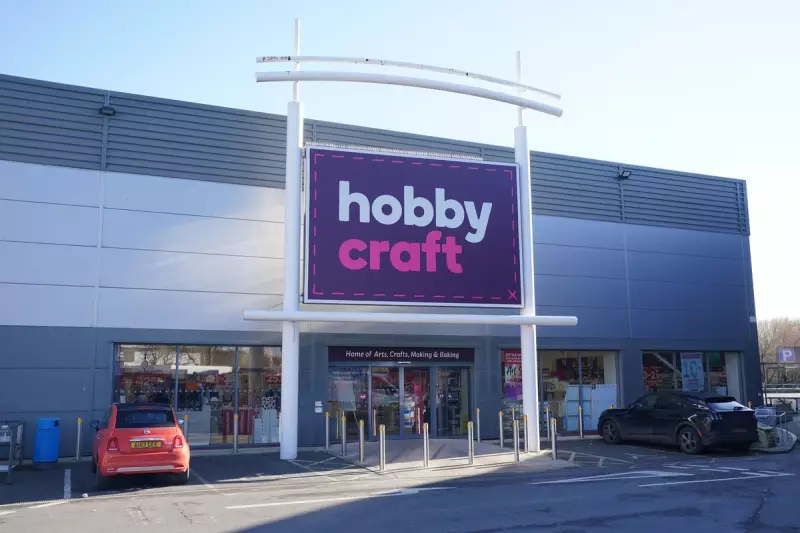
Arts and crafts retailer Hobbycraft has taken the precautionary step of withdrawing children's play sand from sale across its UK stores following alarming reports of asbestos contamination. The move comes after a vigilant parent conducted independent laboratory tests on the product, which revealed the presence of dangerous asbestos fibres.
Parent's Discovery Triggers Safety Alert
According to initial reports by The Guardian, the concern was raised when a parent noticed striking similarities between Hobbycraft's coloured play sand and products that had been recalled in Australia due to asbestos risks. Acting on this suspicion, the anonymous parent purchased a set from Hobbycraft and submitted samples to an accredited testing laboratory.
The laboratory analysis reportedly detected fibrous tremolite asbestos in three out of the five colours tested - specifically in the yellow, green, and pink sand bottles included in Hobbycraft's Giant Box of Crafts kit. This discovery has understandably raised significant safety concerns among parents and consumer protection advocates.

Company Response and Government Position
Hobbycraft has responded to the findings by voluntarily removing the affected product from sale while conducting its own independent testing. A company spokesperson emphasised that no UK regulatory authority had previously identified any risk associated with the product and stated there was no current evidence of harm to customers.
The spokesperson explained: "As a precaution, we have voluntarily removed the product from sale while we carry out independent testing. We will update customers as soon as we are in a position to do so."
However, a government source has taken a stronger position, suggesting that Hobbycraft should proactively recall the product given the evidence presented. The source told The Guardian: "Parents are right to be concerned by this. Officials are investigating, but there's no good reason why Hobbycraft shouldn't recall this themselves, given the evidence."
Understanding the Asbestos Risk
Asbestos presents particular health dangers when its fibres become airborne and are inhaled. While the material is most hazardous during activities like building demolitions where large quantities become airborne, any exposure carries risks. Medical authorities confirm there is no safe level of asbestos exposure, with risks increasing proportionally to the amount and frequency of exposure.
Those most likely to develop asbestos-related illnesses are typically individuals exposed to the substance regularly over extended periods. Nevertheless, the discovery of asbestos in children's play products represents a serious concern given the vulnerable nature of the users and the potential for regular handling.
International Context and Precedents
This incident follows similar safety concerns in Australia, where last November sixty-nine schools were forced to close following the recall of coloured play sand due to asbestos contamination. The international precedent highlights the global nature of product safety challenges in children's toys and craft materials.
The parent who initiated the testing specifically referenced the Australian recall, stating: "The bottles of coloured sand looked extremely similar to ones I had seen on a news report of play sand recalled in Australia. I was concerned enough to buy a set at Hobbycraft and send it to an accredited lab for testing."
As the investigation continues, parents and consumer groups await further updates from Hobbycraft regarding the independent testing results and any potential recall actions. The incident serves as a reminder of the importance of rigorous product safety testing, particularly for items intended for use by children.