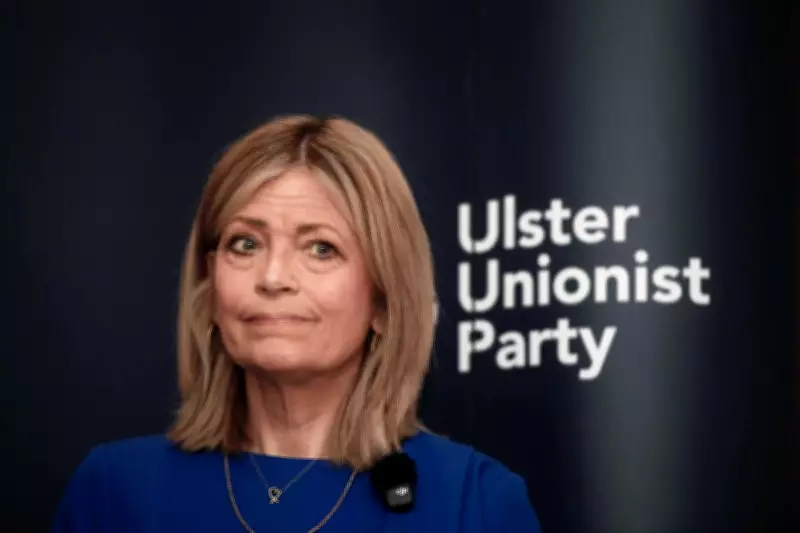
Diana Armstrong, the newly confirmed deputy leader of the Ulster Unionist Party, has been tasked with spearheading a crucial initiative aimed at significantly boosting female participation within the party's ranks. This announcement follows her formal ratification in the deputy leadership role on Saturday, a position that underscores her unique status as the UUP's sole female Member of the Legislative Assembly at Stormont.
A Strategic Priority for the Ulster Unionist Party
In her first comments since assuming the deputy leadership, the Fermanagh and South Tyrone MLA articulated a clear vision for gender inclusivity within unionist politics. She emphasised that her motivation stems from a desire to honour the contributions of women who have historically supported unionism, while actively creating pathways for those currently underrepresented in elected office.
"I am doing this for women who came before me, women who played their part in unionism," Ms Armstrong stated. "But there are many women without a seat in Stormont, without a seat in local government, and I want those women to step forward and be part of this next chapter in the Ulster Unionist Party."

Addressing Practical Barriers to Political Participation
New UUP leader Jon Burrows elaborated on the practical dimensions of this initiative, revealing that Ms Armstrong will lead a dedicated group focused on engaging with women across Northern Ireland. The primary objective will be to identify and dismantle the systemic barriers that prevent greater female involvement in political life.
Mr Burrows highlighted childcare and caring responsibilities as particularly significant obstacles. "A very practical example: we have councillors who tell us that moving into being an MLA is too challenging because they have childcare arrangements, they are working mums or working dads with caring responsibilities," he explained. "We need to look at those practical things and ask how we can make Stormont work better for people with working families."
The leadership has framed this as a core strategic objective, alongside efforts to attract younger members, positioning it as part of a broader renewal agenda for the party.
Policy Development and Grassroots Engagement
Central to the initiative will be the development of concrete policies designed to foster female membership and leverage the distinct qualities women bring to governance and decision-making processes. Ms Armstrong confirmed that specific policy measures are being formulated to achieve these goals.
"There is a policy that will be put in place to bring more female membership and the qualities that women bring to decision-making in governance, and I welcome that work that will be ongoing," she affirmed.
Mr Burrows stressed that this policy development would be deeply informed by grassroots consultation. "That is why we are going to engage with the grassroots, engage with the community and put that voice into our policy," he said, signalling a bottom-up approach to reform.
Signalling a New Chapter for the UUP
Both leaders presented their relatively recent arrivals as MLAs as symbolic of the party's openness to change. "We are open to fresh talent and fresh thinking and fresh ways of doing business," Mr Burrows asserted, framing the recruitment drive as part of offering "something different" to the electorate.
Ms Armstrong, drawing on her connections within the party's local associations, reported a strong appetite among existing female members for greater recognition and influence. "I have a lot of contact with the female members within the associations of our party and there is a real appetite that they are recognised within the party," she noted. "I want to send a signal that we are listening, we value what women can bring to the party inherently."
This concerted effort to attract more women into the Ulster Unionist Party represents a significant organisational priority, aiming to reshape the party's demographic profile and operational culture in the years ahead.