

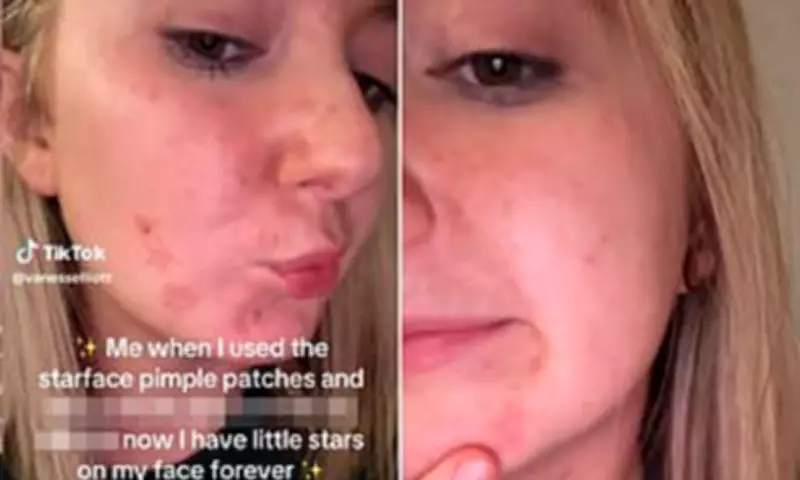
They have become a cult favourite skincare accessory among Generation Z and celebrities alike, but one prominent brand of pimple patches is now facing scrutiny after leaving users with uncomfortable and persistent marks. Several individuals have turned to social media platforms to report experiencing 'itchy' and raised reactions from Starface hydrocolloid patches.
Social Media Outcry Over Skin Reactions
Among those affected is Vanessa Elliot, a UK-based TikTok user, who shared footage revealing the distinctive star-shaped marks left on her face. "Me when I used the Starface pimple patches, now I have little stars on my face forever," she wrote in her post. Her experience was not isolated.
Another user, Sophie from the United States, reported a similar outcome, displaying star-faced marks to her followers. The comment sections of these videos quickly filled with others sharing parallel stories. One individual wrote, "I'm going through this right now, and it's so itchy and raised." Another stated, "Same, never again," while a third added, "Girl, I have the same problem." A further comment noted, "Had one of those on a bigger pimple."

Product Claims and Composition
The product in question, which typically retails for £8.99, is marketed as being able to shrink spots in as little as six hours. It has become fashionable to appear in public adorned with these medicated stickers, a trend propelled by A-list celebrities including Justin Bieber, Nicola Peltz Beckham, and Millie Bobby Brown.
It is understood that the hydro-patches used by Vanessa are constructed from hydrocolloid, a material frequently employed in wound care applications. The brand's website asserts: "Formulated with 100 per cent hydrocolloid, everyone's fav hydro-star pimple patches are clinically proven to minimise breakouts in six hours by absorbing bacteria and fluid. They're vegan, cruelty free, dermatologist tested, and safe for sensitive skin." The patches are designed to shield spots from external bacteria and prevent picking, which can lead to additional scarring.
The Rise of 'Sephora Kids' and Elaborate Skincare Regimes
This incident coincides with a growing phenomenon where children, often referred to as 'Sephora kids', are developing intricate beauty routines despite potential adverse consequences. Scientists from Northwestern University in the United States have discovered that children as young as seven are utilising over a dozen products from various brands on their skin daily.
These costly regimens are exposing children to risks of skin irritation, heightened sun sensitivity, and the development of lifelong skin allergies. By creating dummy accounts posing as 13-year-olds, the researchers gathered 100 videos from TikTok's 'For You Page'. On average, girls aged between seven and 18 employed six different skincare products in their routines, with some using significantly more.
Financial and Health Implications
The survey also uncovered the substantial sums of money that young people are prepared to expend on these products. Teenagers' routines cost an average of $168 (approximately £124), with some girls using products totalling over $500 (around £370).
Searching for terms like 'skin care' or 'skin care routine' on TikTok yields thousands of videos, many amassing hundreds of thousands or even millions of likes. These videos predominantly feature young women demonstrating complicated, multi-step skincare routines. For instance, one video with over 4.1 million likes advocates a routine involving six different treatments, including Vitamin C cream, hyaluronic acid, and 'chemical exfoliants'.
Yet the study found that many younger users on the platform were showcasing routines with even more steps. While these routines promise to deliver 'glassy' or 'glowy' skin, the researchers determined that they actually place teenagers at a high risk of skin irritation. The top-viewed videos analysed contained an average of 11 potentially irritating ingredients.

Expert Warnings from Dermatologists
Corresponding author Dr. Molly Hales, a dermatologist at Northwestern University, explains: "That high risk of irritation came from both using multiple active ingredients at the same time, such as hydroxy acids." These ingredients could trigger an allergic condition known as contact dermatitis, which may restrict the types of soaps and shampoos individuals can use for the remainder of their lives.
Dr. Hales adds that there is also a risk from "applying the same active ingredient unknowingly over and over again when that active ingredient was found in three, four, five different products." However, the creators of these videos appeared either unaware of the risks or unconcerned about the potential negative impacts.
In one illustrative video, a young social media user applied 10 different products to her face within six minutes. Senior author Dr. Tara Lagu, a pharmacist and health services researcher from Northwestern University, observes: "As she's applying the products, she begins to express discomfort and burning, and in the final few minutes, she develops a visible skin reaction."
This combination of specific product reactions, like those reported with Starface patches, and the broader trend of intensive skincare among youth highlights significant concerns within the beauty and dermatology communities regarding consumer safety and informed usage.





