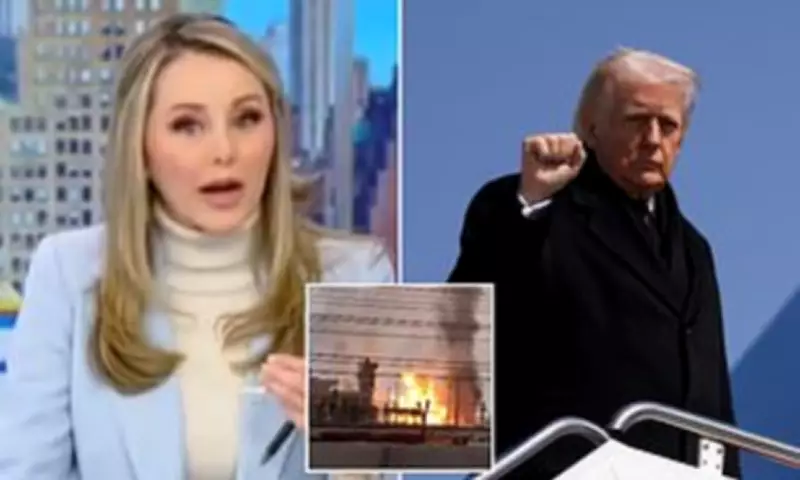
Fox Business host Taylor Riggs has delivered a stark warning about the United States economy, highlighting significant inflationary pressures and market instability triggered by escalating geopolitical tensions in the Middle East. Riggs described the current economic outlook as deeply concerning, particularly following the release of the latest inflation data from the Bureau of Labor Statistics.
Inflation Surge Exceeds Expectations
The Bureau of Labor Statistics reported a 0.7 percent rise in inflation for February, a figure that comfortably surpassed the projected 0.3 percent increase. Since February of the previous year, inflation has climbed by 3.4 percent, indicating a persistent upward trend. Riggs voiced her dissatisfaction with these figures during an appearance on The Big Money Show, stating, "I'm really, really not happy about this inflationary report."
While acknowledging that the Federal Reserve typically looks at broader trends over two or three months, Riggs emphasized her unease, noting, "But this does not look good to me. I don't like sitting here after everything we're talking about and saying, 'Oh, but it's just one month,' because unfortunately, March is guaranteed - 95 percent chance - to get worse than what we saw."

Key Areas of Price Increases
Riggs pointed to booming prices across several essential sectors, including food, alcohol, fuel, trucking, and inpatient care. She highlighted a dramatic 49 percent increase in the cost of fresh and dried vegetables, remarking, "So, there's something going on. Maybe it is a one-off that we could debate, but I don't like the trend." Although prices for apparel and footwear saw a decline, Riggs expressed concern over the overall direction of inflation.
Federal Reserve Response and Economic Context
Federal Reserve Chair Jerome Powell addressed the situation at a press conference, noting that while job numbers have remained low, unemployment has been relatively stable in recent months. Powell stated, "We see the current stance of monetary policy as appropriate to promote progress toward our maximum employment and two percent inflation goals." He also acknowledged the uncertainty surrounding the implications of Middle East developments for the US economy.
Powell attributed elevated readings for goods to the effects of tariffs, which have pushed numbers from negative readings to around two percent. This context underscores the complex interplay between domestic policy and global economic factors.
Geopolitical Tensions and Market Impact
The rise in inflation coincides with soaring oil prices, driven by escalating conflict between the United States, Israel, and Iran. Following missile attacks by the US and Israel on Iran, Tehran retaliated by targeting oil facilities in the Gulf, leading to a near closure of the Strait of Hormuz. This vital waterway, through which approximately one-fifth of the world's oil passes daily, has become a focal point of tension.
Former President Donald Trump attempted to reassure markets, asserting that the Strait of Hormuz would not become an issue, even if Iran attempted to close it, as the US military could intervene. The Trump administration is considering deploying thousands of troops to reinforce operations in the Middle East, particularly around the Strait of Hormuz.
Military Actions and Economic Threats
In response to the crisis, the US military has taken aggressive measures, including dropping multiple 5,000-pound deep penetrator bombs on underground missile sites along Iran's coastline near the strait. These actions aim to clear the way for international shipping and mitigate disruptions to global oil supplies.
Trump issued a severe threat against Iran, warning that he would "massively blow up the entirety" of Iran's South Pars gas field if Tehran continued its attacks. This threat followed an Israeli strike on the Iranian gas field and subsequent retaliatory bombings by Iran on natural gas facilities in Qatar, Saudi Arabia, and the United Arab Emirates.

Trump clarified that the United States was not involved in the Israeli attack and that Qatar had no prior knowledge of it. However, he drew a red line, stating, "NO MORE ATTACKS WILL BE MADE BY ISRAEL pertaining to this extremely important and valuable South Pars Field." He added that if Iran attacked Qatar again, he would unleash devastating force on the Persian Gulf country.
Market Turmoil and Regional Reactions
The geopolitical escalation has triggered significant market turmoil, with overseas markets experiencing early declines on Wednesday. Shares in Asia dropped as oil prices spiked to over $110 a barrel, reflecting heightened anxiety among investors. An Iranian official described the situation as a "full-scale economic war," underscoring the severe economic ramifications of the conflict.
Saudi Arabia responded to Iranian ballistic missile attacks by stating that any trust with Tehran has been shattered. Saudi Foreign Minister Prince Faisal bin Farhan warned, "This pressure from Iran will backfire politically and morally and certainly we reserve the right to take military actions if deemed necessary." This statement followed a meeting of top diplomats from the region in Riyadh, highlighting the deepening regional divisions.
Oil prices surged by five percent on Wednesday as markets reacted to Iran's declaration that energy sites in Saudi Arabia, the United Arab Emirates, and Qatar are now "direct and legitimate targets." This development further exacerbates the economic instability, with potential long-term consequences for global energy markets and inflation trends.