Middle East Conflict Ignites Global Economic Anxiety with Soaring Oil Prices
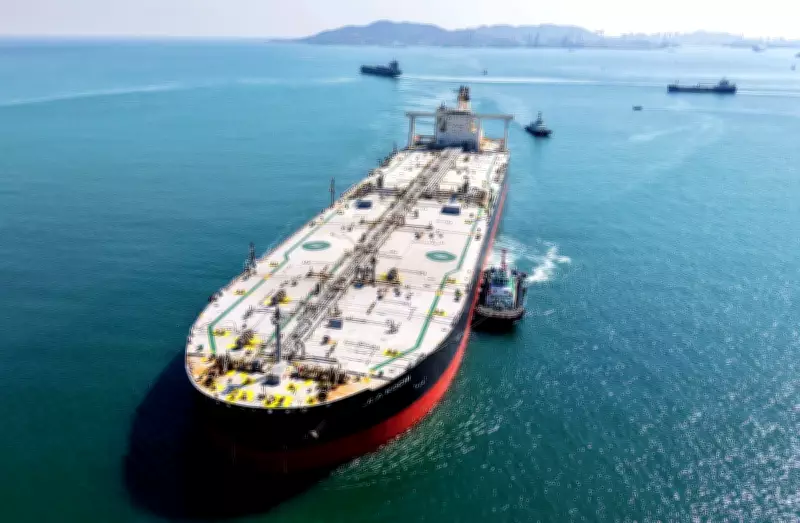
A crude oil tanker is guided to a berth at the oil terminal in Qingdao, China, symbolising the energy supply chains now under severe strain. Asian markets suffered sharp declines early on Monday as the war in the Middle East propelled dramatic oil price rises, rattling stock markets worldwide and sparking fears of a stagflationary shock to the global economy.
Why Has the Iran War Triggered Stagflation Concerns?
With oil prices soaring and stock markets falling, economists warn that a prolonged conflict in the Middle East risks stifling growth globally while boosting prices, creating a perfect storm for stagflation. Oil prices continued to surge on Monday, triggering a stark sell-off across leading stock markets amid growing concern that the US-Israel war on Iran could set the stage for a severe economic downturn.
The Middle East conflict has ignited an energy supply crisis that threatens to drive up inflation and interest rates, according to analysts. They predict growth will weaken as prices rise, with fears of stagflation—where economic activity stagnates but inflation increases—looming large over financial systems.

Stock Market Plunge and Oil Price Dynamics
The price of key oil benchmarks had already posted their highest weekly gains in six years by the time markets opened on Monday, when they soared to more than $115 a barrel. This surpassed $100 for the first time since Russia's 2022 invasion of Ukraine. The West Texas Intermediate benchmark for US crude is now nearly double its January level of about $60 a barrel.
Oil prices climbed significantly in the first week of the US-Israel war on Iran after Iran effectively closed the Strait of Hormuz. Approximately a fifth of global oil and seaborne gas tankers typically pass through this strait, making it one of the world's most critical trade arteries. Recent oil production cuts across the Middle East have exacerbated fears of a supply shortage, eroding chances of price resets.
Warren Hogan, an economic adviser at Judo Bank, noted, "There's a good chance that we're seeing one of the most sudden increases in the cost of oil to the global economy ever." Gas and fertiliser supplies have also been impacted, driving up costs and heightening the risk of a significant global energy price spike, which adds to inflation and slows economic activity.
Despite downplaying by some figures, investors remain unconvinced, with shares across Asia falling sharply. Japan's Nikkei dropped over 6%, and South Korea's Kospi fell over 7% on Monday, with European and US markets expected to follow suit.
Inflationary Pressures from Rising Oil Costs
The US war on Iran is widely expected to boost inflation worldwide, with sustained oil price rises rippling through economies. Royal Bank of Canada economists project that US inflation could surge to 3.7% if oil prices hold at $100 a barrel. Americans are already feeling the impact at the pump, with fuel prices rising 25 cents over the week and another 25 cents over the weekend, averaging $3.44 a gallon by Sunday night.
Higher fuel costs drain workers' wallets and increase business expenses, pushing up prices for goods from food to furniture. Inflation is also set to pick up across the UK and eurozone if higher oil prices persist, according to Oxford Economics. Europe, which imports most of its oil and gas, saw natural gas prices rise nearly 67% in the war's first week.
In China, producer prices could rise 0.4 percentage points if oil prices stay high, while in Australia, inflation may approach 5%, close to 1 percentage point higher than pre-war predictions. Petrol prices could rise by a dollar a litre, with costs already A$0.20 a litre higher than in February.
Stagflation Risks and Economic Slowdown
Oil price spikes are stagflationary, slowing economic activity and raising recession risks while adding to inflation. The International Monetary Fund estimates that world economic growth would slow from about 3.2% to 3% with a 10% lift in energy prices. The UK and euro area might each grow by just 1% or less if the conflict persists.

Asian economies, which have enjoyed strong growth from the global tech boom, face disruption from an energy shock, risking stagflation. In the US, oil prices of $125 a barrel could cut GDP by 0.8% even as inflation surpasses 4%. David Bassanese, chief economist at BetaShares, compared the shock to the 1970s, when Middle East conflicts led to surging prices and economic slumps.
Interest Rate Implications and Future Scenarios
Interest rates are less likely to fall if the war drags on, with central banks poised to hike sooner. The European Central Bank and Bank of Canada, previously expected to hold rates until 2026, are now anticipated to hike at least once in the next year. The US Federal Reserve and Bank of England, under pressure to cut rates, may delay reductions, with the Fed possibly cutting only in September and the BoE holding steady.
Australia could face two rate hikes this year, up from one pre-conflict. Even if the war ends, oil prices may not return to January lows, as traders charge a premium for ongoing risk. Countries like Bangladesh and South Korea are implementing emergency measures, such as closing universities and capping fuel prices, to mitigate impacts.
A quick de-escalation could help avoid an inflation spiral, but if the conflict lasts a month, there is a material risk of global recession with oil prices near $120 a barrel. Goldman Sachs estimates prices could surpass the all-time high of $145 a barrel with prolonged disruption, and Westpac predicts three months could push prices to $185 per barrel, with severe global consequences.