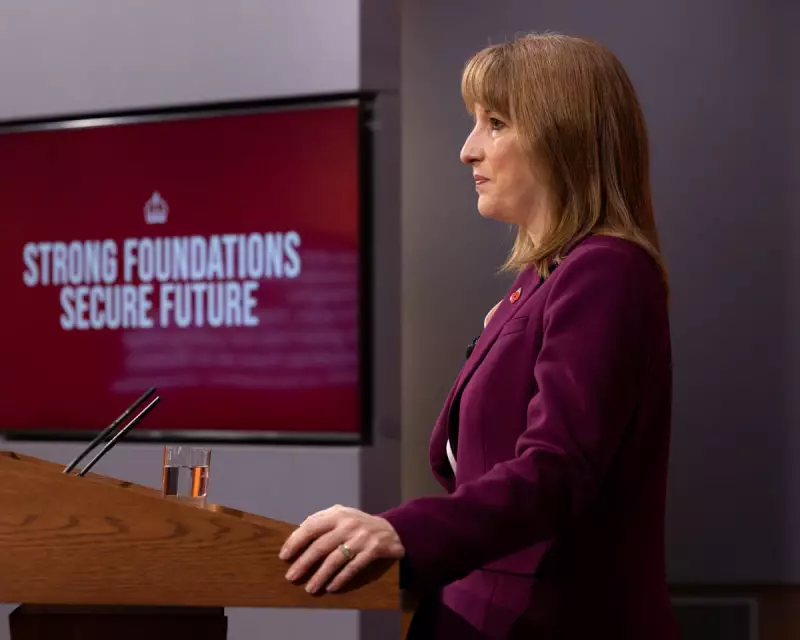
Chancellor Boxed In Ahead of Crucial Autumn Budget
Chancellor Rachel Reeves faces an increasingly difficult balancing act as she prepares to deliver her autumn budget on 26 November, with the UK economy showing worrying signs of stagnation. The latest official figures reveal economic growth slowed dramatically to just 0.1% in the third quarter, down from 0.3% in the previous three months, creating what economists fear could become a destructive 'doom loop' for the nation's finances.
The Growth Crisis Deepens
The slowdown was partly driven by an unexpected external shock - a cyber-attack on Jaguar Land Rover that caused production chaos across the automotive sector. Output in the car industry collapsed by 28.6% during the quarter, shaving an estimated 0.16 percentage points from GDP figures. The attack forced JLR to suspend UK factory operations for several weeks, with devastating consequences for hundreds of smaller suppliers across the West Midlands.
Despite government intervention offering a £1.5bn loan guarantee to support the company and its supply chain, JLR ultimately didn't use the funds, choosing instead to pay suppliers directly. The incident highlights the vulnerability of key British industries to modern security threats.

Fiscal Tightrope Walk
Reeves now confronts a fundamental contradiction in economic policy. While stronger public finances require a stronger economy, the chancellor's self-imposed fiscal rules may force her to implement tax rises and spending cuts that could further squeeze economic activity. The expected shortfall against these rules could reach £30bn, leaving little room for manoeuvre.
The underlying economic picture remains concerning. The economy actually shrank in September and flatlined in August, while real GDP per head - a crucial measure of living standards - showed no growth in the latest quarter. Consumer-facing services output fell by 0.1%, business investment declined by 0.3%, and export volumes also dropped.
Structural Weaknesses Exposed
Several familiar problems continue to drag on economic performance. Consumers remain squeezed by high living costs, business investment remains weak despite government efforts to promote a pro-business environment, and the global backdrop provides little support amid Donald Trump's unpredictable trade wars.
Some of Labour's challenges are self-inflicted. The employers' national insurance increase from last year's budget has added to business costs at precisely the wrong moment, while ongoing speculation about the UK's fiscal position has made both companies and households reluctant to spend.
Glimmers of Hope Amid the Gloom
Despite the concerning data, there are some positive indicators. The cyber-attack on JLR represents a one-off event rather than a structural problem. The UK remains the fastest-growing G7 economy after the United States, a position the International Monetary Fund predicts Britain will maintain next year.
Furthermore, economists had anticipated a second-half slowdown, noting that the UK has exhibited this pattern for several years running. With unemployment at a four-year high and inflation likely having peaked, expectations are building for the Bank of England to cut interest rates at its December meeting.
As pressure mounts from within Labour ranks, the chancellor will be hoping for monetary policy support to complement her fiscal measures. However, with the economy in such a tight spot and bond market investors watching closely, Reeves faces the difficult task of rebuilding confidence without the resources for an expansive growth package when she stands at the dispatch box on 26 November.